

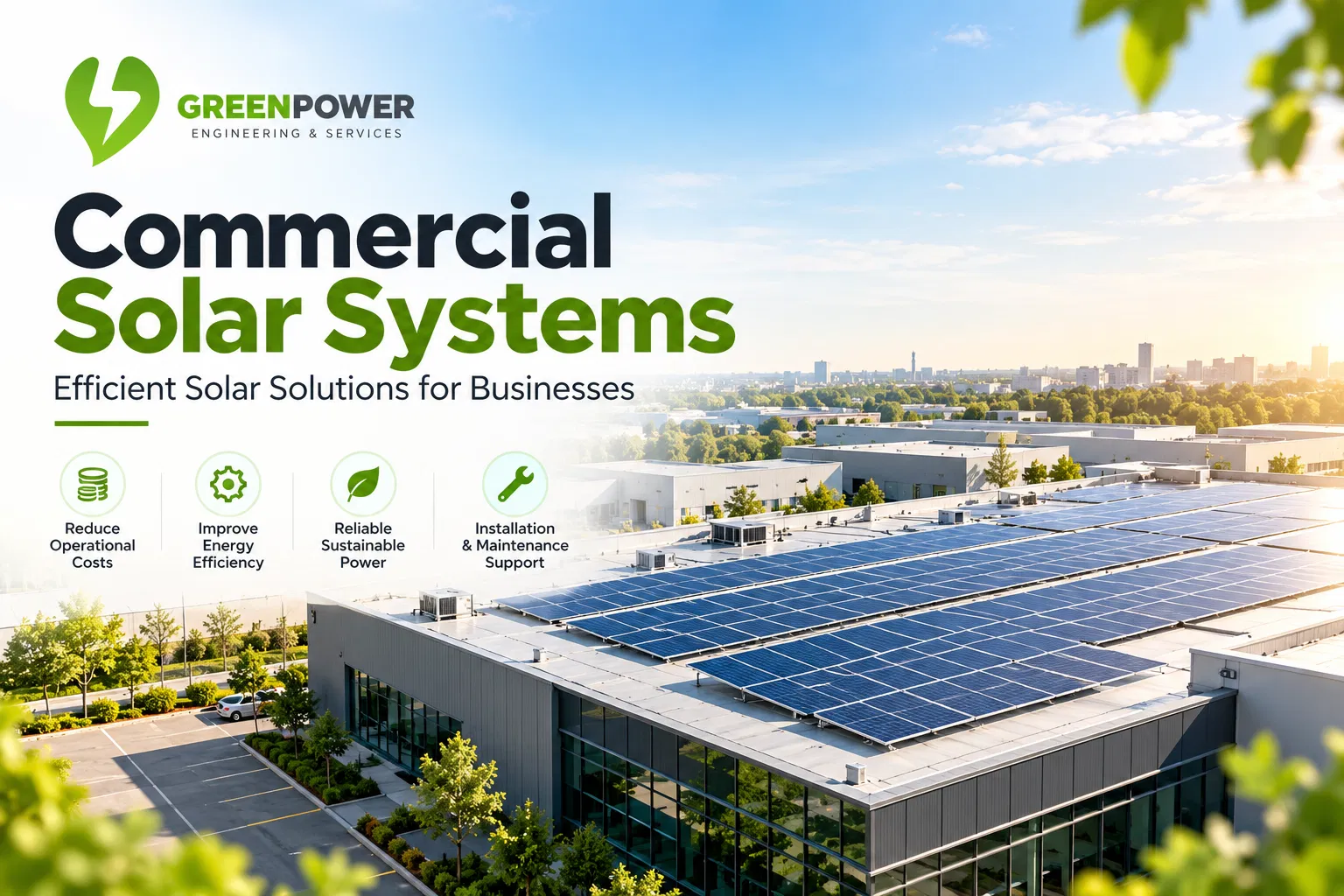
Commercial Solar Systems in Pakistan: How to Evaluate the Right Solar Investment for Your Business

Electricity is a major operating requirement for businesses. Offices, retail outlets, warehouses, hotels, educational institutions, and other commercial facilities depend on power for lighting, air conditioning, machinery, computers, security systems, and everyday operations. As energy expenses become an important part of business budgets, many organizations are exploring ways to manage their electricity consumption more strategically.
Commercial Solar Systems in Pakistan offer businesses an opportunity to generate electricity at their own premises and reduce their reliance on conventional power sources. However, investing in solar requires more than comparing equipment prices or selecting a system based on its advertised capacity.
A commercial solar project should be evaluated according to electricity consumption, operating hours, available installation space, equipment quality, expected generation, installation requirements, and long-term maintenance. Understanding these factors can help business owners make informed decisions and select a system that supports their operational goals.
Start with Your Business Electricity Consumption
The first step in evaluating commercial solar solutions is understanding how much electricity the business actually uses.
Monthly electricity bills provide a useful starting point, but they do not always show the complete picture. Businesses should also consider when electricity is consumed, which equipment creates the highest demand, and whether consumption changes throughout the week or across different seasons.
For example, an office may use most of its electricity during regular working hours, while a hotel or healthcare facility may operate around the clock. A warehouse may have a different consumption pattern depending on its cooling, lighting, and equipment requirements.
Reviewing electricity bills and operating schedules helps create a clearer picture of the property's energy needs. This information becomes the foundation for a suitable solar system design.
Understand the Relationship Between Solar Generation and Business Hours
Solar panels generate electricity during daylight hours. This makes operating schedules an important consideration when planning a commercial solar power project.
Businesses that consume a significant portion of their electricity during the day may be able to use more solar generation directly. Offices, schools, retail stores, and many commercial facilities can evaluate how their daytime electricity requirements align with expected solar production.
If a business uses most of its electricity at night, the project may require a different approach. Battery storage can be considered where suitable, but its capacity and cost should be evaluated according to actual energy requirements.
Understanding this relationship helps businesses avoid selecting a system that produces electricity at times when the facility has limited demand.
Evaluate Your Rooftop or Installation Area
Available installation space is another important factor in commercial solar planning.
Many commercial buildings have rooftops that can accommodate solar panels. However, the total roof area does not necessarily represent the usable installation area.
Before proceeding with commercial rooftop solar, the property should be assessed for structural suitability, shading, roof condition, access, ventilation equipment, water tanks, and other obstructions.
The mounting structure must also be suitable for the roof type. Different arrangements may be required for concrete roofs, metal-sheet roofs, or elevated installations.
If the rooftop does not provide sufficient suitable space, other installation options may be evaluated where the property allows them.
A professional site assessment helps determine how much solar capacity can realistically be installed.
Compare Equipment Beyond the Purchase Price
The initial equipment price is an important part of a solar investment, but it should not be the only deciding factor.
Solar panels should be evaluated according to their efficiency, performance specifications, warranty coverage, physical dimensions, and suitability for the installation environment.
Inverters should be selected according to system capacity, electrical requirements, monitoring features, protection capabilities, and compatibility with the proposed configuration.
Other components also deserve attention. Mounting structures, electrical cables, breakers, surge protection devices, grounding arrangements, and monitoring equipment all contribute to the complete installation.
When comparing commercial solar systems, businesses should review the full technical proposal rather than focusing only on the quoted price per kilowatt.
Understand the Difference Between On-Grid and Hybrid Systems
Commercial properties can use different solar configurations depending on their electricity requirements.
An on-grid system operates alongside the conventional electricity grid. It generates solar electricity for use within the property and draws additional electricity from the grid when solar generation is insufficient. A standard grid-tied inverter generally shuts down during a grid outage unless a specifically designed backup arrangement is included.
A hybrid system combines solar generation, grid connectivity, and battery storage. It can provide backup to selected loads when designed with compatible equipment and sufficient battery capacity.
Businesses should identify whether their main objective is to offset daytime electricity consumption, provide backup for critical equipment, or achieve a combination of these goals.
The appropriate business solar system should be selected according to the facility's actual operating requirements and available budget.
Calculate the Financial Value of the Project
A commercial solar investment should be evaluated using realistic financial assumptions.
The total project cost may include solar panels, inverters, mounting structures, electrical protection, installation labor, engineering, transportation, and other site-specific requirements.
Businesses should compare this investment with the electricity expenses that the system may help offset. Expected financial benefits depend on solar generation, the proportion of electricity used on-site, applicable electricity rates, operating hours, maintenance, and the property's grid arrangements.
A project-specific financial assessment is more useful than relying on general savings percentages or guaranteed payback claims.
Business owners should also consider equipment warranties, expected maintenance expenses, and possible changes in electricity consumption over time.
Consider the Quality of the Installation Process
Even high-quality equipment requires proper installation to perform as intended.
A professional commercial solar installation involves site preparation, mounting structure installation, panel positioning, inverter placement, cable routing, electrical connections, protection equipment, grounding, and system testing.
For commercial properties, the installation team should also consider business activities and building access. Work may need to be scheduled around operating hours or completed in stages to minimize disruption.
Electrical integration should be carefully planned, particularly in buildings with multiple distribution boards, large equipment, or three-phase electrical connections.
Businesses should ask for a clear installation scope that explains the work, equipment, responsibilities, testing procedures, and commissioning arrangements.
Review Grid Connection and Export Arrangements
Some commercial solar installations may be designed to operate alongside the electricity grid with an approved export arrangement.
However, grid connection and electricity export depend on applicable regulations, utility requirements, system capacity, technical approvals, and the property's connection conditions.
Businesses should not assume that every solar installation can export surplus electricity under identical terms.
Before finalizing a project, it is important to understand the applicable connection process and how imported and exported electricity may be accounted for.
A knowledgeable solar provider can help explain the technical requirements and documentation involved in the proposed arrangement.
Plan for Future Business Expansion
A commercial property may have changing energy requirements as its operations grow.
Businesses may add equipment, expand production, introduce additional office space, or increase working hours. These changes can influence future electricity consumption.
When planning commercial solar system design, decision-makers should consider whether the proposed installation can accommodate future requirements.
This does not mean installing a system that is unnecessarily large from the beginning. Instead, the design should consider practical expansion possibilities, inverter limitations, available rooftop space, electrical infrastructure, and future equipment compatibility.
A well-planned project can provide greater flexibility as the business develops.
Why Monitoring Is Important After Installation
Once the solar system is operational, monitoring helps businesses understand how much electricity it generates and whether the equipment is functioning as expected.
Modern monitoring systems can provide information about solar production, inverter status, and system alerts. Depending on the equipment, businesses may also be able to review generation data remotely.
Facility managers can use this information to compare actual production with expected performance and identify unusual changes.
Monitoring also supports better energy management because businesses can evaluate how solar generation relates to their operating schedules and electricity consumption.
Maintenance and Long-Term Operating Costs
A commercial solar installation should be evaluated as a long-term energy asset.
Although solar panels generally require limited routine maintenance, dust accumulation, environmental exposure, and equipment conditions can influence performance.
Panels may need cleaning when contamination affects their surfaces. Inverters, cables, electrical connections, mounting structures, and protection devices should also be inspected according to appropriate maintenance procedures.
Businesses should understand what maintenance services are included in the proposal and whether ongoing technical support is available.
Considering these responsibilities before installation helps organizations plan for the complete life of the system rather than focusing only on its initial purchase.
Choosing the Right Solar Partner
The solar provider plays an important role in the success of a commercial project.
Businesses should look for a provider that understands energy assessment, system design, equipment selection, electrical integration, installation planning, and after-sales support.
A clear proposal should explain the recommended capacity, equipment specifications, expected generation, project cost, installation scope, warranties, and maintenance arrangements.
Communication is also important. Business owners and facility managers should be able to understand the proposed configuration and ask questions before approving the project.
Choosing a provider based on technical suitability and service quality can help businesses make a more informed investment decision.
Why Choose Green Power Engineering Solutions?
Green Power Engineering Solutions provides customized commercial solar services designed around the electricity requirements of businesses and commercial properties.
Its services include energy assessment, customized system design, professional solar installation, energy-efficiency solutions, and maintenance and technical support.
The planning process considers electricity consumption, operating schedules, available installation space, equipment requirements, and future energy needs.
This approach helps businesses explore solar solutions that are aligned with their actual requirements instead of relying on a standard system package.
Whether a company operates an office, retail facility, warehouse, or another commercial property, customized planning can help identify an appropriate solar installation strategy.
Conclusion
Commercial Solar Systems in Pakistan can provide businesses with an opportunity to generate renewable electricity and improve the way they manage energy expenses.
However, choosing the right system requires careful evaluation of electricity consumption, operating hours, installation space, equipment quality, system configuration, project cost, grid arrangements, and long-term maintenance.
A successful solar investment begins with understanding the business's actual requirements and selecting a solution that complements its operations.
With customized planning, professional installation, and ongoing technical support from Green Power Engineering Solutions, businesses can take a practical step toward more efficient and sustainable energy management.
Frequently Asked Questions
1. How do I choose the right commercial solar system for my business?
The right commercial solar system depends on electricity consumption, operating hours, available installation space, budget, and backup requirements. Reviewing electricity bills and conducting a professional site assessment can help determine suitable system capacity.
2. What should I compare when selecting commercial solar equipment?
Businesses should compare panel efficiency, inverter specifications, equipment warranties, mounting structures, electrical protection, monitoring features, and installation quality. The complete technical proposal should be reviewed rather than comparing equipment prices alone.
3. Is commercial solar a good long-term investment for businesses?
Commercial solar can be a useful long-term investment when the system is properly sized and aligned with the property's electricity consumption. Its financial value depends on project cost, solar generation, electricity rates, self-consumption, maintenance, and applicable grid arrangements.














