

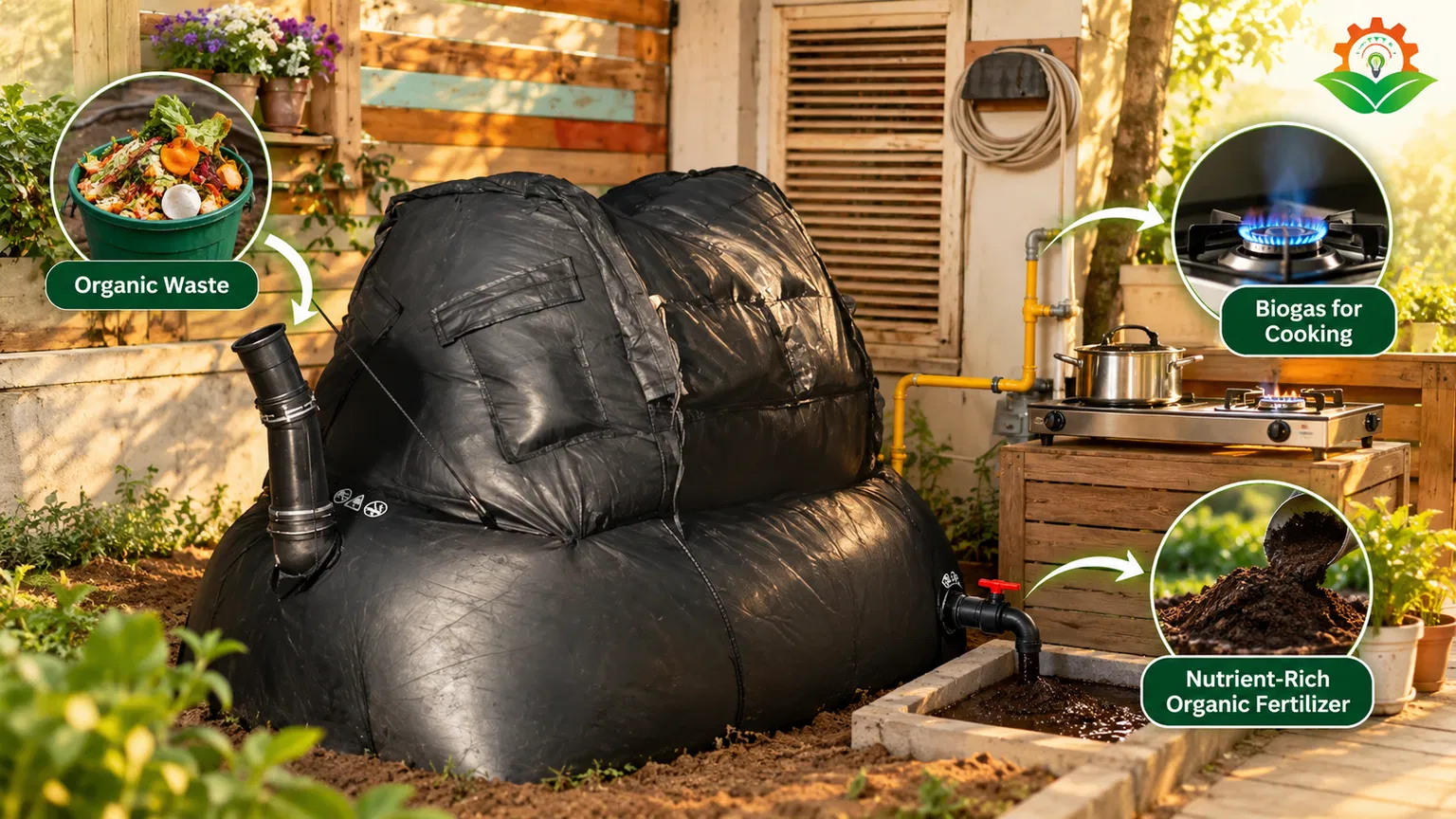

A dairy farmer managing cattle waste or a rural household dealing with rising LPG costs often reaches the same question: How much does a biogas plant cost? While many people focus only on the purchase price, the actual investment depends on plant size, engineering quality, installation requirements, and long-term operating performance. A properly designed biogas plant not only converts organic waste into renewable fuel but also produces nutrient-rich organic fertilizer, making it a cost-effective solution for homes, farms, and institutions over its operational life.
Understanding What You are Paying For
A biogas plant is an engineered anaerobic digestion system that converts biodegradable waste into methane-rich biogas and organic bio-slurry. Unlike conventional waste disposal methods, it generates renewable energy while reducing environmental pollution and fertilizer expenses.
The total investment is not determined by the digester alone. It includes civil work, piping, gas storage, safety components, commissioning, and long-term maintenance support. Choosing a system based solely on the lowest quotation often results in lower gas production and higher operating costs over time.
How a Biogas Plant Works
Understanding the process helps explain why engineering quality affects overall cost.
Organic waste such as kitchen scraps, cow dung, crop residue, and animal manure is mixed with water before entering an airtight digester. Inside the tank, anaerobic bacteria decompose the waste without oxygen, producing methane-rich biogas.
The gas is stored and supplied to cooking appliances, water heaters, or small generators, while the remaining bio-slurry exits the system as an organic fertilizer suitable for agriculture and landscaping.
Engineering Factors That Influence Cost
Every biogas plant design is developed according to several technical parameters, including:
- Daily feedstock quantity
- Organic loading rate
- Hydraulic retention time
- Expected gas demand
- Local climate conditions
- Available installation space
Larger digesters, stronger construction materials, and advanced gas storage arrangements naturally increase the initial investment but also improve durability and operational reliability.
Major Factors Affecting Biogas Plant Price
The final Biogas plant price varies because no two installations are exactly alike.
Important cost factors include:
Daily Feedstock Volume
The amount of kitchen waste, cow dung, or agricultural residue available each day determines the required digester capacity.
More feedstock requires a larger digestion chamber and increased gas storage capacity.
Digester Size and Tank Material
Common construction materials include:
- Reinforced concrete
- HDPE
- FRP
- Mild steel with protective coatings
- Stainless steel for specialized applications
Material selection influences structural strength, corrosion resistance, maintenance requirements, and service life.
Gas Storage Capacity
Storage systems are designed according to daily gas consumption.
Larger storage units improve fuel availability during peak cooking hours but increase installation costs.
Piping and Installation Complexity
The distance between the digester and gas utilization points affects piping requirements.
Additional valves, moisture traps, regulators, and safety equipment also contribute to the total project cost.
Civil Construction and Site Preparation
Ground conditions, excavation requirements, drainage, and foundation work differ from site to site.
Proper site preparation ensures long-term structural stability and safe operation.
Selecting the Right Plant Size
Correct sizing is essential for both performance and investment efficiency.
Engineers evaluate:
- Household size
- Daily cooking fuel demand
- Livestock population
- Kitchen waste generation
- Future expansion plans
An undersized digester cannot meet fuel demand, while an oversized system increases construction costs without proportional benefits.
A well-designed Domestic biogas digester for homes and farms balances biological efficiency with practical energy requirements.
Gas Delivery and Safety
Reliable gas handling is an important part of the overall project investment.
Professional installations include:
- Leak-resistant pipelines
- Pressure regulators
- Isolation valves
- Moisture traps
- Safety shut-off arrangements
These components improve operational safety and maintain consistent gas pressure for kitchen stoves, water heaters, and small generators.
Bio-Slurry Adds Long-Term Value
One reason a biogas plant offers attractive lifecycle economics is the value of its bio-slurry.
The digestion process converts organic waste into stabilized fertilizer rich in plant nutrients.
Benefits include:
- Reduced fertilizer purchases
- Improved soil fertility
- Better water retention
- Enhanced microbial activity
- Sustainable crop production
For farms and kitchen gardens, these savings significantly improve overall project returns.
Key Features of Modern Biogas Plant Systems
Today's engineered biogas plant systems are designed for reliable long-term operation.
Typical features include:
- Continuous gas generation
- Compact installation footprint
- Effective odor control
- Durable tank construction
- Weather and temperature resilience
- Low maintenance requirements
- Easy operation
- Scalable plant capacity
- Long operational service life
These features help reduce maintenance costs while improving overall plant efficiency.
Applications Across India
Modern systems support a wide variety of applications, including:
- Rural households
- Dairy and livestock farms
- Agricultural cooperatives
- Educational hostels
- Hotels and farm stays
- Housing societies
- Community biogas projects
- Rural electrification initiatives
Growing demand has encouraged many Biogas plant manufacturers in India to develop customized solutions for residential, agricultural, and institutional users.
Buyer's Guide: Choosing the Right Manufacturer
The quality of engineering often has a greater impact on long-term value than the initial purchase price.
Before making a decision, evaluate:
- Industry experience
- Digester engineering expertise
- Manufacturing quality
- Material standards
- Customization capability
- Installation expertise
- Technical support
- Documentation and subsidy assistance
- Preventive maintenance services
- Proven project history
A Sigma Power Tech manufacturer and service provider offers complete engineering support, including system design, manufacturing, installation, commissioning, and after-sales maintenance. A Sigma Power Tech biogas plant is engineered to deliver dependable gas production, durable construction, and reliable long-term performance across residential, agricultural, and commercial applications.
Common Mistakes That Increase Costs
Many avoidable planning mistakes lead to unnecessary expenses.
Common examples include:
- Selecting the wrong digester size
- Inconsistent feedstock supply
- Poor site planning
- Ignoring bio-slurry utilization
- Skipping preventive maintenance
- Installing inadequate gas piping
- Overlooking seasonal temperature effects on digestion efficiency
Proper planning minimizes operating costs while maximizing gas production throughout the plant's service life.
Conclusion
The Biogas plant price in India should be evaluated as a long-term investment rather than simply an upfront expense. Factors such as digester size, engineering quality, construction materials, gas storage, installation complexity, and maintenance support all influence both the initial cost and future performance. A correctly sized and professionally engineered biogas plant delivers reliable renewable fuel, valuable organic fertilizer, reduced LPG dependence, and efficient waste management for many years. Prioritizing quality engineering over the lowest purchase price ensures better gas yield, lower lifecycle costs, and a sustainable waste-to-energy infrastructure that continues to generate value well into the future.














