

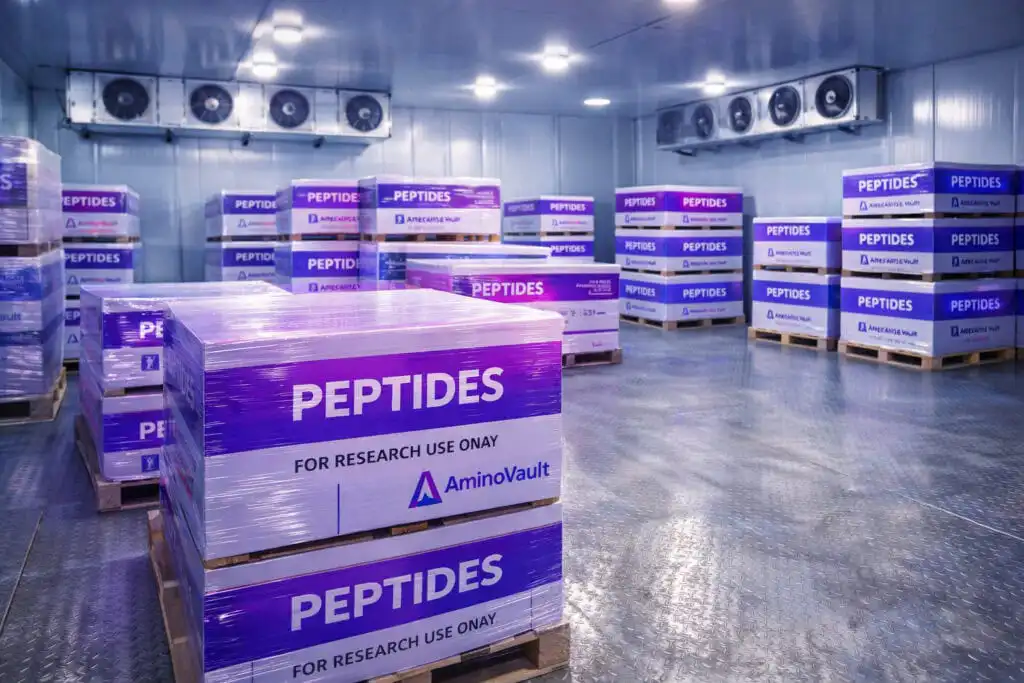
Technical Manual on Reagent Procurement: Molecular Synthesis, Quality Protocols, and Wholesale Sourcing Strategies

In contemporary biochemical, cellular, and pharmacological research, the validity and reproducibility of experimental outcomes depend directly on the structural purity and chemical integrity of laboratory reagents. As academic research institutions, commercial biotechnology facilities, and pharmaceutical development units scale their testing protocols, securing high-capacity reagent inventory becomes a central operational priority. Obtaining custom or catalog amino acid sequences in large volume requires a structured strategy to verify synthesis methodologies, analytical testing documentation, and supply chain stability. For research teams aiming to optimize their laboratory supply chains while maintaining strict quality control benchmarks, choosing to Buy Research Peptides Online represents a fundamental step toward streamlining experimental workflows and ensuring long-term scientific consistency.
This comprehensive reference manual details the essential technical parameters, analytical evaluation methods, and operational protocols needed for successful bulk biochemical procurement across diverse laboratory environments.
Fundamental Mechanisms of Solid-Phase Peptide Synthesis (SPPS)
Understanding the underlying manufacturing chemistry is vital for laboratory directors and purchasing managers when evaluating prospective compound vendors. Solid-Phase Peptide Synthesis (SPPS), originally pioneered by Robert Bruce Merrifield, remains the gold standard methodology for producing custom and catalog sequences. During SPPS, amino acids are assembled sequentially from the C-terminus to the N-terminus while covalently bound to an insoluble polymer resin support.
+-----------------------------------------------------------------------+
|                 SOLID-PHASE PEPTIDE SYNTHESIS (SPPS)                  |
+-----------------------------------------------------------------------+
|  [1] C-Terminal Residue Anchored to Insoluble Polymer Resin Matrix    |
|                                  │                                    |
|                                  ▼                                    |
|  [2] Deprotection of N-Terminal Protecting Group (Fmoc/Boc Removal)   |
|                                  │                                    |
|                                  ▼                                    |
|  [3] Coupling Reaction with Activated Incoming Protected Residue      |
|                                  │                                    |
|                                  ▼                                    |
|  [4] Repeated Deprotection & Coupling Cycles to Target Length         |
|                                  │                                    |
|                                  ▼                                    |
|  [5] Chemical Cleavage from Resin Matrix + Side-Chain Deprotection    |
|                                  │                                    |
|                                  ▼                                    |
|  [6] Preparative HPLC Isolation and Final Lyophilization (Freeze-Dry) |
+-----------------------------------------------------------------------+
Iterative Chemical Extension Cycles
The solid-phase synthetic process relies on repetitive, highly controlled steps designed to extend the chain with high efficiency:
-
Resin Anchoring: The C-terminal amino acid is attached via its carboxyl group to a functionalized resin bead (e.g., polystyrene, Wang resin, or Rink amide resin).
-
Deprotection: The temporary N-terminal protecting group—typically Fmoc (9-fluorenylmethyloxycarbonyl) or Boc (tert-butyloxycarbonyl)—is cleaved using mild base (piperidine) or acid (trifluoroacetic acid) treatments.
-
Activation and Coupling: The carboxyl group of the next protected amino acid is activated using specialized reagents (such as HBTU, HATU, DIC, or Oxyma) and reacted with the free amine of the resin-bound peptide.
-
Washing Rounds: High-purity solvents like N,N-Dimethylformamide (DMF) or Dichloromethane (DCM) are flushed through the resin bed between cycles to remove excess reagents and unreacted intermediates.
Technical Challenges in High-Volume Synthesis
Expanding synthesis from milligram analytical samples to multi-gram or kilogram production lots introduces specific chemical hurdles that demand strict process controls and optimized engineering.
                  [ Synthesis Scale-Up Challenges ]
                                 │
     ┌───────────────────────────┼───────────────────────────┐
     ▼                           ▼                           ▼
[ Deletion Chains ]    [ Steric Aggregation ]     [ Chiral Racemization ]
 Incomplete coupling    Hydrophobic folding        Inversion of L to D
 truncates sequence      traps reactive ends       alters conformation
1. Truncated Deletion Sequences
Incomplete coupling steps during multi-step chain extension can yield minor quantities of shortened sequences missing specific amino acid residues. Accumulation of these deletion sequences compromises sample purity and makes downstream purification significantly more complex.
2. Inter-Chain Aggregation
Sequences rich in hydrophobic amino acids (e.g., Leucine, Isoleucine, Valine) tend to aggregate via beta-sheet formation during synthesis. This aggregation masks the reactive N-terminal amine group, dramatically reducing coupling yield. Manufacturers utilize chaotropic additives or pseudoproline dipeptides to disrupt secondary structures during long-chain synthesis.
3. Racemization Risks
Exposure to activating reagents and thermal stress during coupling can induce chiral inversion of L-amino acids into D-enantiomers. Racemized peptides possess altered spatial configurations, which can interfere with receptor binding kinetic studies and produce false-negative or false-positive experimental results.
Economic and Operational Advantages of Wholesale Reagent Sourcing
Procuring research compounds in single, high-volume production lots provides significant financial, operational, and experimental benefits over frequent, small-scale purchases.
                 [ Single Consolidated Lot ]
                              │
      ┌───────────────────────┴───────────────────────┐
      ▼                                               ▼
[ Uncompromised Lot Uniformity ]             [ Cost Optimization ]
  • Identical purity levels                    • Lower setup overhead
  • Uniform salt/moisture content              • Distributed analytical cost/mg
  • Zero inter-assay variance                  • Reduced administrative burden
Cost-Per-Milligram Optimization
Chemical synthesis involves fixed operational expenditures, including solvent usage, preparative column calibration, and analytical verification runs (HPLC and Mass Spectrometry). Spreading these fixed expenses over a larger production lot significantly lowers the cost per milligram, maximizing institutional research budgets without compromising material standards.
Batch Uniformity and Experimental Replicability
Experimental irreproducibility often stems from minor variations between separate manufacturing batches. Differences in residual moisture, counter-ion ratios (e.g., trifluoroacetate salt content), or trace impurities can introduce unwanted variables into longitudinal studies. Sourcing an entire project's supply from a single, uniform lot ensures consistent chemical parameters across all experimental phases.
Critical Quality Verification Metrics and Analytical Testing
A supplier's commitment to quality control must be verified through objective, batch-specific analytical documentation. Scientific facilities should never accept reagents without complete analytical reports.
+-------------------------------------------------------------------+
|               ANALYTICAL DOCUMENTATION CHECKLIST                  |
+-------------------------------------------------------------------+
|  [✓] High-Performance Liquid Chromatography (HPLC) Chromatogram     |
|      - Verifies chemical purity percentage (Target >98%)          |
|      - Clear peak separation without ambiguous baseline noise     |
|                                                                   |
|  [✓] Mass Spectrometry (MS) Report                                |
|      - Confirms observed m/z matches theoretical molecular weight |
|      - Validates sequence integrity and absence of heavy adducts   |
|                                                                   |
|  [✓] Batch-Specific Certificate of Analysis (CoA)                  |
|      - Lot number matching physical container labeling            |
|      - Testing date, appearance, and recommended storage specs    |
+-------------------------------------------------------------------+
High-Performance Liquid Chromatography (HPLC) Standards
HPLC analysis separates the target compound from synthesis byproducts, deletion sequences, and residual reagents based on their interaction with a stationary column matrix. Standard biological assays generally require an analytical purity of 98% or higher to prevent non-specific baseline noise and erroneous assay interpretations.
Mass Spectrometry (MS) Structural Confirmation
While HPLC measures chemical purity, Mass Spectrometry confirms sequence identity. By measuring the mass-to-charge ratio ($m/z$), MS verifies that the actual molecular weight matches the theoretical mass calculated from the target amino acid sequence, ensuring no unexpected chemical adducts are present.
Systematic Vendor Audit and Evaluation Framework
Establishing a dependable reagent partnership requires a structured auditing process. Research facilities should apply systematic criteria before finalizing supplier contracts.
Step 1: Inspecting Documentation and CoAs
Reject suppliers who provide static or non-lot-specific template CoAs. Ensure that every physical shipment includes an individual Certificate of Analysis with corresponding HPLC chromatograms and MS spectra displaying matching lot numbers.
Step 2: Evaluating Physical Packaging Integrity
Synthetic peptides are sensitive to atmospheric humidity, heat, and ultraviolet radiation. Verify that the supplier uses neutral, low-binding borosilicate glass vials secured with airtight rubber stoppers and aluminum crimp caps to prevent moisture ingress.
Step 3: Assessing Technical Support Capabilities
A reputable wholesale vendor provides responsive technical support capable of addressing complex inquiries regarding counter-ion content, solubilization guidance, sequence modifications (e.g., N-terminal acetylation, C-terminal amidation), and custom packaging arrangements.
Standard Operating Procedures for Laboratory Handling and Storage
Proper handling after delivery is vital for preserving compound stability. Incorrect storage or solubilization can lead to rapid degradation and loss of biological activity.
Storage Parameters
-
Lyophilized Powder: Freeze-dried powders should be stored in a desiccated container at $-20^\circ\text{C}$ for short-to-medium-term preservation (up to 12 months) or $-80^\circ\text{C}$ for long-term multi-year storage.
-
Temperature Equilibration: Before opening cold storage vials, allow them to warm to ambient room temperature ($20^\circ\text{C}$ to $25^\circ\text{C}$). Opening a cold vial exposes the dry powder to atmospheric humidity, causing water condensation and rapid hydrolytic degradation.
Solubilization Guidelines and Protocols
-
Bacteriostatic Water: Recommended as a general diluent for water-soluble sequences intended for multi-use applications. It contains 0.9% benzyl alcohol to inhibit potential microbial growth during storage.
-
Sterile Water (HPLC Grade): Ideal for single-use bioassays sensitive to chemical preservatives. Because it lacks antibacterial agents, solutions prepared in pure sterile water must be used immediately or frozen into single-use aliquots.
-
0.1% Acetic Acid Solution: Recommended for basic sequences containing a high proportion of Lysine or Arginine residues. The acidic environment neutralizes basic side chains, facilitating rapid and complete dissolution.
-
0.1% Ammonium Hydroxide Solution: Recommended for acidic sequences rich in Aspartate or Glutamate residues. The slightly basic pH neutralizes acidic side chains and helps disrupt hydrophobic aggregation.
-
Dimethyl Sulfoxide (DMSO): Essential for highly hydrophobic or insoluble sequences rich in Leucine, Isoleucine, or Valine. Sequences are first dissolved in a minimal volume of organic solvent before being slowly diluted into aqueous assay buffers.
-
Dissolution Technique: Slowly introduce the solvent down the inner glass wall of the vial. Gently roll or swirl the vial between your fingers. Do not shake the vial vigorously, as mechanical shear forces can denature complex secondary structures or cause foaming.
Cold-Chain Logistics and Supply Chain Integrity
Managing inventory pipelines effectively involves anticipating lead times, tracking cold-chain shipping parameters, and securing reliable delivery networks.
Laboratories must carefully forecast their long-term compound requirements to prevent project delays and ensure steady experimental throughput across multiple investigative phases.
Establishing direct contracts with primary manufacturers reduces intermediary costs and ensures faster resolution of custom synthesis specifications.
Robust tracking systems and verified carrier networks protect temperature-sensitive shipments from environmental stress during transit.
When procurement officers evaluate catalog inventories for high-throughput testing programs, locating verified Research Peptides for Sale backed by full analytical transparency guarantees that every research phase operates on uncompromised material foundations.
Compliance with regional chemical handling regulations and standardized material safety documentation further streamlines institutional procurement audits and internal compliance reviews.
Ultimately, aligning with a trusted wholesale partner provides the stability, traceability, and speed necessary to support uninterrupted, high-throughput laboratory operations across multiple concurrent scientific disciplines.
Frequently Asked Questions (FAQs)
1. What does the purity percentage on an HPLC report represent?
The HPLC purity percentage indicates the relative quantity of the target sequence compared to all other peptide-based impurities detected at the monitored UV wavelength. It does not measure non-peptide materials like residual moisture or counter-ions.
2. Why are freeze-dried peptides often shipped at room temperature?
In their lyophilized state, properly processed peptides exhibit high thermal stability and can withstand ambient transit temperatures for 3 to 7 days without degrading. Once received, they should be moved to $-20^\circ\text{C}$ or $-80^\circ\text{C}$ storage.
3. What is the difference between TFA, Acetate, and Hydrochloride salt forms?
During standard SPPS, trifluoroacetic acid (TFA) is used for resin cleavage, leaving residual TFA counter-ions attached to basic amino acid residues. While acceptable for most general assays, sensitive cellular studies may require conversion to acetate or hydrochloride salt forms to prevent TFA-associated cellular toxicity.
4. How can researchers identify the best solvent for an insoluble sequence?
Solubility is determined by the sequence's net charge and hydrophobic residue content. Hydrophobic sequences rich in leucine, isoleucine, or valine often require initial dissolution in a minimal volume of DMSO before being diluted into an aqueous buffer.
5. What is the shelf life of reconstituted liquid solutions?
Reconstituted liquid solutions stored at $2^\circ\text{C}$ to $8^\circ\text{C}$ are typically stable for only short periods (1 to 7 days). For extended preservation, solutions should be divided into single-use aliquots and frozen at $-20^\circ\text{C}$ or $-80^\circ\text{C}$ to avoid repeat freeze-thaw cycles.
Conclusion
Maintaining data accuracy and research efficiency depends on a disciplined approach to reagent procurement. Sourcing bulk research peptides supported by verified analytical data—such as lot-specific HPLC purity verification and Mass Spectrometry confirmation—allows scientific facilities to reduce operational costs while safeguarding experimental integrity. By following standardized reconstitution, handling, and storage protocols, laboratory teams can protect their material investments and ensure long-term scientific consistency.














