


Portable Laser Cleaning Machine: Modern Solutions for Industrial Surface Cleaning
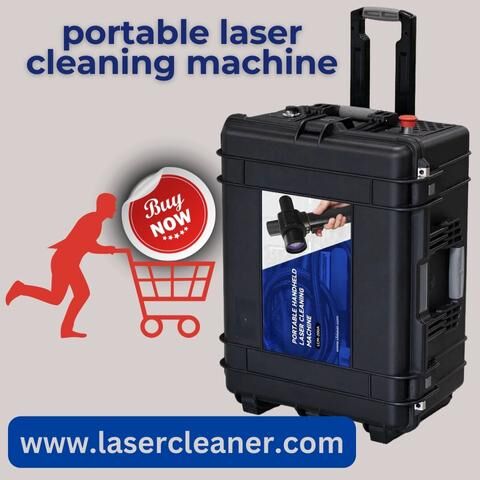
Industrial cleaning is an essential part of manufacturing, metal fabrication, automotive maintenance, and equipment restoration. Businesses need reliable methods to remove rust, paint, oil, and other surface contaminants while maintaining the quality of the underlying material. A portable laser cleaning machine offers a modern approach to surface preparation by using focused laser energy to remove unwanted layers from different materials.
With its compact design and adaptable operation, this equipment is suitable for workshops, factories, maintenance teams, and industrial facilities that require cleaning solutions for different working environments.
What Is a Portable Laser Cleaning Machine?
A portable laser cleaning machine is an industrial device that uses a controlled laser beam to remove contaminants from a material's surface. Depending on the laser settings and the type of contamination, the process can target rust, oxidation, paint, grease, and other unwanted deposits.
Unlike conventional cleaning methods that may involve abrasive materials or chemical products, laser cleaning uses concentrated light energy. This energy interacts with the surface contamination, helping remove unwanted layers without relying on traditional blasting media.
Portable models are designed to make equipment easier to move between workstations, production areas, and maintenance locations. This makes them a practical option for businesses that handle large metal components or need cleaning services in different places.
How Does Laser Cleaning Technology Work?
Laser cleaning works by directing a controlled laser beam onto a contaminated surface. The energy interacts with the unwanted material, causing it to separate from the substrate through processes such as ablation or thermal effects.
The cleaning process depends on several factors, including laser power, pulse duration, scanning speed, material composition, and contamination thickness. Operators can adjust suitable parameters according to the cleaning application and the condition of the surface.
For example, removing light rust from a steel component requires a different approach from stripping thick industrial paint. Testing the settings on a small area helps establish an appropriate cleaning procedure before processing the entire component.
Proper parameter selection is important for achieving consistent results and protecting the underlying material.
Industrial Applications of Portable Laser Cleaning Equipment
1. Rust Removal from Metal Surfaces
Rust can affect metal components used in machinery, construction, transportation, and manufacturing. Laser cleaning can remove corrosion from suitable metal surfaces before painting, coating, welding, or further processing.
2. Paint and Coating Removal
Old paint and certain protective coatings may need to be removed during equipment refurbishment or component preparation. Laser systems can target selected coating layers when the material and operating parameters are suitable.
3. Automotive Maintenance
Automotive workshops work with metal parts, engine components, brackets, and other surfaces that may accumulate grease, oxidation, or paint. Laser cleaning can support selected restoration and maintenance tasks.
4. Mold and Tool Cleaning
Manufacturing molds and industrial tools can collect residues during repeated production cycles. Laser cleaning can help remove deposits from suitable tools, subject to material compatibility and the required surface finish.
5. Industrial Equipment Maintenance
Factories often need to clean machinery parts, metal structures, and production equipment. A portable system can be moved to suitable work areas, helping maintenance teams address cleaning requirements without always transporting components to a separate cleaning station.
Choosing the Right Machine for Your Business
Selecting suitable laser cleaning equipment requires an understanding of the materials, contaminants, and working conditions involved. Businesses should first identify whether their primary applications include rust removal, paint stripping, oil residue removal, or mold maintenance.
Laser power is an important consideration because different cleaning tasks require different energy levels and processing speeds. The laser source and operating mode also influence how the equipment interacts with particular materials.
Portability is another factor. Consider the machine's overall dimensions, weight, cable arrangement, cooling requirements, and the distance between workstations. For frequent on-site work, mobility and convenient setup may be especially important.
Before purchasing a portable laser cleaning machine, buyers should also review the manufacturer's technical specifications, warranty conditions, operator training, spare parts availability, and after-sales support. Requesting a demonstration using representative materials can help determine whether the equipment meets production requirements.
Safe Operation and Maintenance
Laser cleaning equipment requires appropriate safety procedures because direct or reflected laser radiation can cause serious eye and skin injuries. High-power systems may also create fumes, airborne particles, and fire hazards during the removal of coatings or contaminants.
Operators should follow the manufacturer's instructions, use suitable wavelength-rated laser safety eyewear, and establish a controlled work area with appropriate barriers and access restrictions. Local exhaust ventilation or suitable fume extraction should be provided according to the materials being cleaned.
Maintenance procedures may include inspecting cables, checking the cleaning head, keeping optical components clean according to manufacturer guidance, and monitoring the cooling system where applicable. Regular inspections and trained operation help maintain consistent performance and support a safer workplace.
Why Businesses Are Exploring Portable Laser Cleaning
Many manufacturers are exploring laser cleaning as part of their efforts to modernize industrial surface preparation. The technology provides a controlled method for addressing specific cleaning requirements across metalworking, maintenance, restoration, and production environments.
A portable design can be particularly useful for companies that work with large components, manage multiple production areas, or provide on-site industrial services. When the equipment is correctly selected and configured, it can become part of a planned workflow for surface preparation and equipment maintenance.
Businesses should evaluate the technology according to their actual production needs, material compatibility, safety requirements, and operating costs rather than choosing equipment based on specifications alone.
Final Thoughts
A portable laser cleaning machine provides a modern option for industrial surface preparation, helping businesses address rust, paint, oxidation, and other contaminants on suitable materials. Its applications extend across metal fabrication, automotive maintenance, manufacturing, and equipment restoration.
Choosing the right system involves assessing cleaning requirements, laser specifications, portability, safety provisions, and supplier support. With appropriate training and carefully selected operating parameters, laser cleaning technology can support organized, controlled, and efficient industrial maintenance processes.
 English
 Arabic
 French
 Spanish
 Portuguese
 Deutsch
 Turkish
 Dutch
 Italiano
 Russian
 Romaian
 Portuguese (Brazil)
 Greek
 Hrvatski
 Cehoslowakia
