


Planning Your Pilot Training Journey: A Guide for Students
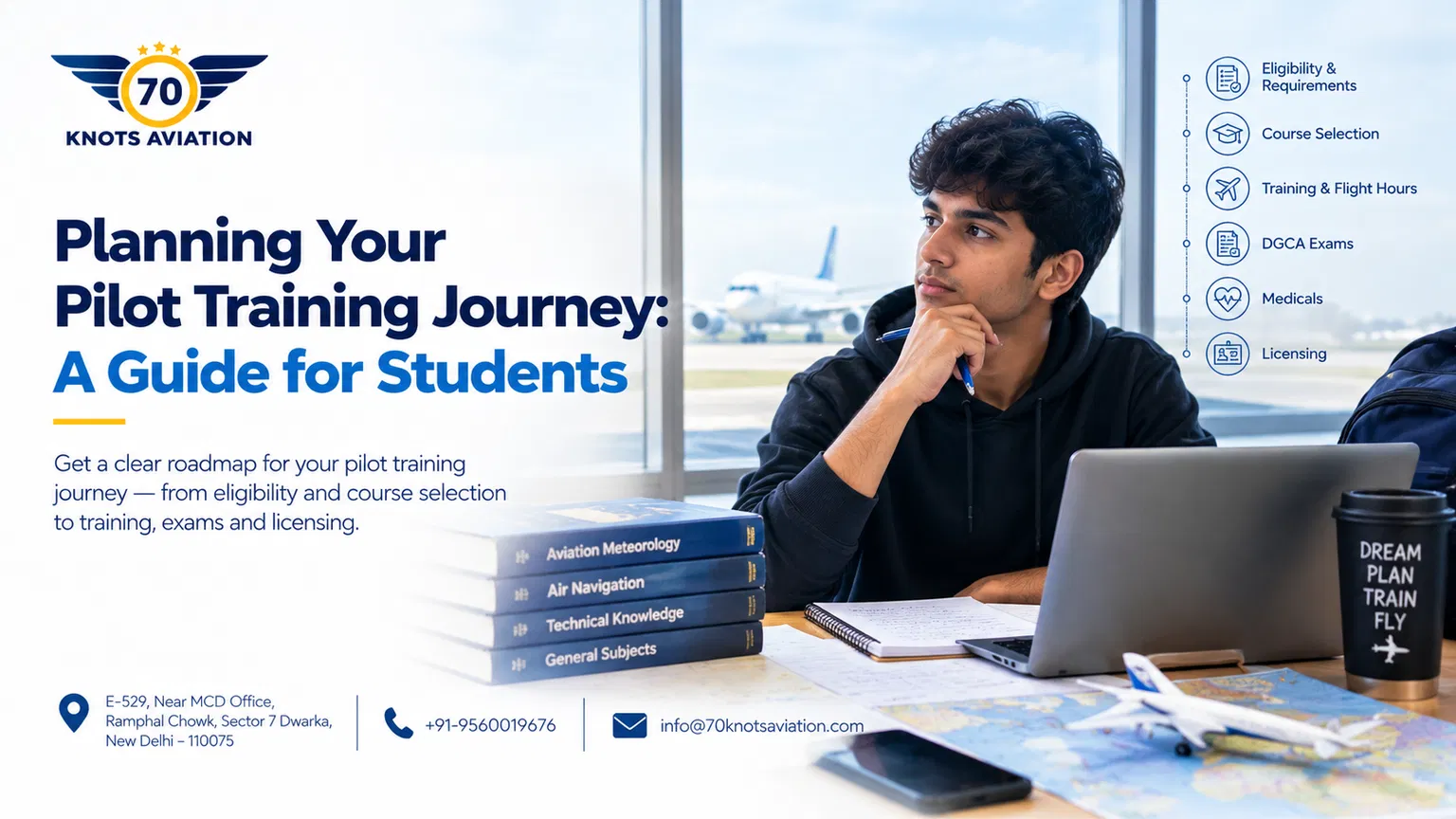
For many students, becoming a pilot begins with a fascination for aircraft and the desire to build a career in aviation. Turning that ambition into a practical plan, however, requires research, preparation, and an understanding of the different stages involved in pilot training.
Before enrolling in a course, students should learn about eligibility requirements, medical assessments, theoretical examinations, and practical flying experience. Understanding these elements early can help them make better decisions about their education, finances, and future career.
Start With Research, Not Assumptions
Students often begin exploring pilot training by comparing institutes and asking about course fees. Although these are important considerations, the first step should be understanding the requirements for the licence they want to pursue.
In India, aspiring professional pilots generally need to satisfy applicable educational and medical criteria, complete the required examinations, and fulfil the relevant flight training and licensing requirements. Students should check the latest information from the Directorate General of Civil Aviation (DGCA) rather than relying entirely on social media posts or outdated articles.
It is also useful to distinguish between ground training and flight training. Ground classes focus on aviation theory, while practical training develops flying skills under the supervision of appropriately qualified instructors at a suitable training organisation.
Why Theoretical Knowledge Matters
Flying involves much more than operating an aircraft. Pilots must understand navigation, weather conditions, aviation regulations, and aircraft systems. These subjects provide the theoretical foundation needed to make informed decisions in aviation.
Students exploring the Best DGCA Ground Classes in New Delhi should look beyond convenience and compare the actual learning experience. Important factors include syllabus coverage, instructor guidance, access to study materials, revision opportunities, and support with difficult topics.
A useful ground training programme should encourage students to understand concepts rather than depend entirely on memorisation. For example, learning Meteorology involves understanding weather patterns and their relevance to flight operations. Air Navigation requires students to work with calculations, directions, and navigational principles. Air Regulations demands careful attention to applicable rules and their interpretation.
Regular revision and practice can help students recognise their weaknesses and improve their understanding over time.
Develop Study Habits Before Examinations
Students do not need to wait until examination dates are announced to develop an effective preparation routine. Small, consistent efforts can make the learning process more manageable.
A practical approach includes:
-
Setting weekly learning targets for each subject.
-
Revising previous topics before moving to new material.
-
Practising calculations and examination-style questions.
-
Maintaining concise notes for important concepts and formulas.
-
Reviewing incorrect answers to understand the reason behind each mistake.
Students should also check official DGCA announcements for current examination requirements, registration procedures, and deadlines. The DGCA Pariksha portal supports examination-related processes, so it is important to understand its purpose and use the official information available there.
Choosing the Right Training Environment
The quality of a student's learning experience depends on several factors, including teaching methods, access to academic support, class schedules, and the suitability of the programme for individual needs.
Students should ask institutes about their course structure, the subjects covered, the availability of revision sessions, and how instructors help learners who find particular topics challenging. It is equally important to request transparent information about fees and any additional expenses.
70Knots Aviation provides ground preparation for aspiring pilots who want to strengthen their theoretical knowledge and prepare for DGCA examinations. Students can enquire about available programmes, understand the learning arrangements, and assess whether the course aligns with their preparation needs.
When comparing institutes, students researching the Best Pilot Training institute in Ramphal Chowk should also confirm whether the services offered focus on ground classes, practical flying, or both. An institute providing theoretical preparation should not automatically be assumed to provide aircraft-based training.
This distinction helps students plan the next stages of their journey without confusing classroom learning with practical flight experience.
Plan for Medical Requirements and Training Expenses
Financial planning is another essential part of becoming a pilot. The total investment may include ground classes, medical assessments, examination-related expenses, practical flight training, accommodation, travel, and other applicable costs.
Students should request a clear breakdown of course fees and identify which services are included. They should also compare practical flight training options separately and check the relevant approvals, training arrangements, aircraft availability, and expected additional expenses.
Medical eligibility should be considered early. Aspiring pilots should verify the applicable DGCA medical requirements and seek guidance from authorised medical examiners. Understanding the relevant Class 2 and Class 1 medical processes can help students plan appropriately before making major financial commitments.
A realistic budget should also allow for changes in training schedules or additional preparation time. Promises of guaranteed examination results, employment, or a fixed completion timeline should be treated cautiously.
Questions Worth Asking Before Joining a Course
Before making a final decision, students should prepare a list of questions for the institute.
Which subjects are included in the programme? Confirm that the course covers the relevant subjects for your intended licence and current examination requirements.
How can students receive academic support? Ask about revision sessions, doubt-clearing arrangements, practice questions, and study materials.
What is the complete fee structure? Understand the tuition fees and identify other expenses that are not included.
What happens after ground training? Ask for general guidance about examination procedures, medical requirements, documentation, and the process of selecting a suitable flight training organisation.
How can I assess my progress? Find out whether the programme includes practice assessments or other ways to identify areas that need improvement.
These questions encourage students to compare programmes based on meaningful factors instead of relying only on advertisements.
Make Your Aviation Goals More Practical
Aviation is a demanding field that rewards preparation, discipline, and continuous learning. Students who research the requirements carefully and maintain a consistent study routine can approach the training process with a clearer understanding of the work involved.
70Knots Aviation can be considered by students exploring ground preparation for DGCA examinations. Before enrolling, learners should review the course details, confirm the applicable regulatory requirements, and plan separately for the practical flying experience required for their intended licence.
Becoming a pilot is a long-term commitment, and every student's journey can differ. The best starting point is to gather reliable information, ask the right questions, assess personal readiness, and build a training plan around realistic academic and financial goals.

 English
 Arabic
 French
 Spanish
 Portuguese
 Deutsch
 Turkish
 Dutch
Dutch
 Italiano
 Romaian
 Portuguese (Brazil)
 Greek
Greek
 Hrvatski
 Cehoslowakia
