


What to Look for in Construction Estimating Services in USA
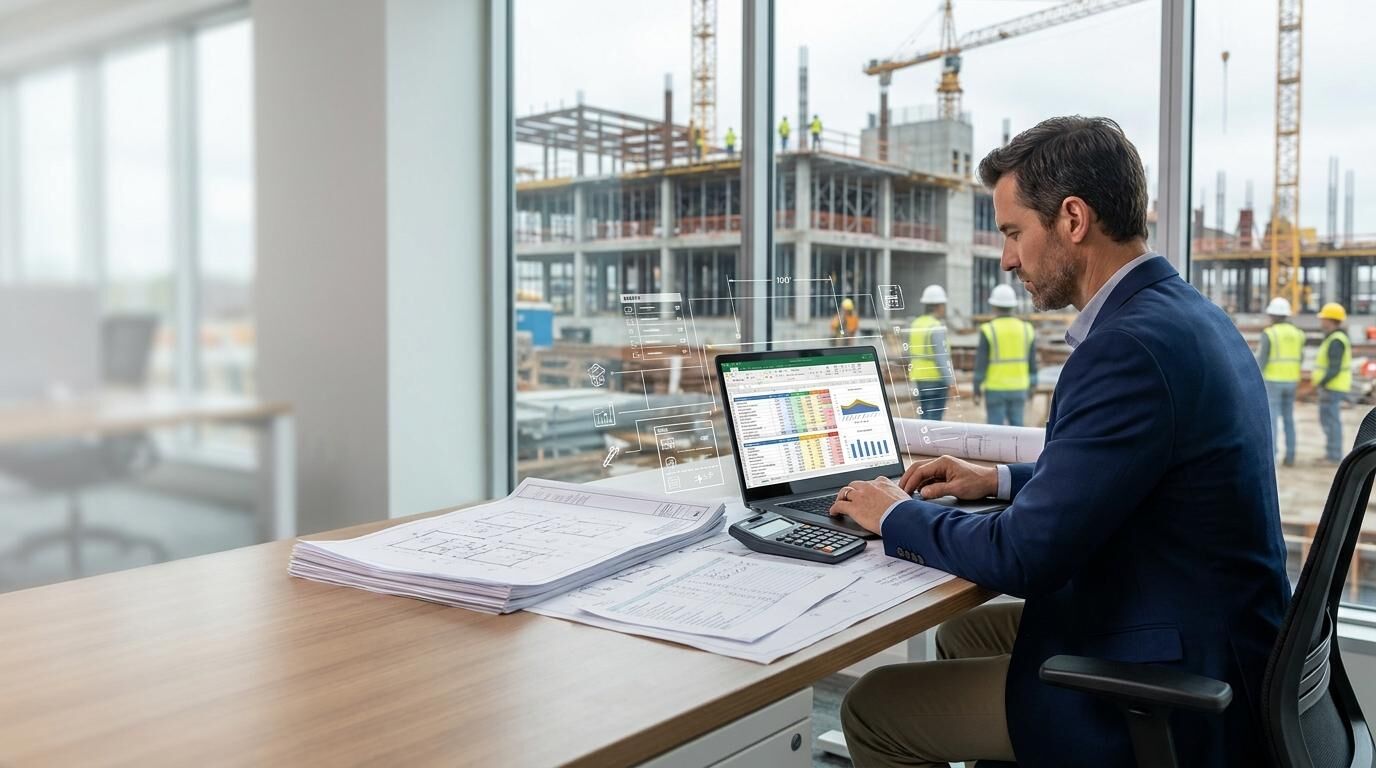
Choosing an estimating provider is an important decision for a contractor. A weak estimate can leave quantities incomplete, labor costs understated, or important scope items outside the bid. A well-prepared estimate gives the contractor a clearer basis for pricing the work and deciding whether a project is worth pursuing.
That is why construction estimating services in USA should be evaluated on more than turnaround time or price.
The estimating team needs to understand construction documents, quantities, labor, materials, project conditions, and the way those pieces affect the final bid.
Whether you are a general contractor, subcontractor, builder, developer, or construction manager, the right construction estimator services should make your bidding process more dependable rather than simply give you another spreadsheet of numbers.
Start With the Scope, Not the Price
One of the first things to evaluate is how the estimator handles project scope.
Before pricing begins, the estimating team should understand:
-
What work is included
-
What work is excluded
-
Which trades are being estimated
-
Which drawings apply
-
What specifications govern the work
-
Whether alternates are required
-
Whether addenda have been issued
-
What the bid deadline requires
This matters because an estimate can have accurate calculations and still be wrong if the scope was misunderstood.
For example, a mechanical estimate may appear complete while excluding controls, insulation, equipment connections, or testing because those responsibilities were not identified during the initial review.
A good estimating process starts by defining what needs to be priced.
Check How the Drawings Are Reviewed
Construction documents contain more information than dimensions and quantities.
An estimator may need to compare:
-
Architectural plans
-
Structural drawings
-
MEP drawings
-
Details
-
Sections
-
Elevations
-
Schedules
-
Specifications
-
General notes
The drawings also need to be checked for revisions.
A newer architectural plan may change a wall location. That change could affect drywall, framing, flooring, electrical devices, doors, finishes, and other trades.
This is why document review should happen before the takeoff is treated as complete.
Quantity Accuracy Is Only One Part of the Estimate
A detailed takeoff is important, but quantities alone do not create a reliable construction estimate.
The estimator also needs to determine how those quantities will be priced.
A basic cost build-up can involve:
Quantity × Unit Cost = Direct Cost
But construction pricing can go further.
Labor productivity, equipment, waste, delivery, subcontractor pricing, project conditions, and other costs may also need to be considered.
For instance, two projects could require the same quantity of concrete but have different installation costs because of access, forming requirements, reinforcement, placement conditions, or project logistics.
A professional estimator should therefore look beyond the quantity itself.
Ask How Labor Costs Are Developed
Labor can significantly influence the final bid.
A contractor should know whether the estimate considers:
-
Labor hours
-
Crew composition
-
Productivity
-
Local labor conditions
-
Installation difficulty
-
Work restrictions
-
Project schedule
-
Overtime requirements where applicable
Using a generic labor rate for every project can produce misleading results.
The same trade can have very different labor requirements depending on the building, location, installation method, and site conditions.
The estimator should explain the assumptions behind the labor portion of the estimate.
Local Pricing Matters in USA Construction
A construction estimate should reflect the market where the project will actually be built.
Labor, materials, equipment, transportation, subcontractor competition, and site conditions can vary between regions.
A project in New York may not carry the same cost structure as a similar project in Texas.
This is particularly important for contractors bidding outside their usual market.
The estimator should know the project's:
-
City
-
State
-
ZIP code
-
Construction type
-
Site conditions
-
Expected procurement conditions
Location does not determine every cost, but ignoring it can make an otherwise detailed estimate less useful.
Look for a Clear Estimating Method
A professional estimate should have a repeatable process behind it.
That does not mean every estimator must use exactly the same software or estimating format.
The important question is whether the methodology makes sense.
The Whole Building Design Guide explains that construction estimates can use different methods depending on the amount of information available, including project comparison, area and volume, assembly and system, and unit-price approaches. It also notes that the level of estimating detail should increase as the project becomes more defined.
This is an important distinction.
An early conceptual estimate should not be judged by exactly the same standard as a detailed bid estimate prepared from complete construction documents.
The estimating method should match the project stage.
Technology Helps, But It Does Not Replace Judgment
An online construction estimator can review plans, perform digital takeoffs, organize quantities, and prepare reports remotely.
Modern estimating software can make measurement and cost organization faster.
But software does not automatically understand every construction detail.
An estimator still needs to recognize:
-
Scope relationships
-
Drawing conflicts
-
Specification requirements
-
Unusual assemblies
-
Trade responsibilities
-
Missing information
-
Constructability concerns
The Whole Building Design Guide specifically cautions that published cost data and estimating software should be adjusted for project-specific conditions rather than applied blindly.
That is why technology should support professional judgment rather than replace it.
Check Whether the Estimate Is Easy to Audit
A contractor should be able to understand where the final number came from.
The estimate should make it reasonably easy to identify:
-
Quantities
-
Units
-
Unit costs
-
Labor
-
Materials
-
Equipment
-
Subcontractor costs
-
Assumptions
-
Exclusions
-
Alternates
This becomes especially useful when the contractor wants to revise the bid.
If the owner changes the flooring specification, for example, the estimator should be able to identify the affected quantity and cost without rebuilding the entire estimate.
A transparent estimate is easier to maintain.
Quality Control Should Be Part of the Process
A second review can catch errors that the original estimator may overlook.
Quality control can examine:
-
Drawing revisions
-
Quantity calculations
-
Scope coverage
-
Unit costs
-
Labor assumptions
-
Mathematical accuracy
-
Missing items
-
Duplicate quantities
-
Exclusions
-
Final totals
The U.S. Army's current construction cost estimating guidance similarly emphasizes understanding the scope, reviewing drawings and specifications, accurately quantifying work, and reviewing quantities and prices as part of a reliable estimating process.
For larger projects, an independent review becomes even more valuable because a small omission can have a substantial effect on the final bid.
Do Not Judge an Estimator Only by Turnaround
Fast delivery is useful when a bid deadline is approaching.
But speed should not be the only selection criterion.
Ask:
How quickly can the estimate be completed?
Then ask:
What is included in that turnaround?
A rushed estimate that misses several scope items may cost more than a slower but properly reviewed estimate.
The better approach is to find an estimating provider that can balance:
-
Accuracy
-
Scope coverage
-
Turnaround
-
Communication
-
Documentation
-
Revision support
The right balance depends on the project's size and complexity.
Review How Revisions Are Handled
Construction documents change.
Addenda are issued.
Owners revise finishes.
Architects update plans.
Contractors discover new information.
An estimating provider should have a clear process for handling those changes.
A useful revision process should identify:
-
What changed
-
Which drawings changed
-
Which quantities were affected
-
Which costs changed
-
Whether the final bid needs adjustment
This makes the estimate more useful after the first delivery.
Communication Matters More Than It Seems
Estimating is not always a completely mechanical process.
Questions can arise about:
-
Scope
-
Missing drawings
-
Specifications
-
Alternates
-
Existing conditions
-
Trade responsibilities
-
Pricing assumptions
The estimator needs to communicate those questions clearly.
A contractor should not have to guess why a particular allowance was used or why an item was excluded.
Good communication creates a stronger connection between the estimate and the contractor's actual bid strategy.
Consider the Project Type and Trade Experience
Not every estimator is equally suited to every project.
A residential remodel may have very different estimating requirements from:
-
A hospital
-
A warehouse
-
A multifamily building
-
An office development
-
An industrial facility
-
A public project
Trade experience also matters.
Electrical, mechanical, plumbing, concrete, roofing, structural, and interior scopes each have different estimating considerations.
When evaluating construction estimation services, ask whether the estimating team regularly works with the type of project and scope you are bidding.
When Outsourcing Makes Sense
Some contractors have experienced internal estimators but still face periods when bid volume exceeds their available capacity.
Others may not have enough work to justify maintaining a large estimating department.
In either situation, outside support can be useful.
Outsource estimating services can give contractors additional estimating capacity without requiring them to hire another full-time estimator.
This can help when:
-
Several bids arrive simultaneously
-
An urgent bid deadline is approaching
-
Internal staff is overloaded
-
A specialized estimate is required
-
A contractor is expanding into another market
The contractor can maintain control over the final bid while using outside estimating support for the detailed work.
Questions to Ask Before Hiring an Estimating Provider
Before sending project documents, ask a few practical questions.
What Project Types Do You Estimate?
Make sure the provider has relevant experience with your type of construction.
What Does the Estimate Include?
Clarify whether quantities, labor, materials, equipment, subcontractors, and other required costs are covered.
How Are Prices Determined?
Ask whether pricing is adjusted for project location and current market conditions.
How Are Revisions Handled?
Find out what happens when drawings or scope change.
Who Reviews the Estimate?
A quality-control process can reduce avoidable mistakes.
What Formats Can You Provide?
Make sure the final estimate can be used with your existing bidding and project-management workflow.
How Is Confidential Information Protected?
Construction drawings and bid information can contain commercially sensitive information. Ask how project documents are handled and protected.
What a Strong Estimate Should Help You Do
The final estimate should support an actual construction decision.
It should help you:
-
Build a competitive bid
-
Understand your costs
-
Identify major cost drivers
-
Compare subcontractor pricing
-
Review scope
-
Evaluate alternatives
-
Protect expected margins
-
Update pricing when documents change
It should not simply produce a large total at the bottom of a page.
A useful estimate explains the number.
Why Independent Estimating Can Add Value
An independent estimate can provide another perspective when a project is complicated or financially important.
The estimator can review the project without being responsible for the design itself and provide an independent assessment of quantities and costs.
The WBDG notes that professional estimators may work directly for owners, as part of design teams, or for construction organizations, and emphasizes the value of involving estimating early and updating estimates as project information develops.
For contractors, an outside estimate can also provide a useful benchmark before the final bid is submitted.
Choosing the Right Construction Estimating Partner
The best provider is not necessarily the one with the lowest fee or the shortest advertised turnaround.
Look for a team that can demonstrate:
-
Construction knowledge
-
Relevant project experience
-
Detailed document review
-
Clear quantity takeoffs
-
Logical labor assumptions
-
Location-aware pricing
-
Organized reporting
-
Quality control
-
Clear communication
-
Confidential document handling
-
Practical revision support
The estimating process should make your work easier, not create another layer of uncertainty.
How All State Estimation Supports Contractors
All State Estimation provides construction estimating support across all 50 states for contractors, subcontractors, builders, developers, architects, and other construction professionals. Its published services include quantity takeoffs, cost estimating, budget estimating, BIM estimating, commercial estimating, and outsourced estimating support.
The team uses project location, scope, labor conditions, construction requirements, and other project-specific factors when developing estimates. Its process also includes document review and quality review before delivery.
For contractors looking for additional estimating capacity, the company also offers construction estimating services in USA with remote project submission and bid-ready estimating support.
Frequently Asked Questions
What should I look for in construction estimating services in USA?
Look for relevant construction experience, detailed scope review, accurate quantity takeoffs, location-aware pricing, clear assumptions, quality control, good communication, and practical turnaround.
Is an online construction estimator reliable?
An online estimator can be reliable when the process includes thorough document review, accurate takeoffs, appropriate pricing, quality control, and clear communication. Working remotely does not inherently make an estimate less accurate.
Why is project location important?
Labor, materials, equipment, transportation, subcontractor availability, and site conditions can vary by market. The project location should therefore be considered when developing construction costs.
Should an estimate include labor and materials?
For a full construction estimate, labor and material costs are normally important components. Depending on the project, equipment, subcontractor costs, indirect costs, and other requirements may also need to be included.
Can estimating services work with revised drawings?
Yes. A good estimating workflow should allow revised drawings, addenda, and scope changes to be reviewed and reflected in the estimate.
When should contractors outsource estimating?
Outsourcing can make sense when bid volume increases, internal estimators are overloaded, urgent deadlines arise, or specialized estimating capacity is needed.
Final Thoughts
A construction estimate is only useful when the contractor can trust what is behind the final number.
That trust comes from a clear process.
The drawings need to be reviewed carefully. The scope needs to be defined. Quantities need to be measured accurately. Labor and material costs need appropriate assumptions. Project location needs to be considered. Changes need to be tracked. And the completed estimate needs to be reviewed before it becomes part of a bid.
When evaluating construction estimating services in USA, look beyond promises of speed or low pricing.
Look at the estimating methodology, construction experience, quality-control process, communication, and ability to explain how the final cost was developed.
For contractors, the real value of professional estimating is not simply receiving a number.
It is having a cost model that can support a confident bidding decision.
A well-prepared estimate gives you something more valuable than a total: it gives you a clear understanding of what that total represents.
 English
 Arabic
 French
 Spanish
 Portuguese
 Deutsch
 Turkish
 Dutch
Dutch
 Italiano
 Russian
 Romaian
 Portuguese (Brazil)
 Greek
Greek
 Hrvatski
 Cehoslowakia