


Understanding COSHH and Protecting Workers from Hazardous Substances
Understanding COSHH and Protecting Workers from Hazardous Substances
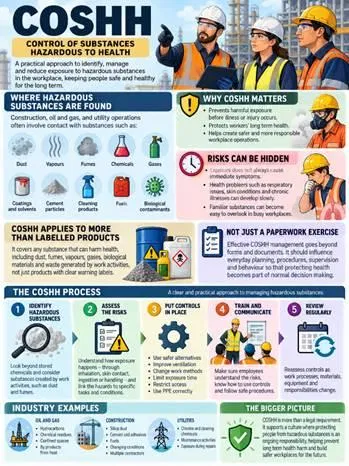
Construction sites, oil and gas facilities, and utility operations regularly operate where hazardous substances are part of everyday work. Employees can encounter dust, vapours, fumes, chemicals, gases, and other materials that may damage health through continued exposure. Because these hazards are encountered so often, workers can begin to regard them as simply another part of the job. Once that happens, serious risks may receive less attention, while organisations may lack a dependable approach for controlling exposure. COSHH offers a structured way to recognise these dangers and reduce harmful contact.
COSHH, or Control of Substances Hazardous to Health, is built around a straightforward idea: identify substances that may cause harm and act early enough to prevent exposure from becoming a health problem. Rather than responding after illness or an incident, COSHH emphasises prevention and makes health protection part of workplace management.
COSHH is often associated only with substances carrying obvious hazard labels, but its scope is broader. Silica dust, welding fumes, wood dust, solvent vapours, cement particles, industrial gases, biological contaminants, and waste arising from work processes can all create health concerns. Any substance capable of causing harm, especially where exposure occurs repeatedly or for long periods, may need to be addressed through COSHH.
In fast moving workplaces filled with equipment, demanding jobs, and complex activities, hazardous substances can become almost invisible in the daily routine. Fuels, coatings, solvents, and cleaning products may be viewed as materials needed to complete a task rather than potential health hazards. Familiarity can reduce vigilance, making workers and organisations more likely to overlook or underestimate these risks.
Harmful exposure does not always create an obvious warning immediately. Accidents may result in visible injuries, whereas health conditions caused by hazardous substances can emerge slowly. Breathing difficulties, skin disorders, and chronic illness may take months or years to become noticeable. COSHH is important because it focuses attention on preventing exposure before gradual harm becomes a permanent health consequence.
A common error is to reduce COSHH to paperwork, forms, or a compliance requirement. Effective COSHH management involves more than recording information. It should shape routine planning, supervision, working methods, procedures, and employee behaviour, ensuring that protection of health remains part of everyday decisions instead of an administrative activity completed occasionally.
The COSHH process may seem complicated, but its core stages are practical. The starting point is identifying hazardous substances. This involves looking beyond chemicals stored on site and recognising substances generated by work activities, such as dust created during cutting or fumes released during heating. Even materials that seem low risk can become harmful when exposure is repeated over long periods.
After hazards are identified, suitable risk assessments should examine how exposure occurs in real working conditions. Workers can inhale airborne particles, absorb substances through the skin, accidentally swallow contaminants, or contact harmful materials during handling. A meaningful assessment should connect the hazard with the task, equipment, environment, and circumstances in which exposure could happen, rather than simply listing substances.
Once the risks are clear, organisations can select appropriate control measures. These may include substituting hazardous substances with safer alternatives, improving ventilation, changing work practices, reducing time spent in higher exposure areas, restricting access, and ensuring personal protective equipment is selected and used correctly. PPE remains valuable, but it should not become the main defence when stronger controls can reduce the hazard at its source.
Training and communication are essential parts of effective control. Employees should understand the hazards associated with substances they encounter and know how the chosen safeguards should work. They need awareness to identify risks, read safety information, and follow procedures. Without that understanding, even carefully designed controls may fail to provide the intended protection.
COSHH is not something that can be completed once and forgotten. Workplace conditions change as organisations add new materials, processes, equipment, tasks, and responsibilities. Existing controls should be reviewed and reassessed regularly to make sure they remain effective and match working practices.
The nature of exposure also differs across sectors. Oil and gas activities may involve hydrocarbons, chemical residues, confined spaces, and substances created through heating or processing. Construction environments can change quickly and may involve multiple contractors working around silica dust, adhesives, cement, and fuels. Utility maintenance can present its own exposure concerns, including contact with chemicals such as chlorine and powerful cleaning agents.
At its core, COSHH is more than a regulatory obligation. It helps create a workplace culture where protecting people from hazardous exposure is treated as a continuing responsibility. When organisations identify hazards early, assess exposure properly, introduce suitable controls, and revisit those measures regularly, they can reduce the potential for long term health damage and create safer working conditions.
Where hazardous substances are unavoidable, COSHH remains an important safeguard. Its purpose goes beyond meeting compliance expectations: it supports workers’ long term health and encourages organisations to make safer, more thoughtful decisions as part of everyday operations for the future.
Book a free demo @ https://toolkitx.com/blogsdetails.aspx?title=COSHH-explained:-a-practical-guide-for-oil-and-gas,-construction-and-utilities
 English
 Arabic
 French
 Spanish
 Portuguese
 Deutsch
 Turkish
 Dutch
Dutch
 Italiano
 Romaian
 Portuguese (Brazil)
 Greek
Greek
 Hrvatski
 Cehoslowakia