


China Laser Welding Machine: Modern Solutions for Precision Metal Fabrication
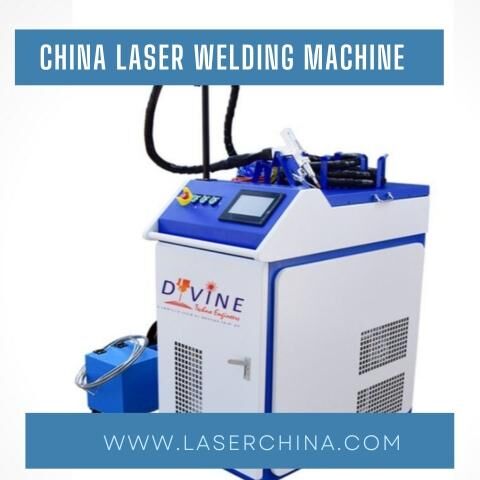
The demand for reliable and precise metal joining equipment has grown rapidly across manufacturing industries. From automotive components and machinery to stainless steel products and customized metal fabrication, manufacturers need welding solutions that can deliver consistent results while supporting efficient production. A China Laser Welding Machine has become an important option for businesses looking to modernize their welding operations and handle a wide range of industrial applications.
Laser welding uses a concentrated laser beam to create a controlled heat source at the welding area. The process can produce clean and accurate welds while allowing manufacturers to work with different metals and material thicknesses. Chinese manufacturers have also expanded their laser equipment production, offering machines designed for workshops, factories, fabrication businesses, and large-scale industrial production.
Understanding Laser Welding Technology
Laser welding is a joining process in which a focused laser beam generates heat on the surface of two materials. When the material reaches the required temperature, it melts locally and forms a weld as the molten area cools. Because the laser beam can be precisely controlled, manufacturers can work on specific areas without unnecessarily heating the surrounding material.
The technology is commonly used with materials such as stainless steel, carbon steel, aluminum, galvanized steel, copper, and various metal alloys. The appropriate laser source, power level, welding head, and process settings depend on the material and application.
A China Laser Welding Machine can be configured for different production requirements. Some machines are designed for handheld operation, while others can be integrated into automated production lines or customized welding systems.
Why China Has Become a Major Laser Equipment Market
China has developed a large manufacturing ecosystem for industrial laser equipment. The country produces laser sources, welding heads, control systems, cooling equipment, automation components, and complete welding machines. This manufacturing network allows equipment suppliers to develop systems for different industries and production requirements.
For international buyers, Chinese laser welding equipment is available in various configurations and power ranges. Buyers can select machines according to their materials, welding applications, production volume, and workspace.
Manufacturers also continue to develop equipment for specialized applications. This includes handheld laser welders, automated welding systems, robotic laser welding solutions, and machines designed for particular industrial materials.
Applications Across Metalworking Industries
Laser welding is used in many areas of modern manufacturing. In stainless steel fabrication, it can be used for cabinets, frames, kitchen equipment, architectural components, and industrial structures. The controlled welding process is particularly useful when appearance and dimensional accuracy are important.
In automotive manufacturing, laser welding can be applied to components, body parts, brackets, battery-related components, and other metal assemblies. The technology is also relevant to bicycle manufacturing, electronics, hardware production, agricultural machinery, and general metal fabrication.
A China Laser Welding Machine can also support customized manufacturing businesses that handle different orders throughout the day. With appropriate settings and tooling, operators can switch between different materials and components according to production requirements.
Handheld Laser Welding for Flexible Production
Handheld laser welding machines have attracted considerable attention from small and medium-sized workshops. Instead of relying entirely on fixed welding stations, operators can move the welding head around the workpiece and access different areas more easily.
This approach is useful for fabrication projects involving frames, metal boxes, doors, furniture components, pipes, machinery parts, and customized structures. The operator can guide the laser welding head along the joint while controlling the welding process through the machine interface.
A handheld system can also be suitable for businesses that manufacture different products rather than repeating exactly the same component throughout the day. The flexibility of the equipment allows manufacturers to adapt their workflow to changing orders.
Selecting the Appropriate Laser Power
Laser power is an important consideration when purchasing a welding machine. Different materials and thicknesses require different amounts of energy. Common industrial configurations include 1000W, 1500W, 2000W, and higher-power systems.
A 1000W machine may be appropriate for certain thinner materials and lighter fabrication work, while 1500W or 2000W systems can provide greater capacity for a wider range of metal applications. Heavier industrial work may require equipment with even higher power.
However, power should not be considered separately from material type, joint design, welding speed, laser source, and production requirements. Selecting a machine based on the actual application helps ensure that the equipment is properly matched to the intended workload.
Working With Stainless Steel and Other Metals
Stainless steel is one of the commonly processed materials in laser welding applications. It is widely used in food equipment, medical products, architectural structures, kitchen equipment, and industrial fabrication.
Laser welding can also be used with carbon steel and aluminum. Aluminum requires careful process control because of its reflective properties and thermal characteristics. Copper and other highly reflective metals may require equipment and settings specifically suited to the application.
Before purchasing a machine, manufacturers should identify the materials they work with most frequently. Sample testing can help determine suitable power, speed, focus position, shielding gas, and other welding parameters.
Importance of Laser Source Selection
The laser source is an important part of a welding system because it generates the laser energy used during the process. Different laser source manufacturers offer systems with different specifications, service arrangements, and operating characteristics.
When purchasing a China Laser Welding Machine, buyers should examine the laser source specifications and understand what type of source is included with the equipment. The availability of technical support and replacement components can also be important for long-term operation.
Working with an established equipment supplier can make it easier to obtain technical documentation, maintenance assistance, and replacement parts when required.
Machine Configuration and Production Requirements
Every workshop has different production requirements. Some businesses may need a compact handheld system, while larger manufacturers may require automated equipment with positioning systems, fixtures, or robotic integration.
The workspace should also be considered before purchasing. The machine must have suitable electrical power, ventilation, cooling arrangements, and adequate space for the operator and workpiece.
Safety and Operator Training
Laser welding requires proper safety procedures because industrial laser systems produce concentrated energy. Operators should receive suitable training before using the equipment and should follow the manufacturer's safety instructions.
The working area should be organized to prevent unauthorized exposure to the laser beam. Appropriate protective equipment, ventilation, shielding arrangements, and workplace procedures should be established according to the machine and application.
Training should cover machine operation, parameter adjustment, workpiece preparation, routine inspection, and emergency procedures. Proper training helps operators work confidently while maintaining a safe production environment.
Maintenance and Long-Term Operation
Regular maintenance is an important part of operating any industrial laser welding machine. Operators should keep the work area clean and inspect components according to the manufacturer's maintenance schedule.
Consumable parts such as protective lenses, nozzles, and other welding-head components may require periodic inspection or replacement. Cooling systems should also be monitored to maintain stable operating conditions.
Choosing a China Laser Welding Machine Supplier
Selecting the right supplier is an important step when purchasing laser welding equipment. Buyers should review the manufacturer's experience, machine specifications, technical documentation, warranty terms, spare-parts availability, and after-sales support.
It is also useful to discuss the actual application with the supplier before placing an order. Providing information about material types, thicknesses, welding requirements, and expected production volume allows the manufacturer to recommend an appropriate configuration.
For international buyers, communication, shipping arrangements, installation guidance, and remote technical support should also be considered. Requesting welding samples or demonstrations can provide a better understanding of how the machine performs with the buyer's specific materials.
The Future of Laser Welding
Laser welding continues to develop alongside automation and advanced manufacturing. More manufacturers are looking for equipment that can improve production consistency while supporting flexible manufacturing requirements.
China's large industrial laser sector is likely to remain an important source of welding equipment for international markets. As technology develops, laser welding machines can become increasingly integrated with automated systems, digital controls, robotic platforms, and specialized production equipment.
Final Thoughts
A China Laser Welding Machine can provide a modern approach to metal fabrication for workshops and industrial manufacturers. From stainless steel products and automotive components to customized metal structures, laser welding technology can be adapted to many manufacturing applications.

 English
 Arabic
 French
 Spanish
 Deutsch
 Turkish
 Dutch
Dutch
 Italiano
 Russian
 Romaian
 Portuguese (Brazil)
 Greek
Greek
 Hrvatski
 Cehoslowakia