


SOC Service Providers in India: Costly Security Gaps for BFSI Explained
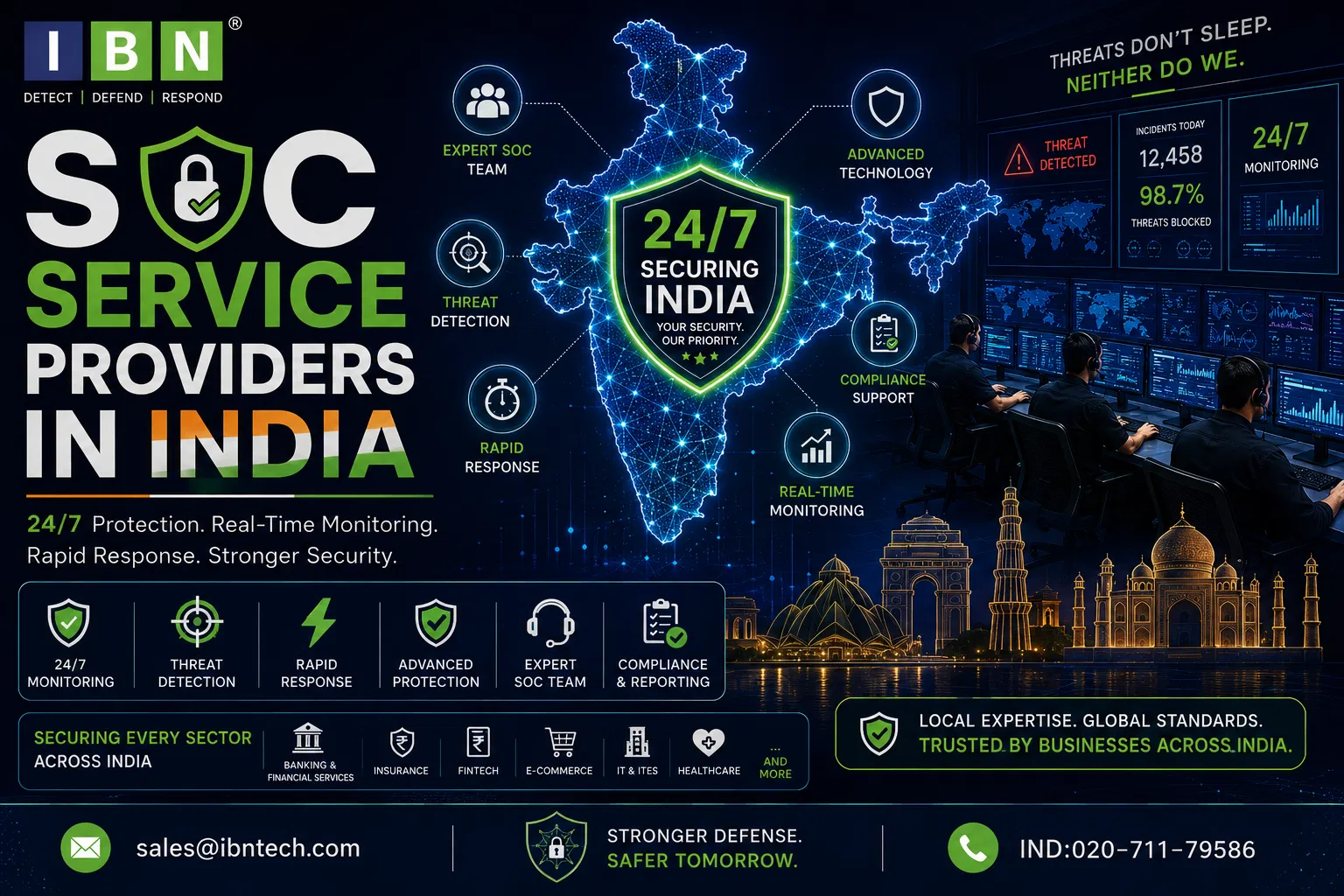
Why BFSI Firms Are Reassessing SOC Service Providers in India
Financial institutions operate in an environment where digital access, customer information, internal applications, payment-related systems, and business-critical infrastructure require strong security controls. Indian BFSI organizations also need to maintain operational resilience while responding to an evolving threat landscape.
For these organizations, soc service providers in india can offer security operations capabilities that help monitor technology environments, investigate suspicious events, and support incident response processes. A managed SOC can complement internal security teams without requiring every monitoring and analytical function to be developed internally.
For BFSI leaders, the decision is less about purchasing another security product and more about establishing a dependable operating process for identifying and handling security events.
What do SOC service providers in India do for BFSI organizations?
SOC service providers in India provide managed security operations that can include continuous monitoring, threat detection, alert analysis, investigation, incident response support, threat hunting, vulnerability management, and security reporting.
For BFSI organizations, these capabilities can help create visibility across relevant security data sources. The actual monitoring scope depends on the organization's architecture, technology stack, security requirements, and service agreement.
A SOC does not remove the need for internal security governance. Instead, it can provide operational support within a broader cybersecurity program.
Why is a SOC as a service provider relevant to financial institutions?
A soc as a service provider gives a financial organization access to outsourced security operations capabilities without requiring the organization to build an entire SOC function internally.
This model can be useful when an institution has security personnel but needs additional monitoring capacity, specialized expertise, or continuous operational coverage.
For a BFSI organization, the service should fit into existing governance and incident response arrangements rather than operating as an isolated security function.
Why does continuous monitoring matter in BFSI?
Financial services environments can generate security events across authentication systems, endpoints, applications, network infrastructure, servers, cloud environments, and other technology assets.
Reviewing these events manually at intervals can leave security teams with limited visibility between reviews.
Continuous monitoring creates an ongoing process for identifying activity that may require attention.
An alert does not automatically mean that an attack has occurred. Analysts need to examine context, investigate relevant activity, and determine whether escalation is appropriate.
What makes BFSI security monitoring particularly important?
BFSI organizations handle systems and information that are central to financial operations and customer services.
A suspicious account event, unexpected privilege change, unusual endpoint behavior, or potentially malicious network activity may require timely investigation.
Security operations can help establish a defined process for examining these signals.
The effectiveness of that process depends on monitoring coverage, available security data, detection capabilities, analyst expertise, and clear escalation responsibilities.
Why can a traditional security model create operational pressure?
BFSI organizations often already maintain multiple cybersecurity controls.
Firewalls, endpoint protection, identity controls, vulnerability management, access management, and other technologies each address specific security requirements.
However, individual controls do not automatically create a unified security monitoring operation.
Security teams must still determine whether alerts are related, whether activity is expected, and whether an incident requires action.
When the same internal personnel are responsible for infrastructure, security governance, investigations, compliance activities, and business support, maintaining continuous monitoring can become difficult.
A managed SOC can provide additional operational capacity while allowing internal teams to retain appropriate ownership.
How should BFSI organizations assess SOC providers?
Financial institutions should start by identifying their most important technology and security monitoring requirements.
The evaluation should consider which systems can be integrated, what events will be monitored, how alerts are investigated, how incidents are escalated, and what reporting is available.
BFSI organizations should also understand the provider's responsibilities and their own responsibilities.
For example, a provider may investigate and escalate a potential incident, while the financial institution retains responsibility for decisions involving account access, system changes, customer communication, or business continuity.
Clear ownership reduces confusion during high-pressure security events.
Which SOC capabilities should BFSI leaders examine?
|
Area |
Evaluation focus |
|
Monitoring coverage |
Visibility across relevant BFSI technology environments |
|
Threat detection |
Identification of potentially suspicious activity |
|
Alert analysis |
Investigation and prioritization of security events |
|
Incident response |
Defined escalation and response procedures |
|
Threat hunting |
Proactive investigation capabilities |
|
Vulnerability management |
Identification and management of security weaknesses |
|
Compliance reporting |
Security information useful for governance activities |
|
Dashboards |
Clear operational visibility for stakeholders |
|
Scalability |
Ability to support changing technology environments |
This framework gives BFSI decision-makers a practical basis for discussing service requirements.
What does a SOC investigation involve?
Security investigations typically begin when a monitoring or detection system identifies activity that may require attention.
Analysts review the event and available context to determine its significance.
A single event may be benign. Multiple related events may indicate a pattern that deserves additional investigation.
The SOC can then classify the event according to the organization's agreed procedures.
Where escalation is necessary, the relevant internal stakeholders are notified through the defined communication process.
This approach avoids treating every security alert as an emergency while ensuring potentially significant activity receives appropriate attention.
Can managed SOC operations complement a BFSI security team?
Yes. A managed SOC can support an internal team by taking responsibility for defined monitoring and investigation activities.
Internal security personnel can continue managing security strategy, governance, access decisions, risk management, remediation, and business requirements.
The external SOC can provide operational monitoring and analysis according to the agreed scope.
This shared model can be particularly useful when a BFSI organization wants to expand security operations without completely restructuring its existing security function.
How should BFSI teams prepare before onboarding?
A financial institution should establish a clear understanding of its technology environment before monitoring begins.
Important systems and security sources should be identified. Existing security technologies should be reviewed for potential integration. Monitoring priorities and incident severity categories should also be documented.
BFSI SOC readiness checklist
- Identify critical financial applications.
- Map important infrastructure and endpoints.
- Document relevant security event sources.
- Define monitoring priorities.
- Establish alert severity categories.
- Identify incident escalation contacts.
- Clarify internal response responsibilities.
- Review security technology integrations.
- Establish reporting expectations.
- Reassess monitoring when systems change.
What compliance considerations affect BFSI SOC operations?
BFSI organizations operate within regulatory and governance environments that can include requirements for information security, incident management, access control, data protection, logging, and operational resilience.
Security monitoring can support these broader activities by providing visibility into relevant events and supporting investigation and reporting processes.
However, an SOC does not automatically make an organization compliant.
Each institution must determine which regulatory, contractual, and internal requirements apply to its operations and maintain the necessary governance framework.
SOC reporting can support that framework by giving security and management teams documented visibility into monitoring and security events.
How can BFSI organizations evaluate SOC performance?
Security leaders can review several areas rather than relying solely on alert volume.
Monitoring coverage indicates whether important technology sources remain visible. Investigation quality shows whether relevant alerts receive meaningful analysis. Escalation performance indicates whether significant events are communicated according to established procedures.
Reporting quality also matters.
Senior stakeholders need information that helps them understand significant security activity without requiring them to interpret raw technical data.
Periodic service reviews can identify monitoring gaps, recurring alert patterns, technology changes, and opportunities to improve the operating model.
Frequently Asked Questions
What is a SOC as a service provider?
A SOC as a service provider delivers outsourced security operations capabilities such as monitoring, threat detection, alert investigation, and incident response support. The specific scope depends on the service agreement.
Why do BFSI organizations use managed SOC services?
BFSI organizations may use managed SOC services to obtain continuous security monitoring and specialist operational support. The model can supplement internal security resources while maintaining internal ownership of governance and business decisions.
Can a SOC support regulatory security requirements?
SOC operations can support security monitoring, investigation, documentation, and reporting activities relevant to broader compliance programs. However, the organization remains responsible for meeting the regulatory and governance requirements applicable to its business.
Does a managed SOC replace BFSI cybersecurity personnel?
A managed SOC does not necessarily replace internal cybersecurity teams. It can provide additional monitoring and investigation capacity while internal personnel retain responsibility for security strategy, governance, remediation, and business decisions.
Contact Us:
IND- 02067680404
IBN Technologies Ltd.
E-mail: - sales@ibntech.com

 English
 Arabic
 French
 Spanish
 Portuguese
 Deutsch
 Turkish
 Dutch
Dutch
 Italiano
 Russian
 Romaian
 Portuguese (Brazil)
 Greek
Greek
 Cehoslowakia