


How a Handheld Metal Laser Welder Is Transforming Precision Metal Fabrication
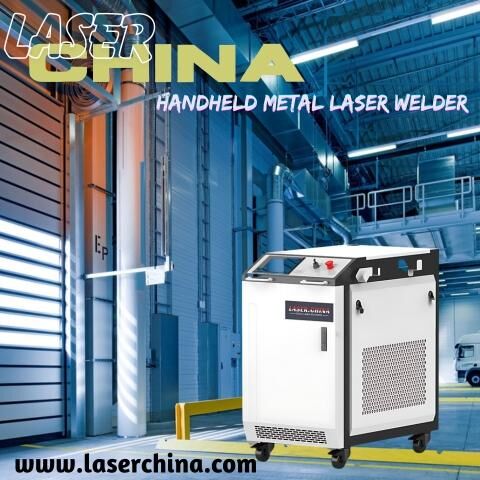
Metal fabrication continues to evolve as manufacturers look for faster, cleaner, and more precise ways to join different materials. Welding remains one of the most important processes in industries such as automotive manufacturing, machinery production, construction, electronics, kitchen equipment, and metalworking. Among modern welding solutions, the handheld metal laser welder has become an increasingly practical option for workshops and production environments that require accurate and consistent welds.
Unlike traditional welding approaches that can require extensive preparation and finishing, laser welding uses a concentrated beam of energy to join metal surfaces with controlled heat input. A handheld design gives operators greater flexibility when working with different shapes, positions, and workpieces. This combination of laser technology and manual operation makes the equipment suitable for a wide variety of fabrication tasks.
Understanding Handheld Metal Laser Welding
A handheld metal laser welder is a portable welding system designed to join metal components using a focused laser beam. The laser generates concentrated energy at the welding point, causing the metal surfaces to melt and form a strong joint as the operator guides the welding head along the required path.
The handheld format allows the operator to move around a workpiece rather than relying exclusively on a fixed automated system. This is particularly useful for medium-sized components, irregular structures, repair work, customized fabrication, and projects involving different welding positions.
The welding process can be performed on materials such as stainless steel, carbon steel, galvanized steel, aluminum, and various metal alloys, depending on the machine configuration, laser power, and application requirements.
Why Laser Welding Is Becoming More Popular
Metalworking businesses increasingly require production methods that can maintain quality while supporting efficient workflows. Traditional welding methods remain widely used, but laser technology provides another approach for applications where controlled heat and precise joining are important.
A laser beam can be focused into a relatively small area, allowing energy to be concentrated around the joint. This controlled process can help reduce unnecessary heating around the welding area. For suitable applications, operators can achieve neat weld lines with less post-welding work.
Applications Across Metal Fabrication
A handheld metal laser welder can be used in many areas of metal fabrication. Stainless steel fabrication is one common application because laser welding can produce clean and precise joints on appropriately prepared surfaces.
Manufacturers of kitchen equipment may use laser welding for cabinets, counters, sinks, frames, and other stainless steel components. Metal furniture manufacturers can also use the technology for frames, decorative structures, and customized products.
In automotive-related fabrication, laser welding can be used for selected metal components, brackets, panels, and repair-oriented work. Machinery manufacturers may apply laser welding to housings, structural components, and fabricated parts.
The technology is also relevant to agricultural equipment, hardware manufacturing, sheet-metal workshops, elevators, electrical cabinets, lighting products, and customized metal projects.
Working With Stainless Steel
Stainless steel is widely used because of its corrosion resistance and clean appearance. However, producing an attractive welded joint requires proper process control.
A handheld laser welding system can provide a focused welding process that is useful when appearance and dimensional control are important. Operators can guide the welding head along seams while maintaining a consistent working technique.
Before welding stainless steel, surfaces should be properly cleaned. Oil, dust, oxidation, moisture, and other contaminants can affect the welding process. Correct material preparation, suitable settings, and appropriate shielding gas are important for producing consistent results.
Welding Aluminum With Laser Technology
Aluminum presents different welding requirements because of its thermal characteristics and reflective surface. A properly configured laser welding system can be used for selected aluminum applications when the machine and process parameters are appropriate.
Operators need to consider material thickness, joint design, laser power, travel speed, wire selection when applicable, and shielding gas. Proper testing is especially important before moving into regular production.
For workshops that work with multiple metals, selecting equipment with an appropriate configuration can make the welding system more versatile for different projects.
The Importance of Laser Power
Laser power is an important consideration when choosing welding equipment. Different materials and thicknesses require different levels of energy to achieve suitable penetration and welding speed.
Lower-power systems may be appropriate for lighter fabrication and thinner materials, while higher-power machines can be selected for applications involving thicker metal sections or greater production requirements.
However, higher power does not automatically mean better results for every project. The correct machine should be selected according to material type, thickness, joint design, production volume, and required welding quality.
Handheld Operation and Operator Technique
Although the equipment uses advanced laser technology, operator technique remains important. The welding head must be positioned correctly, and the operator needs to maintain appropriate movement along the joint.
Training helps operators understand how different materials respond to laser energy. Factors such as travel speed, working distance, laser settings, wire feeding, and shielding gas can influence the final weld.
Consistent technique is especially important when producing multiple components that need a similar appearance and welding quality.
Preparing the Workpiece
Good welding begins before the laser is switched on. Metal surfaces should be clean, properly aligned, and prepared according to the joint design.
Gaps between components should be controlled because excessive gaps can make welding more difficult. Proper clamping can help keep parts in position during the process.
For production environments, establishing a repeatable preparation procedure can help operators maintain consistent results across different batches.
Safety During Laser Welding
Laser welding requires appropriate safety procedures because industrial laser systems can present serious hazards. Operators should follow the manufacturer's instructions and use the required protective equipment.
A suitable laser-safe working environment should be established according to the laser classification and equipment design. Operators may require appropriate laser safety eyewear, protective clothing, ventilation, and other safeguards.
Integrating Laser Welding Into a Workshop
Introducing a handheld metal laser welder into a workshop involves more than purchasing the machine. Businesses should consider electrical requirements, workspace layout, safety arrangements, shielding gas supply, consumables, maintenance, and operator training.
It is also useful to identify the types of projects the machine will handle most frequently. A workshop producing stainless steel cabinets may have different requirements from a company repairing machinery or manufacturing aluminum components.
Testing representative workpieces before regular production can help determine appropriate welding parameters and operating procedures.
Choosing Equipment for Professional Applications
When evaluating a handheld laser welding machine, businesses should examine the manufacturer's specifications and match them with their intended applications.
Important considerations include laser source, available power levels, welding head configuration, wire-feeding options, cooling system, control interface, compatible materials, and service support.
Warranty coverage and availability of replacement components can also matter for businesses that depend on their welding equipment for daily production.
A machine selected according to actual production requirements can provide a more practical long-term solution than choosing equipment based solely on maximum power.
Maintenance and Long-Term Use
Regular maintenance helps keep welding equipment operating reliably. Operators should follow the manufacturer's maintenance schedule and inspect components regularly.
The welding head, protective components, cooling system, optical parts, cables, and other relevant equipment should be checked according to manufacturer recommendations. Clean working conditions can also help protect sensitive laser components from unnecessary contamination.
Expanding Metalworking Capabilities
Laser welding technology can open additional possibilities for workshops that want to handle more precise fabrication projects. A handheld system can complement existing cutting, bending, grinding, and conventional welding equipment.
For businesses already working with fiber laser cutting machines, adding laser welding can create a more integrated metal fabrication workflow. Components can be cut accurately, prepared efficiently, and then joined using a controlled laser welding process.
Final Thoughts
A handheld metal laser welder offers a modern approach to metal joining for workshops and manufacturers looking for controlled and flexible welding processes. Its handheld design allows operators to work with different components and welding positions, while concentrated laser energy supports precise processing when the equipment is correctly configured.
From stainless steel fabrication and machinery production to customized metalwork and selected aluminum applications, laser welding continues to find new uses across modern manufacturing. Proper machine selection, operator training, material preparation, safety procedures, and regular maintenance are essential for achieving reliable results.
 Arabic
 English
 French
 Spanish
 Portuguese
 Deutsch
 Turkish
 Dutch
Dutch
 Italiano
 Russian
 Romaian
 Portuguese (Brazil)
 Greek
Greek
 Hrvatski
 Cehoslowakia