


Precision Shoulder Screws Manufacturer | USA-Made Shoulder Bolts – AMPG

AMPG is a leading manufacturer of shoulder screws and shoulder bolts producing high-quality, USA-made precision fasteners for industrial and OEM applications. Contact us
Shoulder Bolts and Shoulder Screw: A Complete Guide for Precision Applications
When a fastening application requires more than simply joining two components, shoulder bolts and a shoulder screw can provide the precision and controlled movement needed for reliable performance. Unlike conventional fasteners, these components feature a smooth, accurately machined shoulder that can serve as a bearing surface, spacer, pivot, or locating element.
For engineers, manufacturers, and maintenance professionals looking for precision fastening solutions, shoulder bolts offer a practical option for applications where dimensional accuracy and repeatable movement matter. Similarly, a shoulder screw can combine fastening capability with a precisely defined working surface.
What Are Shoulder Bolts?
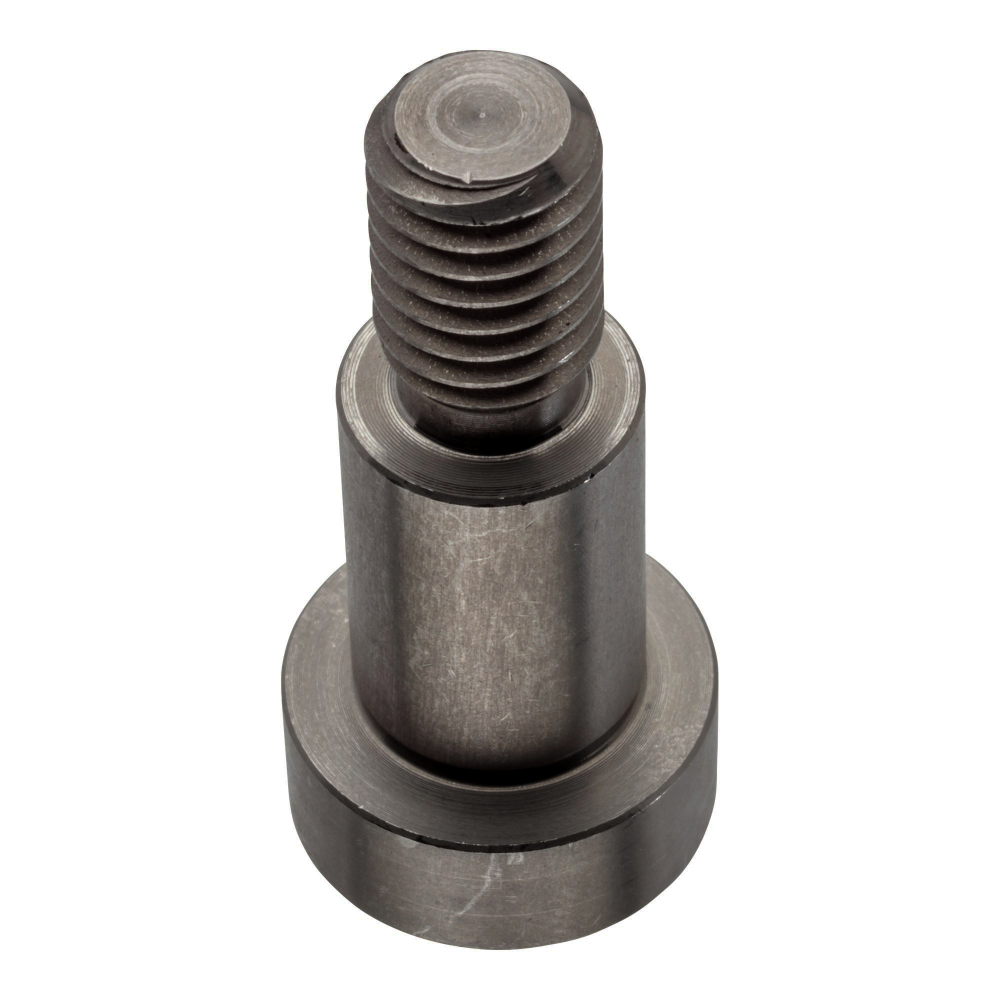
Shoulder bolts are specialized fasteners designed with three primary sections: a head, a smooth shoulder, and a threaded portion. The shoulder typically has a larger diameter than the threaded section, creating a consistent surface around which another component can rotate, slide, or remain accurately positioned.
This design makes them different from ordinary screws and bolts. Instead of relying entirely on the threaded portion for positioning, the shoulder provides a controlled mechanical interface.
In precision machinery, this feature can help reduce unwanted movement, improve alignment, and provide a dependable location for moving or stationary parts.
How Does a Shoulder Screw Work?
A shoulder screw works by using its unthreaded shoulder as the functional portion of the fastener. Once installed, the threaded section secures the component while the shoulder establishes the desired spacing or movement relationship.
Depending on the design, the shoulder may function as:
- A pivot point
- A bearing surface
- A spacer
- A guide
- A locating pin
- A mounting surface
Because the shoulder is manufactured to specific dimensions, it can provide greater consistency than improvised spacers or standard threaded fasteners.
Shoulder Bolts vs. Conventional Fasteners
Standard bolts are primarily intended to clamp components together. Their threaded sections generally provide the connection, while the shank may have limited functional value.
Shoulder bolts are different because the smooth shoulder is intentionally engineered as part of the application. This allows one fastener to perform both a fastening and positioning function.
For example, imagine a mechanical assembly containing a rotating lever. A conventional bolt might secure the lever but allow undesirable play or inconsistent positioning. A properly selected shoulder fastener can provide a defined surface for the lever to rotate around while maintaining a secure connection.
This makes shoulder-style fasteners especially useful when dimensional control is important.
Common Applications of Shoulder Fasteners
Shoulder fasteners are used across a wide range of industries because their geometry supports both fastening and mechanical movement.
Machinery and Automation
Automated equipment frequently contains moving arms, rollers, brackets, guides, and linkages. A precision shoulder can provide a repeatable pivot or mounting point while maintaining alignment.
Manufacturing Equipment
Production machinery often requires components to move consistently from one cycle to another. Shoulder fasteners can help establish controlled clearances and reliable positioning.
Electrical and Electronic Equipment
Certain electrical assemblies use specialized fasteners to maintain spacing between components. A correctly sized shoulder can provide mechanical separation while the threaded portion holds the assembly together.
Automotive and Mechanical Assemblies
Linkages, hinges, brackets, and other mechanical systems can benefit from a fastener that provides a smooth, accurately dimensioned contact surface.
Key Benefits of Using Shoulder Bolts
The main advantage is versatility. Instead of requiring separate components for fastening, spacing, and positioning, one precision fastener can sometimes perform several functions.
Other benefits include:
- Accurate positioning: The shoulder establishes a consistent mechanical reference.
- Controlled movement: Smooth surfaces can support pivoting or sliding components.
- Reduced assembly complexity: Fewer separate parts may be required.
- Repeatability: Consistent dimensions support uniform production.
- Improved alignment: The shoulder can help maintain component relationships.
- Design flexibility: Different shoulder lengths, diameters, materials, and head styles are available.
The correct fastener should always be selected according to the mechanical requirements of the application rather than appearance alone.
How to Choose the Right Shoulder Screw
Choosing the correct component starts with understanding the environment and mechanical requirements.
1. Determine Shoulder Diameter
The shoulder diameter should match the component it supports. An incorrect diameter can create excessive play or prevent proper assembly.
2. Measure Shoulder Length
Shoulder length determines how much space is available for the moving or positioned component. Accurate measurement is essential when a specific clearance is required.
3. Check Thread Specifications
Thread diameter, pitch, and length must match the mating component. The threaded portion should provide sufficient engagement without interfering with the functional shoulder.
4. Select the Appropriate Material
Material selection depends on load, wear, corrosion, temperature, and operating conditions. Stainless steel may be useful where corrosion resistance is important, while other materials can be appropriate for specific industrial requirements.
5. Consider Head Style
Head configuration can affect accessibility, installation space, and the overall design of an assembly. Choose a head style that works with the available tools and surrounding components.
Why Precision Matters
Small dimensional differences can have a significant effect on mechanical assemblies. A shoulder that is too short may create unwanted movement, while one that is too long can interfere with adjacent components.
Likewise, an incorrectly sized diameter may affect rotation, alignment, or load distribution. For this reason, engineers should consider dimensional tolerances and the intended function before ordering fasteners.
Precision is particularly important in automated machinery, fixtures, tooling, and assemblies where components repeatedly move or interact.
Installation Tips for Better Performance
Proper installation can help maximize the performance of shoulder fasteners.
First, inspect the mating hole and surrounding surfaces to ensure they are clean and free from burrs. Confirm that the shoulder seats correctly before applying final tightening torque.
Avoid treating the shoulder as though it were a standard threaded shank. Its smooth surface is often the functional element of the assembly, so scratches, contamination, or incorrect clearances may affect performance.
It is also important to use appropriate tools and avoid excessive tightening. The required torque depends on the fastener material, thread specifications, and application.
Frequently Asked Questions
What is the main purpose of shoulder bolts?
Their main purpose is to provide fastening while also creating a precise shoulder that can support, position, guide, or space another component.
Can a shoulder screw be used as a pivot?
Yes. When the diameter, length, material, and surrounding components are properly selected, the smooth shoulder can function as a pivot surface.
Are shoulder fasteners available in different sizes?
Yes. They can be manufactured or supplied in different shoulder diameters, lengths, thread configurations, materials, and head styles to suit different applications.
What should engineers consider before purchasing them?
Important considerations include shoulder diameter, shoulder length, thread dimensions, material, load requirements, operating environment, tolerances, and installation method.
Conclusion
For applications that demand secure fastening alongside accurate positioning or controlled movement, shoulder bolts and a properly selected shoulder screw can offer an efficient engineering solution. Their distinctive shoulder geometry makes them useful in machinery, automation, tooling, electronics, automotive assemblies, and many other precision applications.
By evaluating dimensions, materials, thread specifications, operating conditions, and installation requirements, engineers can select a shoulder fastener that supports dependable assembly performance and long-term reliability.
Visit Us: - https://ampg.com/product-list/shoulder-screws

 English
 Arabic
 French
 Portuguese
 Deutsch
 Turkish
 Dutch
Dutch
 Italiano
 Russian
 Romaian
 Portuguese (Brazil)
 Greek
Greek
 Hrvatski
 Cehoslowakia