Real Estate Tokenization Development: Could On-Chain Valuation Become a Standard Layer for Tokenized Properties?
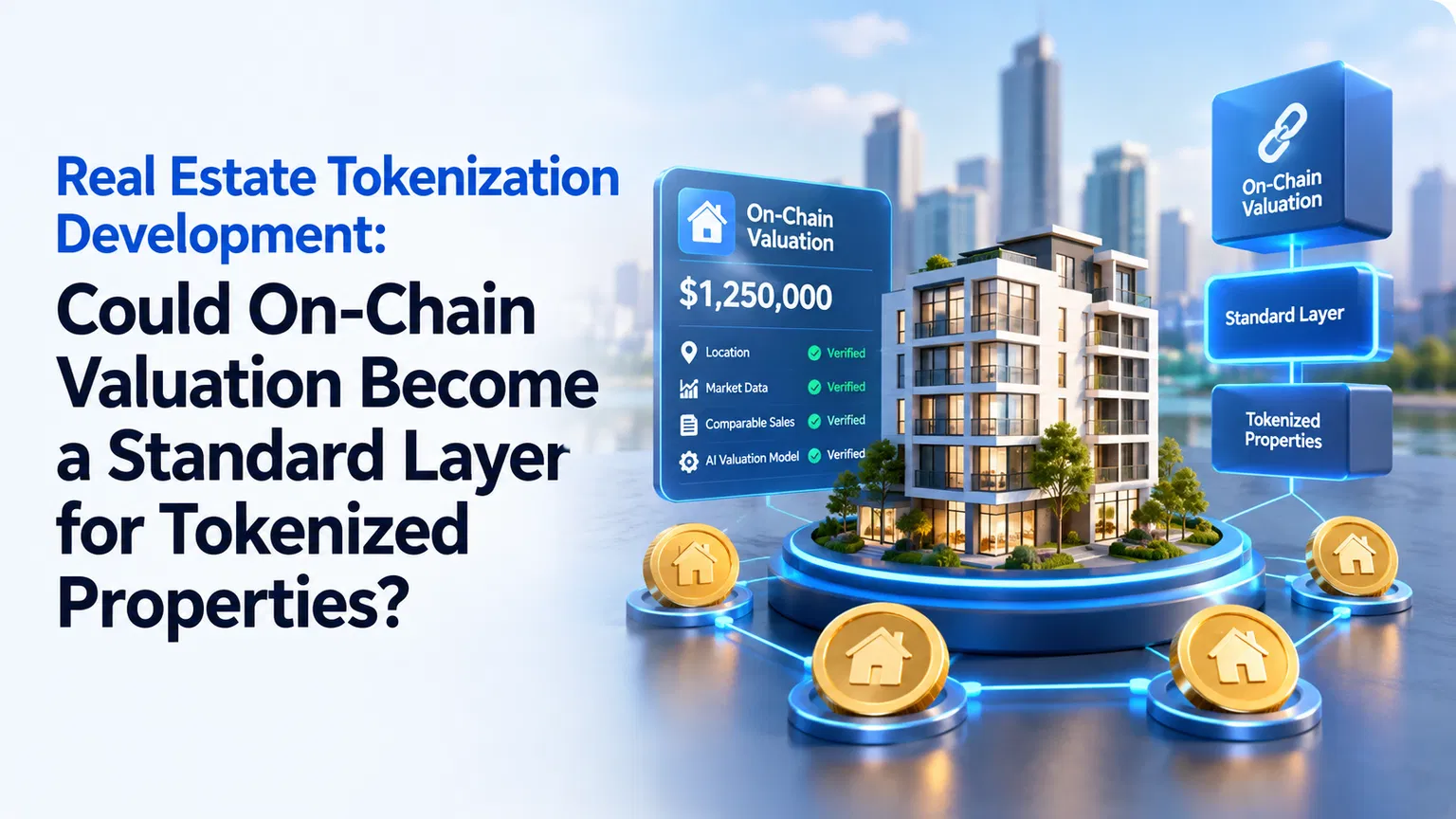
Real estate markets have always depended on valuation. Before a property is sold, financed, refinanced, or used as collateral, participants need an estimate of what the asset is worth. Traditional valuation usually relies on appraisals, comparable properties, rental income, location data, market conditions, and professional judgment. As property ownership moves onto blockchain networks, another question is emerging: could valuation data also become part of the digital asset infrastructure?
Real estate tokenization converts rights connected to physical properties into digital tokens recorded on a blockchain. These tokens can represent fractional interests, economic rights, ownership interests, debt claims, or participation in a property-holding structure. However, putting ownership information on-chain does not automatically provide reliable information about the value of the underlying property.
This is where on-chain valuation could become important. A valuation layer could bring property assessments, market data, rental information, transaction records, and other relevant inputs into a system that interacts with property tokens. For companies working on real estate tokenization development, this could become an important area of product design over the coming years.
Why Valuation Matters in Tokenized Real Estate
A property token has limited meaning if investors cannot understand the value of the asset connected to it. Suppose a commercial building is represented by 100,000 tokens. Investors may know how many tokens exist, but they still need information about the property's estimated market value, rental income, occupancy, debt, expenses, and other financial factors.
Traditional real estate markets already use different valuation methods. The sales comparison method examines similar properties. The income approach considers expected income from the property. The cost approach estimates what it would cost to replace the property, while other methods may be used for specific property categories.
Tokenized property markets could bring some of these inputs into digital systems. Instead of valuation information remaining in separate reports, selected data could be associated with the relevant property token or investment vehicle. This does not mean every valuation should be treated as an exact or permanent figure. Property prices can change, and different valuation professionals can reach different conclusions.
The objective would be to make valuation information easier to reference, update, audit, and connect with other property-related records.
What Could an On-Chain Valuation Layer Include?
An on-chain valuation layer could contain several categories of information rather than a single property price. A property record might include the latest professional valuation, valuation date, methodology used, rental income, occupancy rate, recent comparable transactions, property expenses, outstanding debt, and other relevant information.
Some data could be stored directly on a blockchain, while larger documents and external records could remain in off-chain systems. The blockchain could store references, hashes, timestamps, permissions, and selected valuation figures.
Oracles could play an important role in this structure. An oracle can bring information from external sources into a blockchain-based application. For property markets, these sources could include valuation firms, property databases, government records, rental platforms, market data providers, and other approved information sources.
A real estate token development project could therefore include an architecture where property information is collected, reviewed, recorded, and periodically updated. The system would still need procedures for handling incorrect, outdated, disputed, or incomplete information.
Could Valuation Become a Standard Property Token Layer?
There is a reasonable case for valuation becoming a common layer in future tokenized property systems. Token issuance alone provides information about digital ownership or economic rights, but valuation data can provide context around those rights.
Consider a token representing a fractional interest in an office building. The token record could reference the property's latest valuation, valuation date, rental income, occupancy information, and outstanding liabilities. When the valuation is updated, the relevant record could receive a new timestamp and data reference.
This could create a history of valuation updates rather than relying on a single number. Investors, asset managers, administrators, and other authorized participants could review how the property's reported value changed over time.
However, standardization would require agreement on data formats, valuation methods, update schedules, data providers, and governance rules. A valuation layer would therefore need more than blockchain infrastructure. It would require participation from property professionals, financial institutions, technology providers, legal advisers, and other market participants.
The Role of Oracles in Property Valuation
Blockchain networks generally cannot access external property information by themselves. This creates a need for reliable data feeds. In tokenized real estate, oracles could connect property tokens with information from approved external sources.
For example, a property valuation provider could submit a valuation report to a system. The relevant valuation figure could then be recorded with a timestamp and reference to the underlying report. Multiple data providers could also be used where appropriate.
Using several sources may provide a broader view of market conditions, but it can also introduce disagreements. Two valuation providers may assign different values to the same property. A system therefore needs rules for handling differences rather than assuming that every data source will produce identical results.
A real estate asset tokenization company developing such systems may need to consider source reputation, update frequency, data validation, dispute procedures, and permissions when designing the valuation architecture.
Valuation Updates Could Affect Token Markets
Tokenized property markets may operate differently from conventional property transactions because digital assets can potentially change hands more frequently. This raises questions about how valuation information should be updated.
If a property's market value changes significantly, investors may expect the valuation record associated with the property to reflect that development. A system that updates valuation information once every few years may not provide enough context for a more active digital market.
At the same time, updating valuations too frequently may create unnecessary noise. Short-term price movements do not always indicate a meaningful change in the underlying property value.
A practical approach could involve scheduled professional valuations combined with supplementary market indicators. The system might record formal valuations at defined intervals while also presenting rental performance, comparable sales, occupancy data, and other information between valuation events.
This would give users several reference points instead of treating one number as the complete picture.
How Smart Contracts Could Use Valuation Data
Smart contracts may interact with valuation data in several ways. For example, certain lending arrangements could use property valuation information when calculating collateral ratios. Investment structures could use predefined valuation thresholds for specific financial operations.
Suppose a tokenized property is used as collateral for a loan. If the recorded valuation falls below a predefined level, the smart contract could trigger a review process. The contract does not need to make the final financial decision by itself. Instead, it could notify administrators or initiate a predefined procedure.
Another use could involve fund accounting. A property fund issuing tokens may need periodic net asset value calculations. Property valuation data could form one part of the calculation process.
These applications demonstrate why valuation may eventually become more than a reporting feature. It could become an information layer that interacts with other parts of a tokenized property ecosystem.
Valuation and Investor Information
Investors in tokenized properties may want more than ownership records. They may also want information that helps them understand what they hold.
A digital property dashboard could present the latest valuation, previous valuation, rental income, occupancy, expenses, debt levels, token supply, and other relevant information. Historical records could show how reported property value changed over time.
This does not remove investment risk. Valuations are estimates, and real estate markets can change because of interest rates, local economic conditions, construction activity, tenant demand, regulation, and other factors.
For a real estate tokenization company, the challenge is therefore not simply presenting more data. The system needs to distinguish between verified information, estimates, historical records, and externally supplied data.
Governance Could Become Just as Important as Technology
A valuation layer requires governance because someone must decide which information is accepted and how disagreements are handled.
A tokenization platform may use one approved valuation provider, several providers, or a combination of professional assessments and market data. Each approach has different implications.
A governance framework could define who can submit valuation information, who reviews it, how often updates occur, what happens when data conflicts, and how corrections are recorded. It could also establish procedures for valuation disputes.
For a real estate tokenization platform development company, these governance decisions can influence the design of smart contracts, databases, user permissions, reporting tools, and administrative workflows.
Regulatory Considerations for On-Chain Valuation
Property tokenization operates across real estate, securities, financial services, tax, and data regulations in many jurisdictions. Valuation information may also have legal and accounting implications depending on how the tokenized structure is organized.
Recording a valuation on a blockchain does not automatically make the figure legally authoritative. The legal status of a valuation depends on the jurisdiction, the asset structure, the valuation provider, and the purpose for which the figure is being used.
Companies working on real estate tokenization development should therefore treat valuation as part of the wider legal and operational framework rather than as a purely technical feature.
Documentation can also matter. If a valuation figure is used in investor reporting or financial calculations, users may need access to supporting documents and information about the methodology used.
How Real Estate Tokenization Platforms Could Integrate Valuation
A real estate tokenization platform development project could include valuation as a dedicated module connected to property records, investor dashboards, compliance systems, and smart contracts.
The platform could maintain a property profile containing ownership information, token supply, valuation history, income information, and supporting documents. Authorized valuation providers could submit updates through controlled interfaces.
Smart contracts could then reference approved valuation data for specific functions. Administrators could review changes before they become active, depending on the governance model.
This approach could also help create a consistent data structure across multiple properties. As more properties are tokenized, having common fields for valuation date, valuation method, source, amount, currency, and supporting documentation could make portfolio management easier.
What Could Happen by 2027 and Beyond?
The next phase of real estate tokenization may involve more attention to information surrounding the token rather than token issuance alone. Property identity, ownership records, compliance information, income data, valuation records, and transaction history could become interconnected.
The market is still developing, so it is too early to assume that one valuation model will become universal. Different property categories may require different methods. Residential properties, commercial buildings, hotels, industrial facilities, land, and infrastructure assets can have very different valuation characteristics.
Still, the growing use of digital property records could create demand for structured valuation information. As tokenized assets become more sophisticated, investors and institutions may expect the data surrounding those assets to be organized with the same level of attention as the tokens themselves.
How Real Estate Tokenization Companies May Approach This Model
A real estate tokenization development company working on future platforms may need to think about valuation during the initial architecture stage. The valuation layer can affect data models, oracle connections, smart contract functions, reporting systems, and investor interfaces.
A real estate asset tokenization company could also offer different valuation configurations depending on the property and jurisdiction. Some projects may need periodic professional valuations, while others may use a combination of appraisals and market indicators.
Companies researching Top real estate tokenization companies or Best real estate tokenization companies may also find that platform architecture, data management, compliance processes, and property administration are becoming increasingly important areas of comparison.
The broader real estate tokenization market may therefore move from simply asking how a property can be tokenized to asking how information about that property can remain useful throughout its digital lifecycle.
Conclusion
On-chain valuation could become an important information layer for tokenized properties as real estate markets adopt blockchain-based ownership and investment structures. A property token can represent ownership or economic rights, but valuation data can provide context about the underlying asset, its income, liabilities, market conditions, and historical changes. Oracles, professional valuation providers, smart contracts, data records, and governance procedures could work together to maintain this information. However, valuation remains an estimate rather than an unquestionable price, so proper methodology, source selection, review procedures, and regulatory consideration will remain important. As real estate tokenization develops further, valuation may become a recurring part of property token infrastructure rather than a document kept outside the digital asset system. Blockchain App Factory provides Real estate tokenization development services.
FAQs
1. What is on-chain valuation in real estate tokenization?
On-chain valuation refers to recording selected property valuation information within or through a blockchain-based system. The information may include the valuation amount, date, source, methodology, and supporting references.
2. Why is valuation important for tokenized properties?
Valuation gives investors and administrators information about the estimated financial value of the underlying property. It can also support reporting, portfolio management, lending arrangements, and other financial processes.
3. Can blockchain determine the actual value of a property?
No. Blockchain can record and distribute valuation information, but it does not independently determine the market value of a physical property. Valuation still depends on professional assessments, market data, and other relevant information.
4. What role do oracles play in property valuation?
Oracles can bring information from external sources into blockchain-based applications. In tokenized real estate, they may connect valuation providers, property databases, market information, and other approved sources with digital property records.
5. Could smart contracts use property valuation data?
Yes. Depending on the legal and technical structure, smart contracts could reference valuation information for functions such as collateral monitoring, fund calculations, reporting, or predefined review procedures.
6. Will every tokenized property need the same valuation method?
Not necessarily. Different property categories and jurisdictions may require different valuation approaches. Residential, commercial, industrial, hospitality, and land assets can have different valuation characteristics.
7. How can a real estate tokenization platform include valuation?
A platform can include property valuation records alongside ownership details, token supply, income information, supporting documents, and historical valuation data. Approved data providers can submit updates according to predefined procedures.
8. Does on-chain valuation remove real estate investment risk?
No. Recording valuation information on a blockchain does not remove market risk. Property values can change due to economic conditions, interest rates, tenant demand, local market conditions, regulation, and other factors.
9. Why could valuation become more important for real estate token development?
As tokenized property markets become more information-driven, participants may need regular information about the underlying asset. Valuation can provide one part of that information and may interact with other property, financial, and compliance data.

 English
 Arabic
 French
 Portuguese
 Deutsch
 Turkish
 Dutch
Dutch
 Italiano
 Russian
 Romaian
 Portuguese (Brazil)
 Greek
Greek
 Hrvatski
 Cehoslowakia