How Are Shipping Containers Delivered and Placed on Your Property?
Buying a shipping container is an exciting step toward creating additional storage, workspace, or project space. But one important question often comes up after the purchase: How does the shipping container actually get delivered and placed on my property?
Unlike a small shed or storage unit, a shipping container requires specialized transportation and enough space for the delivery truck to maneuver and unload it safely.
Whether you're purchasing shipping containers for sale for personal storage, business inventory, construction equipment, or another application, understanding the delivery process can help you prepare your property and avoid unexpected problems.
In this guide, we'll explain how shipping containers are delivered, what equipment is used, how containers are positioned, and what you should do before delivery day.
Table of Contents
- How Are Shipping Containers Delivered?
- Step-by-Step Shipping Container Delivery Process
- What Type of Truck Is Used?
- How Much Space Is Needed for Delivery?
- How to Prepare Your Property
- What Happens When the Container Arrives?
- Where Should You Place a Shipping Container?
- What Can Prevent a Successful Delivery?
- FAQs
- Get Your Shipping Container Delivered With Conex Hub
How Are Shipping Containers Delivered?
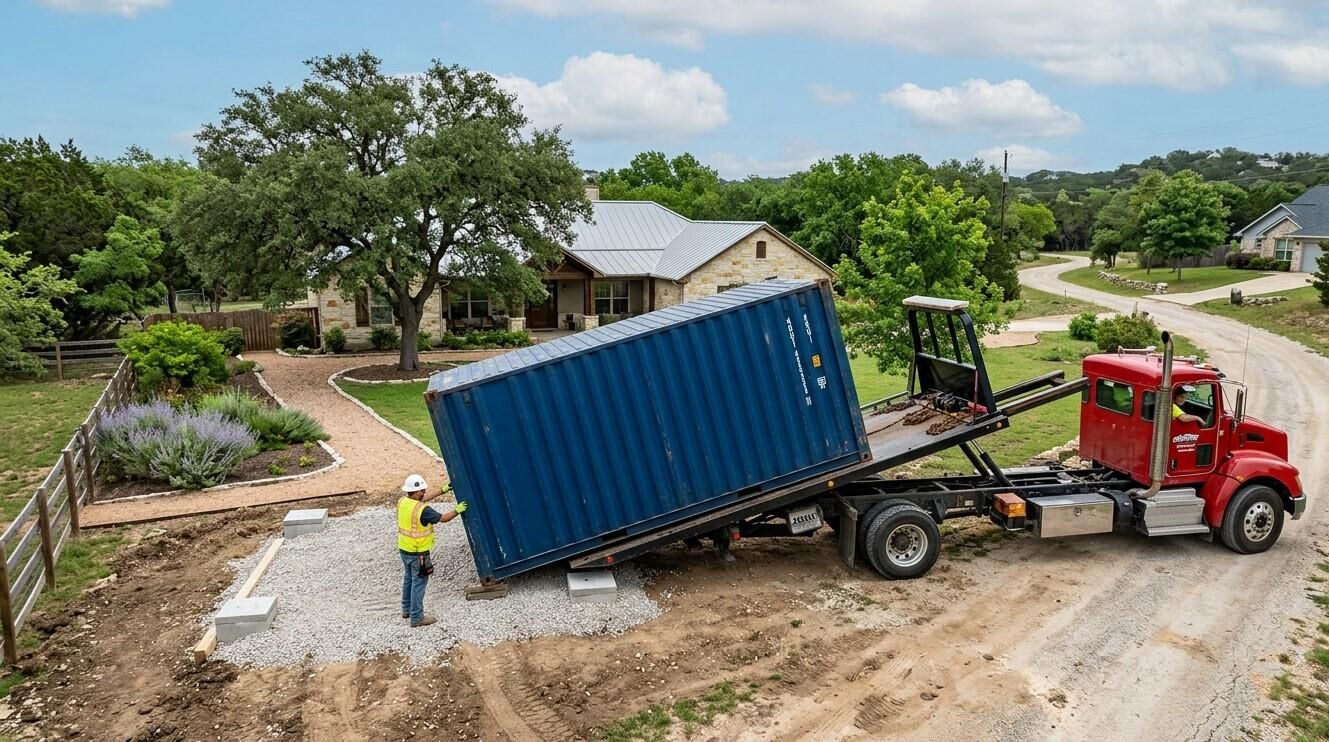
Shipping containers are typically transported to your property on specialized trucks. For standard ground delivery, tilt-bed trucks can be used to slide the container from the truck onto the prepared placement area.
According to Conex Hub, its delivery team matches the truck and delivery method to the conditions at the customer's site. Its current delivery process includes site assessment, positioning confirmation, container placement, and a final walkthrough.
The exact delivery method depends on factors such as:
- Container size
- Property access
- Road conditions
- Available clearance
- Placement location
- Ground conditions
- Delivery equipment
This is why preparing your property before the truck arrives is so important.
Step-by-Step Shipping Container Delivery Process
1. Order Your Container
The process starts when you select the right container for your needs.
You may choose between different sizes, conditions, and configurations. Common sizes include 10ft, 20ft, 40ft, and 40ft high-cube containers.
If you're comparing storage containers for sale, consider both the container's capacity and the space available on your property.
2. Provide Your Delivery Address
Your delivery location is important because the supplier needs to determine whether the site is accessible for the selected container and delivery truck.
Conex Hub's quote process asks customers for their delivery address along with container type, condition, quantity, and timeline.
If you're searching for a shipping container for sale near me, providing an accurate delivery location can help the supplier determine available delivery options and pricing.
3. The Container Is Dispatched
After the order is confirmed, the container is assigned and loaded onto the appropriate delivery truck.
Conex Hub states that its process includes assigning the container from the nearest yard and providing a delivery window before dispatch.
4. The Driver Arrives at Your Property
When the truck reaches your property, the driver assesses the site and confirms the intended placement location with you.
This is an important opportunity to make sure the container will be positioned exactly where you want it.
5. The Container Is Unloaded
With a tilt-bed truck, the truck bed tilts and the container slides onto the prepared surface.
The driver carefully controls the unloading process so the container reaches the desired position.
Conex Hub lists approximately 60 feet of straight-line clearance for a 20ft container delivered by tilt-bed truck. For larger deliveries, its guidance states that 100 feet or more of straight-line clearance may be required depending on the delivery method.
6. The Container Is Positioned
Once unloaded, the driver positions the container in the agreed location.
The placement area should be firm, dry, and level. Suitable surfaces can include pavement, gravel, or hard-packed dirt.
7. Final Inspection
After placement, the delivery process includes checking the container's position and access.
Conex Hub's current delivery process includes a final walkthrough to verify items such as doors, locks, and container condition.
What Type of Truck Is Used?
Tilt-Bed Truck
Tilt-bed trucks are one of the most common options for delivering standard shipping containers.
The truck tilts its bed, allowing the container to slide off the rear onto the property.
According to Conex Hub, tilt-bed delivery can be suitable for sites with relatively tight access, provided there is enough straight-line clearance.
Tilt-Bed Truck With Trailer
Larger containers or particular delivery situations may require a trailer configuration.
Conex Hub's delivery information states that its tilt-bed and trailer setup can handle containers up to 45 feet and requires significant straight-line clearance.
Crane or Specialized Equipment
Some properties may not have enough access for conventional tilt-bed delivery.
In those situations, specialized equipment such as a crane or lift may be considered, depending on the site and container.
For oversized or unusually heavy cargo, specialized container solutions may also be required.
Always discuss unusual site conditions with your container supplier before scheduling delivery.
How Much Space Is Needed for Delivery?
Space requirements depend on the container size and delivery equipment.
As a general guide based on Conex Hub's current delivery requirements:
| Container / Delivery | Approximate Clearance |
|---|---|
| 20ft tilt-bed delivery | About 60ft straight-line clearance |
| 40ft tilt-bed delivery | About 100ft straight-line clearance |
| Larger/specialized delivery | May require additional space |
These are not universal measurements for every property. Actual requirements can vary based on the truck, road, terrain, and placement location.
Don't just measure the driveway width. You should also consider:
- Turning radius
- Straight-line access
- Gate width
- Road width
- Overhead wires
- Tree branches
- Utility poles
- Fences
- Buildings
- Slopes
How to Prepare Your Property
Proper preparation is one of the most important parts of successful container delivery.
Choose Firm, Level Ground
The container should be placed on firm, dry, level ground. Soft soil, mud, and sand can cause problems for heavy delivery equipment and may result in settling after placement.
Clear the Delivery Route
Remove vehicles, trailers, equipment, landscaping materials, and other obstacles from the delivery path.
Check Overhead Clearance
Look for tree branches, power lines, cables, signs, and roof overhangs.
Measure the Access Route
Measure the entrance, driveway, gates, corners, and the distance from the road to the intended placement area.
Check Local Requirements
Some locations may require permits or HOA approval before a container can be placed on a property. Conex Hub recommends checking with your local building department or HOA before delivery.
What Happens When the Container Arrives?
On delivery day, you should be prepared to give the driver access to the property and confirm the final placement location.
A typical process includes:
- The truck arrives.
- The driver evaluates the site.
- You confirm the placement location.
- The container is unloaded.
- The driver positions the container.
- The container's position and access are checked.
- A final walkthrough is completed.
Conex Hub currently estimates approximately 30–60 minutes for placement, followed by a brief walkthrough.
The actual time can vary depending on the property and delivery conditions.
Where Should You Place a Shipping Container?
The best location depends on how you'll use the container.
For general storage, choose a location that provides:
- Easy access
- Good drainage
- Stable ground
- Adequate clearance around the container
- Convenient access to the doors
Think about future access, too. If you're storing business inventory or equipment that you'll need regularly, don't place the container somewhere that's difficult to reach.
You should also make sure the container doors have enough room to open fully.
For specialized applications, you may want a container with additional access points. For example, Conex Hub offers open-side containers designed to make loading bulky items easier.
What Can Prevent a Successful Delivery?
Several issues can make container delivery difficult or require rescheduling.
Soft or Muddy Ground
Rain can make previously accessible ground too soft for heavy delivery equipment.
Insufficient Clearance
Low branches, overhead wires, narrow gates, and tight turns can prevent the truck from reaching the placement area.
Incorrect Measurements
A driveway that looks large enough may still lack sufficient straight-line clearance.
Blocked Access
Parked vehicles, trailers, construction equipment, or other obstacles can interfere with the delivery.
Poor Weather
Heavy rain, snow, and mud may affect delivery conditions and could require rescheduling for safety and property protection.
FAQs
How is a shipping container delivered to a house?
Shipping containers are commonly delivered using a tilt-bed truck. The truck tilts its bed and slides the container onto a prepared area of the property. The exact method depends on site conditions and container size.
Can a shipping container be delivered to a backyard?
It depends on access. The truck needs enough space to reach the intended placement area safely. Narrow gates, tight turns, overhead wires, trees, and other obstacles can make backyard delivery difficult.
Does the ground need to be level for a shipping container?
Yes. Firm, dry, level ground is recommended for container placement. Gravel, pavement, and hard-packed dirt can be suitable depending on the site.
How much clearance does a 20ft shipping container need?
Conex Hub recommends approximately 60 feet of straight-line clearance for a 20ft tilt-bed delivery. Actual requirements can vary depending on the delivery truck and site conditions.
How much space does a 40ft container need for delivery?
Conex Hub recommends approximately 100 feet or more of straight-line clearance for a 40ft container, depending on the delivery method.
Can a shipping container be placed on gravel?
Yes. Conex Hub identifies gravel as one of the surfaces that can be suitable for container placement, provided the ground is firm, dry, and level.
Do I need to be home when my container is delivered?
It's best to be available if possible so you can confirm the placement location with the driver and address any site-related questions.
Can I find shipping containers delivered near me?
Many container suppliers offer delivery to customer properties. If you're searching for a shipping container for sale near me, provide your exact delivery location to the supplier so they can determine delivery availability and requirements.
Get Your Shipping Container Delivered With Conex Hub
Understanding how shipping containers are delivered can make the buying process much easier. From selecting the right container to preparing the ground and measuring delivery access, planning ahead helps ensure a smoother installation.
Whether you're comparing shipping containers for sale for personal or commercial use or looking for storage containers for sale, make delivery requirements part of your decision.
Conex Hub offers new, used, and custom-fabricated shipping containers and provides delivery solutions based on the container and property requirements. The company says it has delivered more than 30,000 containers and operates five yards across California and Arizona.
If you're ready to purchase a container, Conex Hub's quote process allows you to provide your container requirements and delivery address so the team can provide current pricing, availability, and delivery options.
Ready to have a shipping container delivered to your property? Contact Conex Hub today to get a quote and discuss your container size, delivery location, and site requirements.

 English
 Arabic
 French
 Spanish
 Portuguese
 Deutsch
 Turkish
 Dutch
Dutch
 Italiano
 Russian
 Romaian
 Portuguese (Brazil)
 Greek
Greek
 Hrvatski