 Croatian
 English
 Arabic
 French
 Spanish
 Portuguese
 Deutsch
 Turkish
 Dutch
Dutch
 Italiano
 Russian
 Romaian
 Portuguese (Brazil)
 Greek
Greek
 Chech
Chech
 Afganistan
 Sobre
Sobre
 Termos
 Privacidade
 Advertisment
 DMCA
DMCA
 Gmaps
Gmaps
 Rewards
 Refunds
 Developers

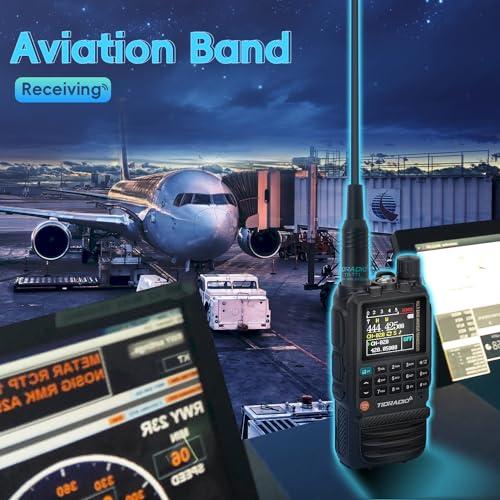
Airband frequencies are used for communication between aircraft and ground stations, including air traffic control (ATC), airports, and other aircraft. These frequencies are essential for ensuring safe and efficient air travel.
The airband typically ranges from 108 MHz to 137 MHz, covering VHF navigation and communication channels. Below is a comprehensive list of commonly used airband frequencies and their purposes.
Airband Frequency Ranges
VHF Navigation (VOR, ILS, Marker Beacons)
- 108.00 – 117.95 MHz: Used for navigation aids such as VOR (VHF Omnidirectional Range) and ILS (Instrument Landing System).

VHF Communication
- 118.00 – 136.975 MHz: Dedicated to air-to-ground and air-to-air communication.
Common Airband Frequencies
VHF Navigation Frequencies
- 108.00 – 111.95 MHz: Localizer and marker beacon frequencies for ILS systems.
- Example: 108.10 MHz (ILS Localizer)
- 112.00 – 117.95 MHz: VOR (VHF Omnidirectional Range) and terminal VOR frequencies.
- Example: 113.30 MHz (VOR Navigation)
VHF Communication Frequencies
- 118.00 – 121.95 MHz: Tower, Ground Control, and Clearance Delivery
- 118.00 MHz: Commonly used by airport towers for air traffic control.
- 121.50 MHz: International emergency frequency (guard frequency).
- 121.90 MHz: Ground control for taxiing aircraft.
- 122.00 – 123.05 MHz: Uncontrolled Airports (CTAF – Common Traffic Advisory Frequency) and Flight Service Stations
- 122.00 MHz: Used by UNICOM for airport advisory.
- 122.75 MHz: Air-to-air communications, often used by general aviation pilots.
- 122.90 MHz: Advisory services at non-towered airports.
- 123.05 MHz: Flight service station communication.
- 123.10 – 123.65 MHz: Aeronautical Multicom (general purpose air-to-air communications)
- 123.45 MHz: Air-to-air communications between aircraft.
- 124.00 – 126.00 MHz: Enroute Air Traffic Control (ARTCC – Air Route Traffic Control Centers)
- 124.00 MHz: Typically used by ARTCC for enroute air traffic control.
- 126.00 – 128.80 MHz: Enroute Air Traffic Control (continued)
- 127.00 MHz: Used by ARTCC for controlling high altitude flights.
- 128.80 – 132.00 MHz: Airline Operations and Enroute ATC
- 129.40 MHz: Airline company operations communication.
- 130.65 MHz: Used for enroute air traffic control.
- 132.00 – 135.975 MHz: Enroute ATC and Airline Communications
- 132.45 MHz: Used by ARTCC for high altitude sectors.
- 133.45 MHz: Commonly used for ATC in busy airspaces.
- 135.80 MHz: Airline company frequency for operational control.
- 136.00 – 136.975 MHz: Data Link and Additional ATC Communication
- 136.00 MHz: Used for ACARS (Aircraft Communications Addressing and Reporting System) and other data link services.
- 136.975 MHz: Commonly used for additional ATC communications.
International Distress and Emergency Frequencies
- 121.50 MHz: International emergency and distress frequency, monitored by ATC and military.
- 243.00 MHz: Emergency frequency for military use (guard frequency).
Airband Frequency Usage Examples
- 108.10 MHz: ILS localizer frequency, used for aircraft approach and landing guidance.
- 113.30 MHz: VOR frequency, providing navigational assistance.
- 121.50 MHz: International emergency frequency, used for distress and safety communications.
- 122.75 MHz: Common air-to-air communication frequency for general aviation.
- 123.45 MHz: Air-to-air communication frequency for non-operational purposes.
- 124.00 MHz: ATC frequency used for enroute traffic control.
- 129.40 MHz: Airline operations communication frequency.
- 132.45 MHz: ATC frequency for controlling flights in busy airspaces.
- 135.80 MHz: Airline company operational frequency for coordinating with their aircraft.
- 136.975 MHz: Used for various ATC communications and data link services.
Legal Considerations
Listening to airband frequencies is generally legal and encouraged for aviation enthusiasts and professionals. However, transmitting on these frequencies without proper authorization is strictly prohibited and can result in severe penalties. Always ensure you comply with local regulations regarding radio communications.
(onesdr.com)