

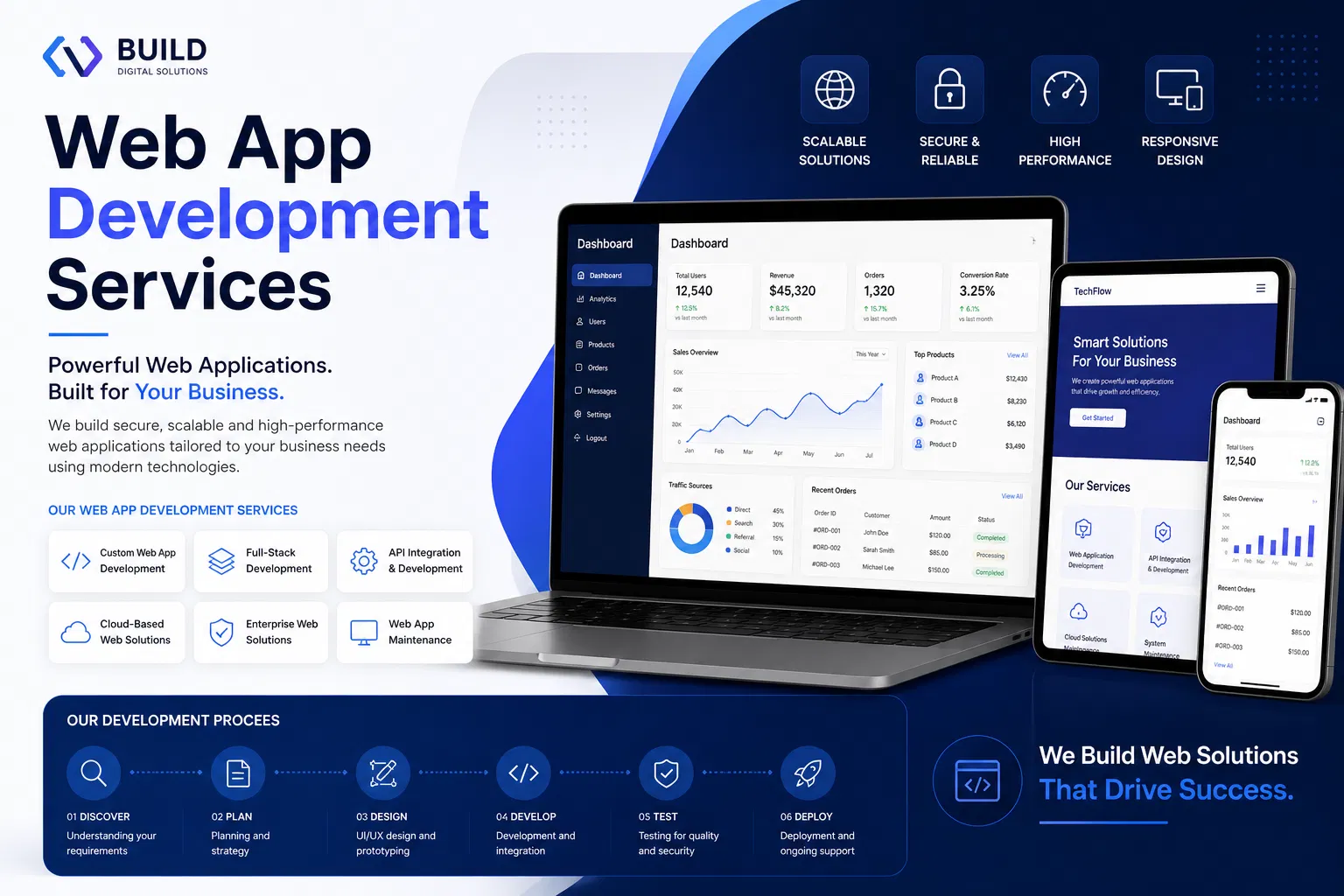
Building Faster Digital Experiences With Progressive Web Apps and Modern Web Technologies

The way people interact with businesses online has changed significantly. Customers expect websites and applications to load quickly, work smoothly on mobile devices, and provide convenient experiences regardless of their internet connection.
For businesses, this creates a need for web platforms that are more capable than traditional websites but easier to access than conventional applications. Progressive web app development offers one solution by combining the accessibility of the web with several application-like capabilities.
When supported by modern frontend and backend technologies, PWAs can become powerful platforms for e-commerce, SaaS products, customer portals, booking systems, education platforms, and internal business applications.
Understanding the Modern PWA Approach
A Progressive Web App is a web application designed to provide a reliable and engaging experience across different devices and network conditions.
A well-planned PWA can include features such as:
-
Responsive layouts
-
Fast loading
-
Installability
-
Offline or limited-connectivity functionality
-
Caching
-
Push notifications
-
Secure connections
-
App-like navigation
The exact capabilities available can vary depending on the browser and device.
The primary goal is to create a web application that feels reliable and convenient while remaining accessible through the web.
Why Businesses Are Moving Beyond Traditional Websites
Traditional websites remain useful for many purposes, but modern businesses often need more interactive functionality.
A business platform may require:
-
Customer accounts
-
Product catalogs
-
Search
-
Payments
-
Personalized dashboards
-
Real-time information
-
Notifications
-
Data management
-
Third-party integrations
These requirements make web application development a better fit than a simple informational website.
A web application can combine a responsive interface with backend services, databases, APIs, authentication, and business logic.
The Business Value of Progressive Web Apps
One of the biggest advantages of PWAs is their ability to provide broad web accessibility while supporting enhanced functionality.
Businesses can benefit from:
Cross-Device Accessibility
Users can access the application through a browser on smartphones, tablets, and computers.
Improved User Experience
Responsive interfaces can provide a consistent experience across different screen sizes.
Easier Distribution
Users can access a web application through a URL rather than depending entirely on traditional app distribution channels.
Performance Optimization
Caching and efficient application architecture can improve loading and interaction experiences.
Flexible Development
Businesses can progressively add features based on user needs and technical requirements.
Performance Is at the Center of Good Web Development
A visually impressive application is not enough if it performs poorly.
During progressive web app development, developers should consider:
-
Page loading speed
-
JavaScript usage
-
Image optimization
-
API performance
-
Caching
-
Network requests
-
Rendering efficiency
-
Mobile performance
Performance should be measured throughout development instead of being treated as a final-stage task.
How React Supports Interactive Applications
React can help developers build dynamic user interfaces using reusable components.
For example, a business application may use React components for:
-
Navigation
-
Product cards
-
Search
-
Forms
-
Dashboards
-
Shopping carts
-
User profiles
-
Notifications
A component-based approach can make large applications easier to organize and maintain.
React can therefore be a useful choice for projects requiring interactive and responsive interfaces.
Why Node.js Matters on the Backend
The frontend is only one part of a modern web application. The backend manages data, authentication, business logic, and communication with external services.
Node.js can be used to build backend services and APIs that support:
-
User authentication
-
Database operations
-
API requests
-
Payment integrations
-
File management
-
Business workflows
-
Third-party services
A common architecture can be represented as:
React Interface → Node.js Backend → Database → External Services
This structure can provide a flexible foundation for many types of applications.
Custom Web App Development for Unique Requirements
Every business operates differently. A standard software platform may not provide the exact workflows or integrations an organization needs.
Custom Web App Development allows companies to create software around their specific requirements.
Custom solutions can include:
-
Industry-specific workflows
-
Custom dashboards
-
User permissions
-
Business automation
-
API integrations
-
Custom reporting
-
Customer portals
-
Internal management systems
This approach can provide greater flexibility when an organization has specialized processes.
Where Progressive Web Apps Can Make an Impact
PWAs can be suitable for a wide range of digital products.
E-Commerce
Businesses can create fast product browsing, search, shopping, and account experiences.
Education
Learning platforms can provide course materials, student dashboards, and interactive resources.
Travel and Booking
Travel companies can build booking systems, customer portals, and itinerary platforms.
SaaS Products
Software companies can deliver browser-based applications with responsive and app-like interfaces.
Retail
Retail businesses can provide product catalogs, customer accounts, and personalized experiences.
Internal Business Platforms
Organizations can build employee portals, reporting dashboards, and operational tools.
Choosing the Right Development Partner
The success of a web application depends heavily on technical planning and implementation.
When selecting a React Node.js web app development company, businesses should evaluate:
Technical Knowledge
The development team should understand React, Node.js, databases, APIs, cloud infrastructure, and modern web technologies.
Project Experience
Review previous projects that demonstrate the team's ability to build complete applications.
Security Practices
Authentication, authorization, API protection, and secure data handling should be included from the beginning.
Scalability
The architecture should support future growth rather than being designed only for the initial number of users.
Communication
Clear communication helps prevent misunderstandings about requirements, timelines, and functionality.
A Practical Development Roadmap
A successful project can follow a structured process.
Step 1: Define the Product
Identify the users, business goals, key features, and expected outcomes.
Step 2: Design the Experience
Create responsive layouts and intuitive user journeys.
Step 3: Plan the Architecture
Select frontend, backend, database, hosting, and integration technologies.
Step 4: Develop the Core Application
Build essential features and validate them with real users or stakeholders.
Step 5: Introduce PWA Features
Add appropriate capabilities such as caching, service workers, and installability.
Step 6: Integrate External Platforms
Connect payment gateways, CRMs, analytics tools, cloud services, or other required systems.
Step 7: Test Thoroughly
Test functionality, performance, accessibility, security, and compatibility across supported browsers and devices.
Step 8: Launch and Monitor
After deployment, track errors, performance, and user behavior to identify opportunities for improvement.
Security and Reliability
Modern web applications often process valuable business and customer information. Security should therefore be considered throughout the development lifecycle.
Important areas include:
-
Secure authentication
-
Role-based permissions
-
API security
-
Data encryption
-
Input validation
-
Secure session management
-
Monitoring
-
Regular dependency updates
Reliability also depends on appropriate error handling, backups, monitoring, and infrastructure planning.
Why Choose Indibus Software?
Indibus Software helps businesses develop modern web applications designed around their technical and business requirements.
Companies looking for progressive web app development, web application development, or Custom Web App Development can work with experienced developers to build responsive, scalable, and user-focused digital products.
As a React Node.js web app development company, Indibus Software can develop modern frontend interfaces, backend APIs, custom dashboards, business applications, integrations, and PWA solutions.
The development approach can be adapted to startups, growing businesses, and established organizations looking to modernize their digital platforms.
Conclusion
Progressive Web Apps provide businesses with an effective way to deliver modern digital experiences through the web. By combining responsive design, performance optimization, appropriate caching, and application-style functionality, PWAs can support a wide range of business use cases.
For organizations with specialized requirements, Custom Web App Development can provide the flexibility needed to build software around unique workflows and customer needs.
With React for interactive interfaces and Node.js for backend services, businesses can create scalable web applications supported by modern architecture.
Choosing an experienced React Node.js web app development company such as Indibus Software can help organizations transform their ideas into secure, responsive, and high-performing digital products.
Website = https://indibus.net/services/web-development