


Protective Textile Market Poised to Reach US$10.68B by 2034
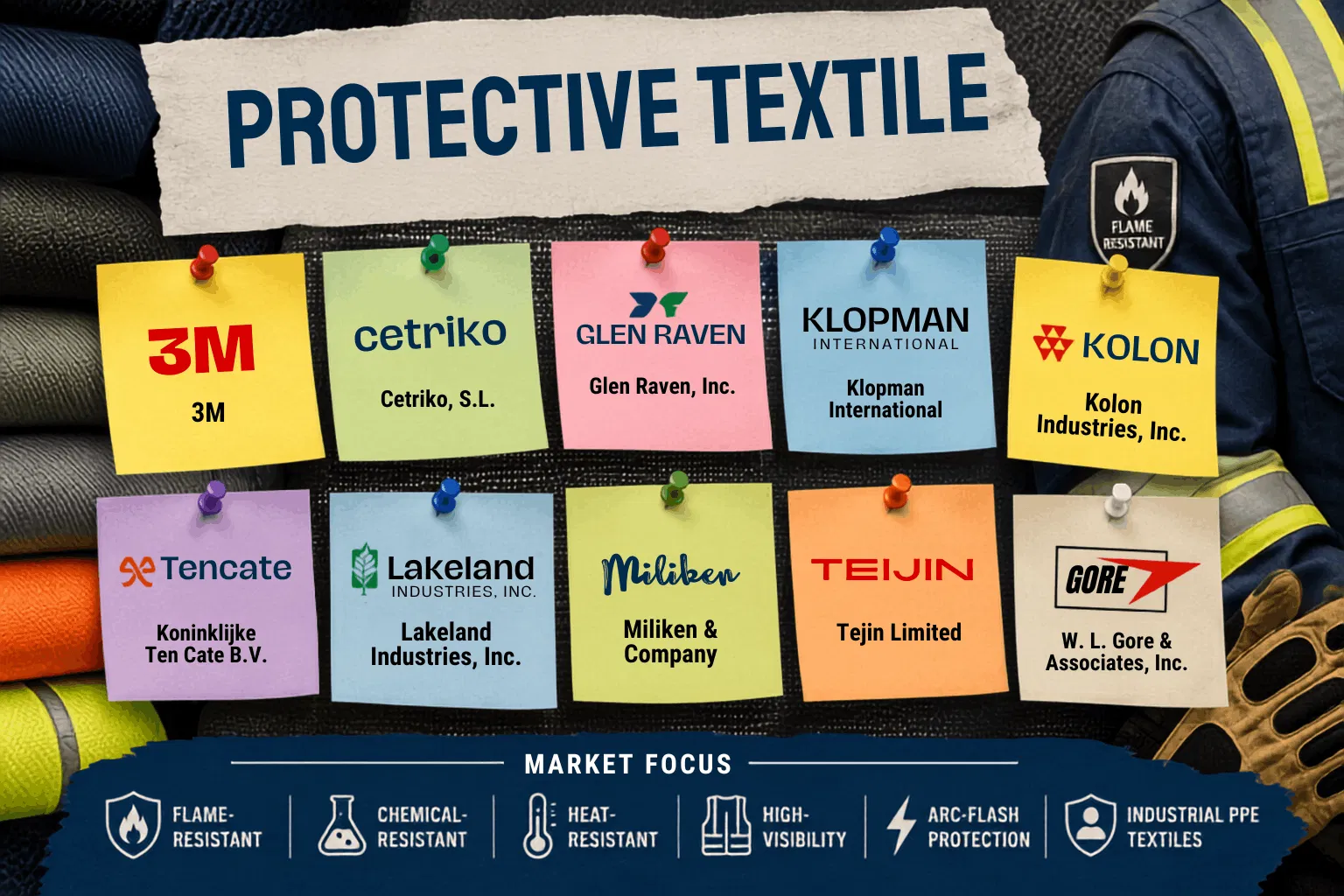
Workplace safety regulations are playing a major role in shaping demand for protective textiles. Employers across hazardous industries increasingly need clothing that meets established protection and performance standards. As compliance requirements strengthen, the Protective Textile Market is projected to expand at a 3.2% CAGR through 2034.
What Is the Protective Textile Market?
Protective textiles are engineered fabrics built to shield workers from specific hazards such as fire, chemical exposure, moisture, and physical abrasion, often using fibers like aramid and fiberglass combined with specialized coatings. Unlike standard workwear, these fabrics are certified against defined performance thresholds, and failure is measured in real injuries, not customer complaints.
Request a Sample Copy of the Report: https://www.theinsightpartners.com/sample/TIPRE00014641
Why Regulation Is Doing the Heavy Lifting
Occupational safety standards have tightened steadily across oil and gas, construction, and manufacturing, and each update to those standards tends to widen the addressable market for protective fabrics rather than shrink it. What makes this particularly significant is that compliance is not optional for employers operating in hazardous environments, so demand holds firm even during broader industrial slowdowns.
Healthcare adds a second growth engine entirely separate from industrial hazard. Hospitals require chemical-resistant and fluid-repellent fabrics for gowns, drapes, and isolation gear, and the memory of pandemic-era supply shortages has pushed procurement teams toward more resilient, diversified sourcing strategies. This is not just a hospital procurement shift, it reflects a structural shift toward treating protective textile supply as critical infrastructure rather than a routine purchasing category.
Military modernization programs round out the demand picture. Defense agencies across North America, Europe, and Asia Pacific are updating soldier protection systems, and fabric performance against ballistic threats, flame, and chemical agents sits at the center of those upgrades. So what ties healthcare, construction, and defense together? Each sector treats the fabric itself as a piece of safety equipment, not a commodity textile, and that mindset keeps premium pricing and steady replacement cycles intact.
Segmentation Overview
Segments Covered
By Material Type: Fiberglass, Aramid, Cotton, Polyester, Composite Materials, Others
By Functionality: Flame Resistant, Waterproof, Chemical Resistant, Others
By End-Use Industry: Oil and Gas, Construction, Manufacturing, Healthcare, Military, Others
By Geography: North America, Europe, Asia Pacific, and South and Central America
Aramid fibers hold a strong position in the material type segment given their natural flame resistance and use across firefighting and industrial protective gear. Flame-resistant functionality leads demand overall, reflecting the sheer breadth of industries, from welding to electrical utilities, where fire hazard is a constant operational risk. Oil and gas remains a heavyweight end-use industry because personnel there face flame, chemical, and static hazards simultaneously, requiring fabrics certified across multiple protection categories at once.
Key Market Players
- 3M
- Cetriko, SL
- Glen Raven, Inc.
- Klopman International
- Kolon Industries Inc
- Koninklijke Ten Cate bv
- Lakeland Industries, Inc.
- Milliken and Company
- Teijin Limited
- W. L. Gore and Associates, Inc.
Sustainability and Innovation Trends
Manufacturers are under growing pressure to deliver protection without the environmental cost traditionally associated with treated fabrics. Older flame-retardant finishes relied on chemistries now facing regulatory scrutiny in Europe and North America, pushing suppliers toward bio-based and halogen-free alternatives that meet the same safety thresholds.
Smart textile integration is also gaining ground, particularly in military and industrial safety gear, where sensors woven directly into fabric can monitor a wearer's temperature, heart rate, or exposure to hazardous conditions in real time. Beyond the safety case, recyclability has become a genuine selling point, since many protective garments are single-use or short-lifecycle items that generate significant industrial waste. Suppliers offering take-back or recycling programs for used protective gear are starting to win contracts that pure performance specifications alone would not secure.
Buy Premium Report: https://www.theinsightpartners.com/buy/TIPRE00014641
Regional Outlook
North America leads the market, supported by strict occupational safety enforcement and a dense concentration of oil and gas, construction, and healthcare demand. Europe follows closely, where REACH regulations and strong worker protection frameworks continue to push adoption of certified protective fabrics across manufacturing and utilities. Asia Pacific is set to post the fastest growth through the forecast period, as rapid industrialization in China, India, and Southeast Asia expands the workforce exposed to occupational hazards requiring certified protective wear. South and Central America remains a smaller market, growing steadily alongside mining and construction activity in Brazil and neighboring economies.
Related Reports
Antimicrobial Textiles Market Demand, Share & Growth by 2034
Conductive Textiles Market Growth, Trends & Demand by 2034
Nitrile Gloves Market Demand, Size & Forecast by 2034
Fiber Reinforced Polymer (FRP) Panels and Sheets Market Key Findings by 2031
About The Insight Partners
The Insight Partners is among the leading market research and consulting firms in the world. We take pride in delivering exclusive reports along with sophisticated strategic and tactical insights into the industry. Reports are generated through a combination of primary and secondary research, solely aimed at giving our clientele a knowledge-based insight into the market and domain. This is done to assist clients in making wiser business decisions. A holistic perspective in every study undertaken forms an integral part of our research methodology and makes the report unique and reliable.
Contact Us:
If you have any queries about this report or if you would like further information, please contact us:
Phone: +1-646-491-9876
E-mail: sales@theinsightpartners.com
Also Available in: Korean | German | Japanese | French | Chinese | Italian | Spanish

 English
 Arabic
 Spanish
 Portuguese
 Deutsch
 Turkish
 Dutch
Dutch
 Italiano
 Russian
 Romaian
 Portuguese (Brazil)
 Greek
Greek
 Hrvatski
 Cehoslowakia