
 Sobre
Sobre
 Termos
 Privacidade
 Advertisment
 DMCA
DMCA
 Gmaps
Gmaps
 Rewards
 Refunds
 Developers
Spot Resistance Welder: Working Principle, Applications & Industrial Advantages
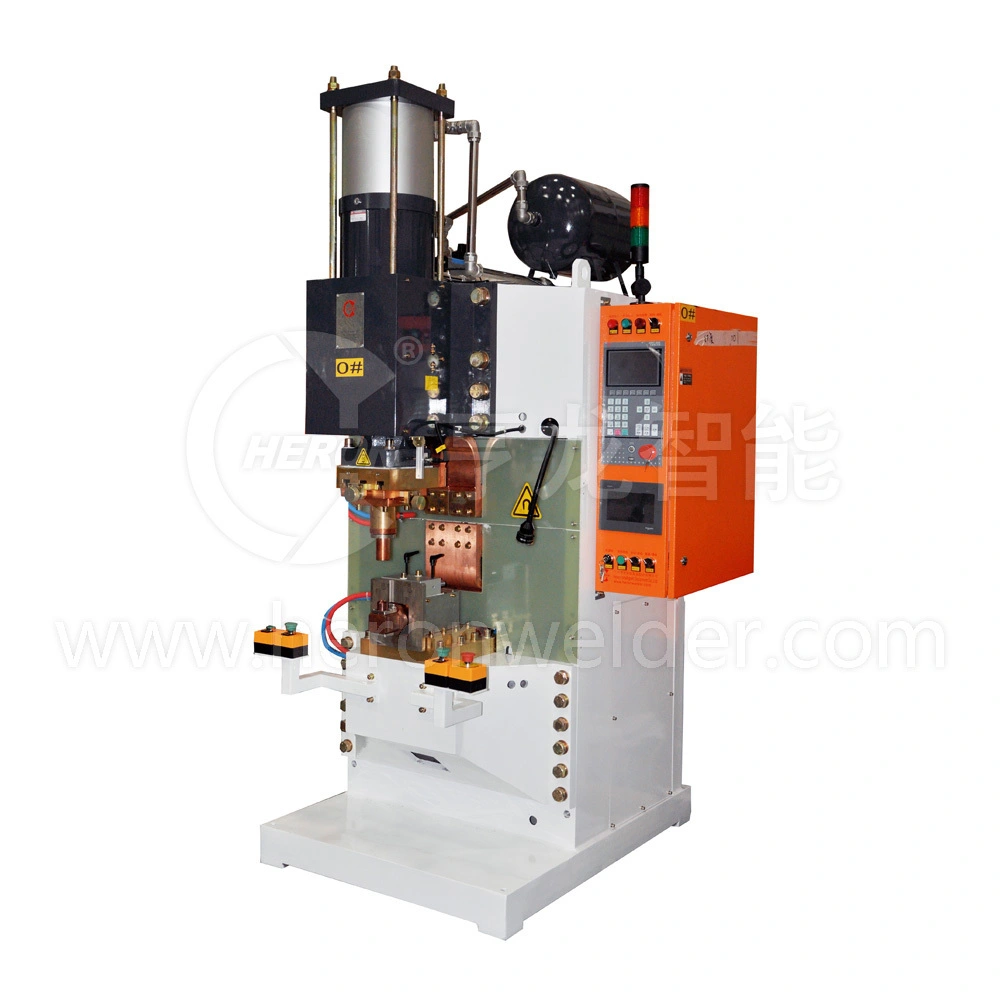
In modern manufacturing, precision, speed, and repeatability are essential for high-volume metal joining operations. A spot resistance welder plays a critical role in achieving these goals, especially in automotive, appliance, battery, and sheet metal fabrication industries. As a core resistance welding technology, it enables fast, localized joining of metal sheets using controlled heat and pressure.
For OEMs, automation integrators, and production engineers, understanding how a spot resistance welder works and where it delivers maximum value is key to optimizing production efficiency and weld quality.
What is a Spot Resistance Welder?
A spot resistance welder is a type of resistance welding equipment that joins two or more overlapping metal sheets by applying pressure and high electrical current through copper electrodes. The heat generated by electrical resistance at the contact interface melts the metal locally, forming a solid-state weld “nugget” after cooling.
This process is widely used because it is:
- Fast and repeatable
- Easy to automate in production lines
- Suitable for thin sheet metal joining
- Energy-efficient compared to many arc-based processes
In industrial environments, it is a foundational technology for mass production assembly lines.
Working Principle of Spot Resistance Welding
The operating principle is based on Joule heating (I²R effect), where electrical resistance generates heat.
Step-by-step process:
- Clamping
Two or more metal sheets are placed between copper electrodes. - Pressure Application
Electrodes apply force to ensure stable electrical contact. - Current Flow
A high electrical current passes through the joint area. - Heat Generation
Resistance at the interface generates intense localized heat. - Nugget Formation
Metal melts at the contact point, forming a weld pool. - Cooling Under Pressure
Current stops, pressure is maintained, and the molten zone solidifies into a strong joint.
This entire cycle typically takes milliseconds to a few seconds, making it ideal for high-speed manufacturing lines.
Types of Spot Resistance Welding Systems
Modern industrial systems include multiple advanced configurations:
MFDC Spot Welding Systems
Medium Frequency Direct Current (MFDC) systems offer:
- Stable current output
- Lower energy consumption
- Better weld consistency
- Reduced heat-affected zone
Capacitor Discharge Spot Welding
- Uses stored electrical energy released in a short pulse
- Ideal for delicate or precision welding
AC Spot Welding Systems
- Traditional and cost-effective
- Suitable for general sheet metal applications
Among these, MFDC technology is increasingly preferred for automotive-grade and high-strength steel applications due to superior control and repeatability.
Key Applications of Spot Resistance Welder
A spot resistance welder is widely used across multiple industries:
Automotive Manufacturing
Used for:
- Car body panels
- Door frames
- Seat structures
- EV battery trays
Appliance Manufacturing
Common in:
- Washing machine shells
- Refrigerators
- Air conditioning panels
Electrical & Electronics
Used for:
- Battery tab welding
- Busbars
- Metal enclosures
Sheet Metal Fabrication
Ideal for:
- Cabinets
- Steel furniture
- HVAC duct components
Its ability to produce clean, distortion-free joints makes it a preferred solution in automated production environments.
Advantages of Spot Resistance Welding
For modern factories, spot welding offers several engineering and production benefits:
High Production Speed
Cycle times are extremely short, enabling mass production efficiency.
Automation Compatibility
Easily integrated with robotic arms, CNC systems, and automated lines.
Minimal Material Distortion
Localized heating reduces thermal deformation.
Consistent Weld Quality
Modern control systems ensure repeatable weld parameters.
Cost Efficiency
No filler materials, shielding gases, or consumables required.
Challenges and Considerations
While highly effective, spot resistance welding requires precise control:
- Electrode wear over time
- Sensitivity to surface contamination
- Material thickness limitations
- Need for optimized current-pressure-timing balance
Proper parameter tuning is essential to ensure consistent weld nugget formation and structural integrity.
Best Practices for High-Quality Spot Welding
To achieve optimal results in industrial production:
- Maintain clean, oxide-free metal surfaces
- Use properly shaped and cooled electrodes
- Optimize weld force and current timing
- Monitor electrode wear regularly
- Implement real-time weld quality monitoring systems
Advanced systems like MFDC controllers significantly improve process stability and reduce production defects.
Heron Welder: Engineering Precision in Spot Resistance Welding
As a global manufacturer of advanced welding technologies, Heron Welder specializes in high-performance spot resistance welding systems, including MFDC spot welders, projection welding machines, clinching systems, and fully automated welding production lines.
Heron’s engineering approach focuses on:
- High-efficiency energy delivery
- Stable welding current control
- Industrial-grade automation integration
- Custom-built welding solutions for OEMs
From automotive production lines to heavy industrial fabrication, Heron’s systems are designed to deliver consistent weld quality, lower operational costs, and scalable automation performance.
FAQs About Spot Resistance Welder
1. What materials can a spot resistance welder join?
It is commonly used for low-carbon steel, stainless steel, galvanized steel, and selected aluminum alloys in industrial applications.
2. Is spot welding stronger than traditional welding?
Spot welds are extremely strong for sheet metal joints but are typically designed for lap joints rather than structural thick-section welding.
3. What is the difference between MFDC and AC spot welding?
MFDC provides more stable current, higher efficiency, and better weld consistency compared to traditional AC systems.
4. Can spot resistance welding be automated?
Yes, it is one of the most automation-friendly welding methods and is widely used in robotic production lines.
5. What industries rely most on spot resistance welding?
Automotive, appliance manufacturing, electronics, and metal fabrication industries heavily depend on this process.
Conclusion
A spot resistance welder is a critical industrial tool that enables fast, reliable, and cost-effective metal joining for modern manufacturing. With advancements in MFDC technology and automation integration, it has become an essential part of high-efficiency production systems.
For manufacturers seeking improved weld consistency, higher productivity, and scalable automation solutions, investing in advanced resistance welding technology is a strategic advantage.
Partner with Heron for Advanced Spot Welding Solutions
If you are looking to upgrade your production line or develop a custom welding system, Heron Welder provides end-to-end engineering support from machine selection to full automation integration.
Contact Heron today to request a quote or discuss a customized spot resistance welding solution tailored to your manufacturing needs.


 Croatian
 English
 Arabic
 French
 Spanish
 Deutsch
 Turkish
 Dutch
Dutch
 Italiano
 Russian
 Romaian
 Portuguese (Brazil)
 Greek
Greek
 Chech
Chech
 Afganistan
