About
About
 Términos
 Privacidad
 Advertisment
 DMCA
DMCA
 Gmaps
Gmaps
 Rewards
 Refunds
 Desarrolladores
The True Price of Ignoring Safety in High-Performance Operations
The True Price of Ignoring Safety in High-Performance Operations
Treating safety as a mere documentation exercise is more than outdated—it silently erodes business value. While penalties and fines are the most visible consequences, they rarely represent the largest expense. The deeper impact shows up in slower production cycles, additional recovery shifts, rework, rising insurance costs, and long-term reputational harm. In complex environments, these effects compound quickly, creating a continuous drain on productivity that can escalate into significant financial losses. Preventing this requires more than static policies; it calls for deliberate leadership, a proactive safety mindset, and digital EHS systems that provide real-time insight and enable coordinated action.
A safety breach occurs whenever there is a deviation from established rules, procedures, or controls designed to safeguard people, equipment, or the environment. This can include incomplete or incorrect permits, skipped lockout/tagout procedures, superficial risk assessments, expired certifications, blocked access routes, or improper use of personal protective equipment. Whether intentional or accidental, these lapses reveal the disconnect between documented standards and actual execution—and it is within this gap that incidents, liabilities, and unnecessary costs emerge.
The financial impact of such failures flows through two distinct but connected channels. Direct costs are easy to identify: regulatory penalties, medical expenses, compensation claims, equipment damage, and emergency response efforts. Indirect costs, however, are often more significant. These include halted operations, rescheduled tasks, underutilized contractors, rushed logistics, missed service commitments, extended investigations, legal complications, and even the gradual loss of customer trust. Even relatively minor incidents can divert valuable time from engineers and managers, pulling them away from productivity and innovation toward administrative and corrective work.
The consequences of safety failures are intensifying in today’s environment. Operations are leaner, supply chains operate with minimal buffers, and customers are far less tolerant of delays. A single high-risk near miss can disrupt an entire facility and escalate quickly to senior leadership. Repeated disruptions may jeopardize critical contracts. Insurance providers are also placing greater emphasis on operational data quality, often increasing premiums when records are inconsistent or incomplete. Additionally, under growing ESG expectations, safety performance has become a central factor for regulators, partners, and investors assessing long-term stability.
The damage rarely stops at the initial incident. Several factors tend to amplify its impact over time. Downtime in one critical area can cascade across the entire value chain. Shortcuts taken today often result in quality issues, defective output, and future warranty claims. Ignored hazards weaken employee trust, leading to higher turnover and increased hiring and training costs. At the same time, a poor safety record can undermine brand credibility, affecting contract renewals, bids, and strategic partnerships.
Organizations that lead in this space approach safety the same way they manage reliability—by focusing on early signals, taking preventive action, and continuously improving controls. Achieving this shift depends on three key elements. First, accountability must be clearly defined at every level, from executive leadership to frontline teams. Second, workflows should be designed to make safe actions the default and easiest choice. Third, organizations need strong digital visibility, with tools that highlight trends, risk concentrations, and emerging issues before they turn into incidents.
Modern EHS platforms play a critical role in eliminating inefficiencies and reducing risk. By integrating policies, daily operations, and secure documentation into a unified system, they remove gaps where violations can occur and enable faster, more effective responses. These systems enforce structured permit-to-work and lockout/tagout processes to avoid conflicting activities. They standardize risk assessments and job safety analyses while tracking remaining risk levels. They also simplify incident and near-miss reporting through quick capture tools and guided investigation workflows. With built-in action tracking, organizations can assign responsibilities, monitor deadlines, and maintain full traceability. Advanced analytics highlight leading indicators, helping teams focus on areas that need attention, while audit-ready records reduce administrative burden and regulatory risk.
Progress does not require a large-scale transformation. Meaningful improvements can begin with targeted actions. Start by strengthening controls around the most critical high-risk activities to ensure they cannot be bypassed. Identify a small set of leading indicators for each site and track them consistently. Ensure every near miss is followed by a brief root-cause analysis and clear corrective steps. Finally, share a simple monthly risk overview so leadership and operational teams stay aligned on priorities.
Safety failures are not isolated events—they are indicators of deeper systemic issues. Closing the gap between policy and real-world execution requires strong standards, engaged teams, and systems that embed safe practices into everyday work. When done effectively, this not only reduces risk but also creates more stable operations and stronger financial performance.
Schedule a free demo:
https://toolkitx.com/blogsdetails.aspx?title=The-real-cost-of-safety-violations-in-2025:-fines,-downtime,-and-the-$1b/week-problem
Patrocinados
Patrocinados

Patrocinados
Patrocinados
Patrocinados
Patrocinados
Virtuala FansOnly
CDN FREE
Cloud Convert
Categorías
Read More
foundry, griptape, vfx industry, visual effects, Jason Schleifer, Christy Anzelmo, creative innovation, industry shift, digital artists, studios ## Introduction In a significant move poised to reshape the landscape of the visual effects (VFX) industry, Foundry has officially acquired Griptape, a company known for its innovative approaches to creative workflows and tools for artists. This...

## Introduction In an era where artificial intelligence (AI) tools like ChatGPT are revolutionizing the landscape of content creation, marketers find themselves at a critical junction. The burgeoning popularity of AI in content marketing has sparked a debate on the balance between automation and authenticity. While AI can significantly enhance productivity and efficiency, it is paramount for...

Nintendo 64, VR gaming, nostalgia, Quest, cult classic, virtual reality, gaming revival, immersive experience, retro gaming, childhood memories ## Introduction For many gamers, the Nintendo 64 era was a golden age of interactive entertainment. Iconic titles captivated players with their innovative gameplay and memorable characters, leaving a lasting impact that resonates even today. Now,...

Vellum hair simulation, Houdini, character FX, visual effects production, Gnomon Workshop, hair dynamics, animation techniques, 3D modeling, simulation workflows, FX masterclass ## Introduction In the world of visual effects, the ability to create realistic hair dynamics can significantly elevate the quality of character animations. Among the powerful tools available for this purpose, Houdini...

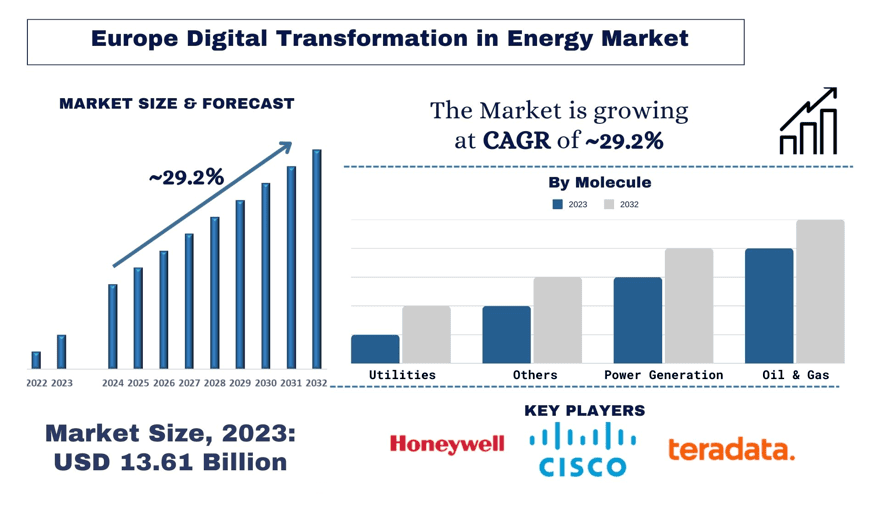
According to the UnivDatos, increasing investment in digital grid technologies in the region will drive the scenario of Digital Transformation in Energy and as per their “Europe Digital Transformation in Energy Market” report, the market was valued at USD ~13.61 billion in 2022, growing at a CAGR of 29.2% during the forecast period from 2024 - 2032 to reach USD billion by 2032. In...