 About
About
 Termini e Condizioni
 Privacy
 Advertisment
 DMCA
DMCA
 Gmaps
Gmaps
 Rewards
 Refunds
 Developers
How ISSOW Brings Clarity, Control, and Accountability to Hazardous Work
How ISSOW Brings Clarity, Control, and Accountability to Hazardous Work
In environments where high-risk operations are routine—where heavy equipment, live systems, and overlapping tasks come together—even a minor lapse can trigger serious outcomes. Something as simple as a missed isolation, vague instruction, or poorly managed shift transition can lead to equipment damage, operational delays, compliance issues, or even injury. For sectors like energy production, utilities, offshore facilities, and large-scale industrial operations, relying on memory, informal habits, or fragmented records is no longer a viable approach.
For years, many organisations have depended on paper-based permits, disconnected spreadsheets, and long email chains to coordinate critical work. While these methods may function in simpler settings, they struggle under pressure when multiple activities run in parallel. What once seemed manageable becomes scattered and difficult to oversee, increasing the likelihood of human error. This is precisely where an Integrated Safe System of Work (ISSOW) brings structure—introducing consistency, control, and accountability throughout the lifecycle of high-risk tasks.
At its core, ISSOW unifies all key safety processes into a single, coordinated system. Instead of treating risk assessments, permits, isolations, and handovers as separate elements, it connects them into one continuous and traceable workflow. High-risk activities—such as confined space entry, electrical tasks, hot work, and working at height—are governed through formal approvals, supported by detailed hazard identification and clearly defined safeguards. Isolation procedures are documented and verified to ensure equipment is safe before work begins. Pre-task briefings further reinforce clarity around responsibilities, safety measures, and site readiness. Once work is completed, the system ensures structured closure, controlled de-isolation, and accurate shift transitions. When digitised, every step is recorded within a single platform, complete with timestamps, approvals, and supporting evidence for full traceability.
Manual systems simply cannot deliver this level of reliability. Paper permits and email-based coordination limit real-time awareness, making it difficult to determine which tasks are active, where isolations are in place, or whether concurrent work introduces risk. This becomes even more challenging across large or distributed operations. Audits often turn into time-consuming investigations, requiring teams to piece together incomplete or inconsistent records. Shift handovers add another layer of risk, as key details can be miscommunicated or lost. Over time, informal practices begin to replace structured processes, weakening compliance and increasing the chances of delays, safety incidents, and regulatory breaches.
A digital ISSOW solution addresses these gaps by establishing a single, reliable source of information. It integrates permits, hazard controls, isolations, approvals, and supporting documentation into a logical and controlled workflow that mirrors real operational needs. Real-time dashboards provide clear visibility into ongoing work, pending actions, and potential conflicts, allowing teams to act proactively. Every interaction is automatically recorded, creating a complete audit trail supported by digital signatures, attachments, location data, and standardised formats. With mobile access, field teams can update, approve, and close tasks instantly—reducing delays and administrative overhead.
The ISSOW process follows a well-defined lifecycle. It begins by clearly defining the scope of work, including location, timing, and associated assets. Hazards are systematically identified, and control measures are established. Isolation requirements are planned and assigned with precision. Approval workflows ensure the right personnel review and authorise each stage, supported by automated notifications to prevent delays. Before work starts, teams confirm readiness, site conditions, and responsibilities. During execution, progress is tracked, and any deviations are recorded. Upon completion, activities are formally closed, isolations are safely removed in sequence, lessons are documented, and a complete record of evidence is maintained.
With ISSOW in place, organisations move beyond assumptions and gain clear insight into how high-risk work is managed. Performance metrics such as approval timelines, recurring issues, compliance levels, and workforce competency become visible and measurable. Implementation typically begins with high-risk operations, supported by standard templates, defined roles, and integration with existing systems—often starting with a pilot phase before scaling. When executed effectively, ISSOW enhances safety standards, improves efficiency, reduces downtime, and streamlines audit processes—delivering safer operations without compromising productivity.
If you would like to explore how ISSOW could work within your operations, you can book a demo here:
https://toolkitx.com/blogsdetails.aspx?title=A-Safety-Manager%E2%80%99s-Approach-to-ISSOW-Permit-Management
Sponsorizzato
Sponsorizzato

Sponsorizzato
Sponsorizzato
Sponsorizzato
Sponsorizzato
Virtuala FansOnly
CDN FREE
Cloud Convert
Categorie
Leggi tutto
agentic commerce, payment methods, Stripe, network tokens, buy now pay later, digital payments, e-commerce innovation, fintech solutions, payment processing ## Introduction In the rapidly evolving landscape of e-commerce, businesses are continually seeking innovative solutions to meet the diverse needs of their customers. One of the most significant developments in this arena is the rise of...

Ghost of Yotei, Videospiel, Spielverzögerung, ActuGaming.net, Gaming-Nachrichten, Gold-Status, Releases 2023, Spieleentwicklung, Gamer-News ## Einführung Es ist ein Moment, auf den viele Gamers gewartet haben: Ghost of Yotei hat den Gold-Status erreicht! Was bedeutet das? Es bedeutet, dass das Spiel in die endgültige Produktionsphase eintritt und es keine weiteren Verzögerungen geben sollte....

Breville, Luxe Brewer, coffee maker, cold brew, drip coffee, single-button operation, coffee brewing, kitchen appliances, coffee enthusiasts ## Introduction For coffee enthusiasts, the quest for the perfect brew is a never-ending journey, often leading to the exploration of various brewing devices. In 2025, the Breville Luxe Brewer has emerged as a noteworthy contender in the coffee maker...

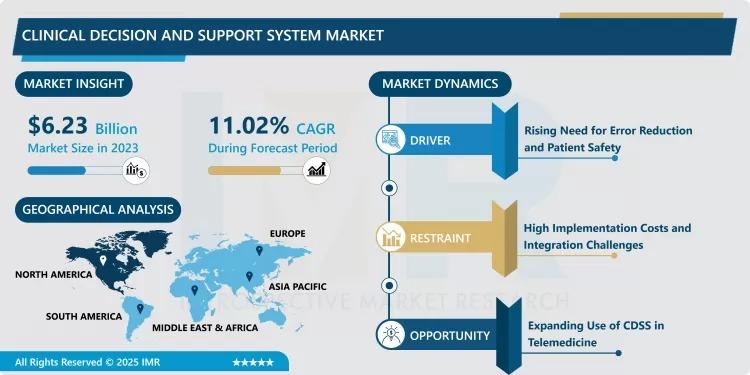
According to a new report published by Introspective Market Research, Clinical Decision Support System Market by Product, Delivery Mode, Application, End-User, and Region, The Global Clinical Decision Support System Market Size Was Valued at USD 6.23 Billion in 2023 and is Projected to Reach USD 15.96 Billion by 2032, Growing at a CAGR of 11.02%. Overview:The global Clinical Decision...
The New Era of Learning: Scalable, Flexible, and Data-Driven Education The traditional concept of education—confined to a physical space and governed by strict schedules—is steadily becoming obsolete. In its place, a profound transformation is underway, where learning is no longer a fixed destination but an ongoing, integrated part of everyday life. Driving this evolution are...

