Über
Über
 Bedingungen
 Datenschutz
 Advertisment
 DMCA
DMCA
 Gmaps
Gmaps
 Rewards
 Refunds
 Entwickler
10 European Cities You Can Explore on Less Than £50 a Day
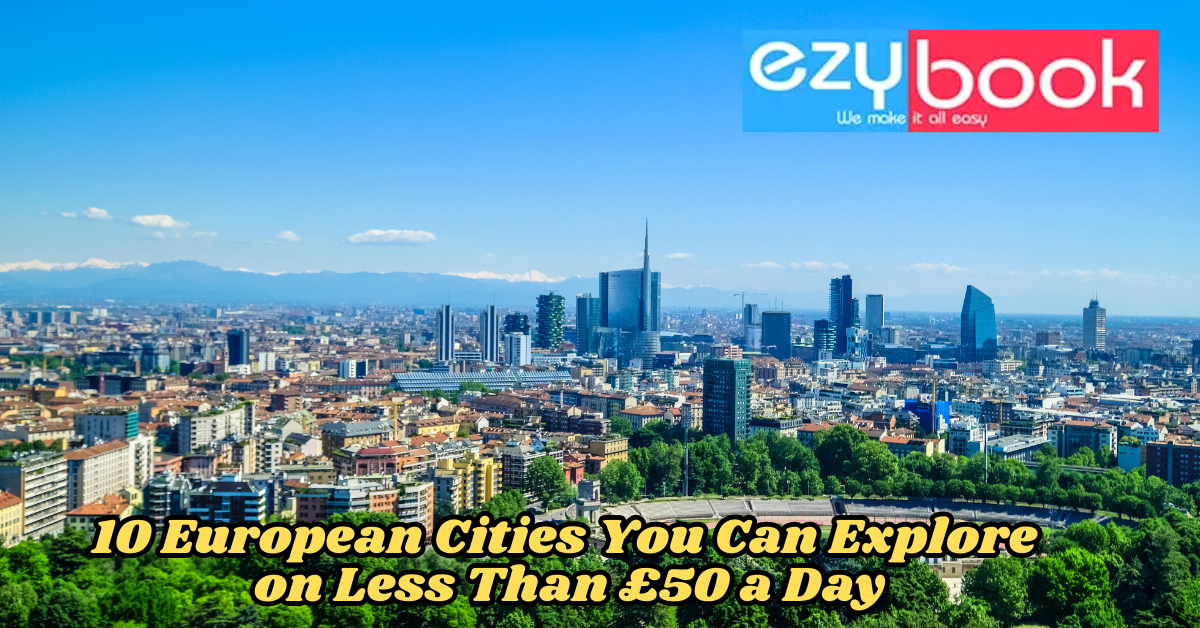
There’s a particular satisfaction in realising you don’t need much.
A bed that’s clean. Food that tastes of somewhere. Streets you can walk without paying to enter them. I’ve had days in Europe that cost more than £200 and felt oddly hollow. I’ve also had £40 days that felt full in the way that lingers.
Travelling cheaply isn’t about deprivation. It’s about adjusting expectations. You trade boutique hotels for guesthouses. Taxis for walking. Set menus for bakeries and markets. And sometimes — not always, but sometimes — you see more.
Here are ten cities where £50 a day is realistic if you’re thoughtful.
1. Kraków, Poland
Kraków feels generous. Affordable guesthouses cluster around the Old Town, and hearty meals rarely stretch the budget. Pierogi for lunch, soup for dinner, coffee that doesn’t feel overpriced simply because you’re in a historic square.
The city’s beauty is largely free — wandering Planty Park, crossing into Kazimierz, sitting quietly in churches that have stood longer than most countries.
You don’t rush here. You don’t need to.
2. Budapest, Hungary
Budapest rewards walkers. Cross the Chain Bridge at sunset. Climb Gellért Hill. Sit in a thermal bath in the morning when it’s cheaper and quieter.
Food is filling and affordable if you avoid the most polished restaurants. Markets are your friend. So are bakeries.
Accommodation outside the immediate centre often drops the daily total comfortably below £50.
3. Porto, Portugal
Porto is built for wandering.
Narrow streets, tiled façades, river views that cost nothing. A pastel de nata and strong coffee can carry you further than expected. If you stay a little uphill from the riverfront, rooms become far more reasonable.
Evenings can be simple — supermarket bread, cheese, and a view.
4. Sofia, Bulgaria
Sofia rarely tops bucket lists, which helps. Prices remain refreshingly low. Public transport is cheap and reliable. You can eat well without budgeting anxiety.
There’s a grounded feel to the city. Parks filled with locals. Markets that feel functional rather than curated. It’s not trying to impress you, and that makes it easier to live in, even briefly.
5. Valencia, Spain
Spain can be expensive, but Valencia strikes a balance. Beaches are free. The old town is walkable. Markets offer affordable meals if you look beyond the obvious stalls.
Accommodation requires planning — midweek rates help — but daily costs can stay modest if you avoid constant tapas-hopping in tourist-heavy areas.
Choose one neighbourhood and settle into it.
6. Sarajevo, Bosnia and Herzegovina
Sarajevo surprised me.
Ottoman-era streets, mountain air, strong coffee served slowly. Meals are inexpensive and filling. History is visible without entrance fees stacked on every corner.
It’s the kind of place where you can sit for hours and spend very little.
7. Vilnius, Lithuania
Vilnius feels understated and affordable. The Old Town is compact enough to explore on foot. Cafés don’t inflate prices simply because you’re visiting.
There’s a quiet rhythm to the city that suits budget travel. You don’t feel pressured to buy experiences to justify being there.
8. Thessaloniki, Greece
Greece doesn’t have to mean island prices.
Thessaloniki’s waterfront is open and generous. Street food is satisfying and cheap. Museums are modestly priced, and many of the city’s pleasures involve walking and watching rather than spending.
It’s lively without being overwhelming.
9. Bucharest, Romania
Bucharest has edges, and that’s part of the appeal. Accommodation is affordable if you book early. Food ranges from humble to modern without leaping into expensive territory.
Parks and wide boulevards make it easy to spend hours outside without paying for entertainment.
10. Bratislava, Slovakia
Often overshadowed by Vienna, Bratislava benefits from lower expectations and lower prices. The centre is small, meaning transport costs disappear. A day can unfold slowly — castle views, cafés, river walks — without draining your wallet.
It feels manageable. And that matters.
How to make £50 realistic
The cities help, but habits matter more.
Stay slightly outside the postcard centre. Walk as default. Eat where locals eat. Travel midweek if possible. Small shifts compound.
Even before you leave, saving starts early. Sorting departures calmly whether that’s arranging meet and greet at Heathrow for a smoother early flight or taking time to compare airport parking deals instead of booking last-minute protects your budget before you’ve even boarded.
Stress often leads to expensive decisions. Calm planning rarely does.
The bigger point
Spending less doesn’t mean experiencing less.
In fact, limiting your budget can sharpen your attention. You notice parks. Public benches. Bakeries tucked into corners. You spend more time observing and less time consuming.
£50 a day won’t buy luxury. But it can buy immersion, perspective, and a surprising amount of freedom.
And sometimes, that’s more than enough.
Gesponsert
Gesponsert

Gesponsert
Gesponsert
Gesponsert
Gesponsert
Virtuala FansOnly
CDN FREE
Cloud Convert
Kategorien
Mehr lesen
This report presents a structured and objective analysis of the global Self-Sealing Ziplock Bag Market growth. With a focus on historical trends, current developments, and future projections, it offers a data-rich foundation for decision-makers, industry participants, and investors. The report includes both macro and micro-level insights, enabling readers to grasp key dynamics across...

Guitar Speaker Market Overview: Guitar speakers are specialized loudspeakers used in guitar amplifiers to deliver the distinctive sound required by electric and bass guitars. The market encompasses a variety of speakers tailored for different music genres, performance settings, and personal preferences. From professional musicians performing at live events to hobbyists practicing at home,...

A/B testing, marketing strategies, testing methods, conversion optimization, data-driven decisions, user experience improvement, split testing ## Introduction In the fast-paced world of digital marketing, making informed decisions can be the difference between success and failure. One of the most effective strategies to refine marketing efforts is the A/B test. But what exactly is an A/B...

data analyst, data scientist, career in data, data education, data careers, analytics, data analysis, data science path, career advice ## Introduction In today’s data-driven world, the demand for professionals skilled in data analysis and data science is at an all-time high. As businesses increasingly rely on data to inform their strategies, the roles of data analysts and data scientists have...

Oscar nominations, 98th Academy Awards, Hollywood excellence, film industry news, best picture nominees, 2023 Oscars ## Introduction The glitz and glamour of the film industry are once again in the spotlight as the nominations for the 98th Oscars have been announced. This prestigious event celebrates the artistic and technical achievements in filmmaking, recognizing the hard work and...