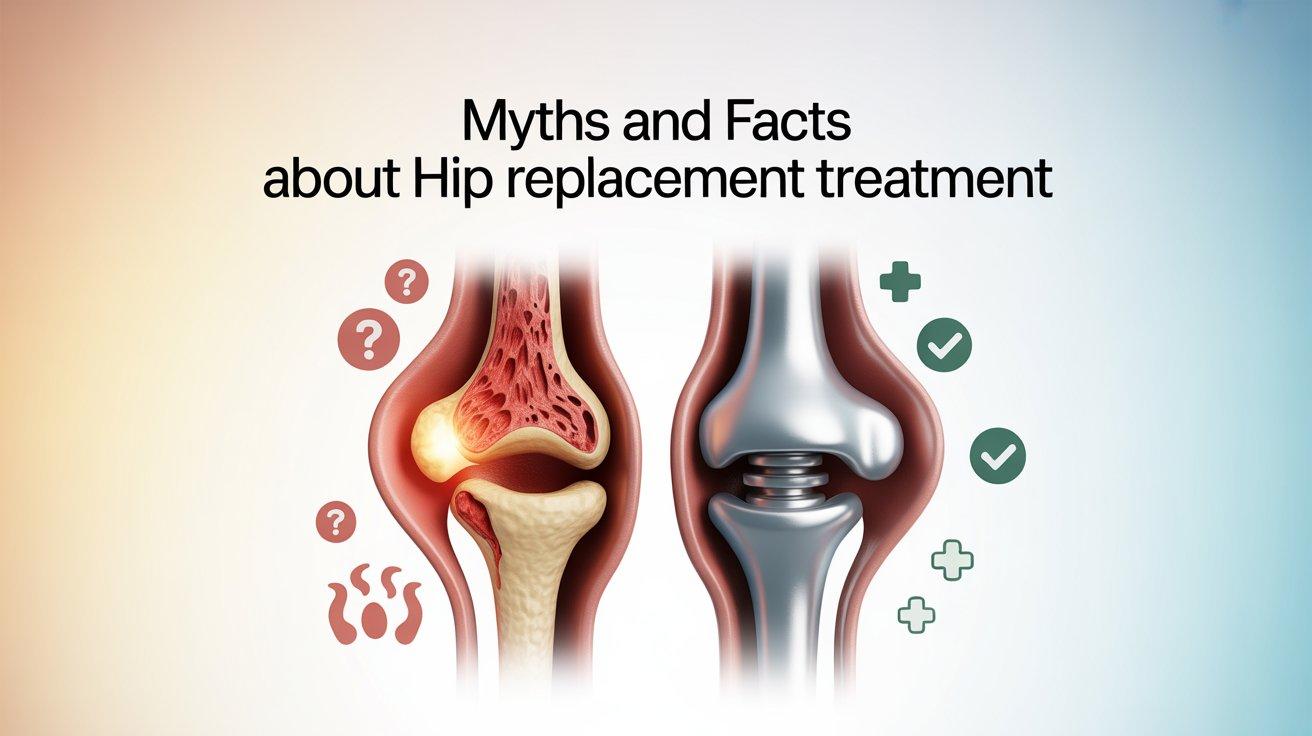
Hip replacement treatment is one of the most successful orthopedic procedures for relieving chronic hip pain and restoring mobility. However, many patients delay treatment because of myths and misinformation. As an orthopedic surgeon, I often meet patients who are anxious due to half-truths they have heard from friends, family, or online sources. This article clears common myths and explains the real facts about hip replacement treatment to help patients make informed decisions.
Myth 1: Hip replacement is only for elderly people
Fact: Age alone is not the deciding factor for hip replacement treatment. The main criteria are pain severity, reduced mobility, and poor quality of life. While many patients are above 60, younger individuals with conditions such as avascular necrosis, rheumatoid arthritis, severe injuries, or congenital hip problems may also need surgery. If hip pain limits daily activities and does not improve with medication or physiotherapy, hip replacement may be recommended regardless of age.
Myth 2: Hip replacement surgery is extremely risky
Fact: Modern hip replacement treatment is considered very safe when performed by an experienced surgeon. Advances in surgical techniques, anesthesia, and infection control have significantly reduced risks. Complications such as infection, blood clots, or implant problems are uncommon and are carefully managed with proper pre-surgery evaluation and post-operative care. For most patients, the benefits far outweigh the risks.
Myth 3: Recovery takes many years
Fact: Recovery after hip replacement is much faster than many people believe. Most patients start walking with support within a day or two after surgery. Basic daily activities usually resume within 4 to 6 weeks, and full recovery may take a few months. Regular physiotherapy, following medical advice, and maintaining a healthy lifestyle help speed up recovery and improve outcomes.
Myth 4: Hip replacement means complete bed rest
Fact: Early movement is a key part of hip replacement treatment. Prolonged bed rest is not recommended. Patients are encouraged to sit, stand, and walk under supervision soon after surgery. Controlled movement improves blood circulation, reduces stiffness, prevents complications, and strengthens muscles around the new hip joint.
Myth 5: Artificial hip joints do not last long
Fact: Modern hip implants are designed to be durable and long-lasting. With improved materials and surgical precision, many hip replacements last 15 to 20 years or more. Proper weight management, avoiding high-impact activities, and regular follow-ups can further increase the lifespan of the implant.
Myth 6: Hip replacement treatment is unbearably painful
Fact: Pain management has improved significantly in recent years. Most patients experience much less pain after surgery compared to the pain they had before. Modern anesthesia techniques, medications, and rehabilitation programs ensure patient comfort during and after the procedure. Any post-surgical discomfort is temporary and manageable.
Myth 7: You cannot live a normal life after hip replacement
Fact: Hip replacement treatment is designed to restore normal movement and independence. After recovery, patients can walk comfortably, climb stairs, travel, and perform routine activities with ease. Many patients also return to low-impact activities such as swimming, cycling, yoga, and golf. High-impact sports may be restricted, but overall quality of life improves significantly.
Myth 8: Surgery should be the last option at any cost
Fact: While non-surgical treatments like medication, injections, and physiotherapy are tried first, delaying surgery for too long can worsen joint damage and muscle weakness. When conservative treatments fail, timely hip replacement can prevent further deterioration and provide better long-term results.
Myth 9: Hip replacement always leads to complications
Fact: The majority of hip replacement surgeries are successful and complication-free. Following medical advice, attending physiotherapy sessions, and maintaining follow-up appointments greatly reduce the chances of problems. Choosing a skilled and experienced surgeon also plays a vital role in ensuring safety and success.
Conclusion
Understanding the myths and facts about hip replacement treatment helps patients make confident and informed decisions. Modern hip replacement is safe, effective, and life-changing for individuals suffering from chronic hip pain and stiffness. With proper evaluation, expert surgical care, and disciplined rehabilitation, patients can regain mobility, independence, and a better quality of life. If hip pain is limiting your daily activities, consulting an experienced orthopedic surgeon can help determine the right treatment approach for you.

 Sobre
Sobre
 Termos
 Privacidade
 Advertisment
 DMCA
DMCA
 Gmaps
Gmaps
 Rewards
 Refunds
 Developers




 Croatian
 English
 Arabic
 French
 Spanish
 Deutsch
 Turkish
 Dutch
Dutch
 Italiano
 Russian
 Romaian
 Portuguese (Brazil)
 Greek
Greek
 Chech
Chech
 Afganistan