Complete Guide to Demineralized Water Storage Tanks
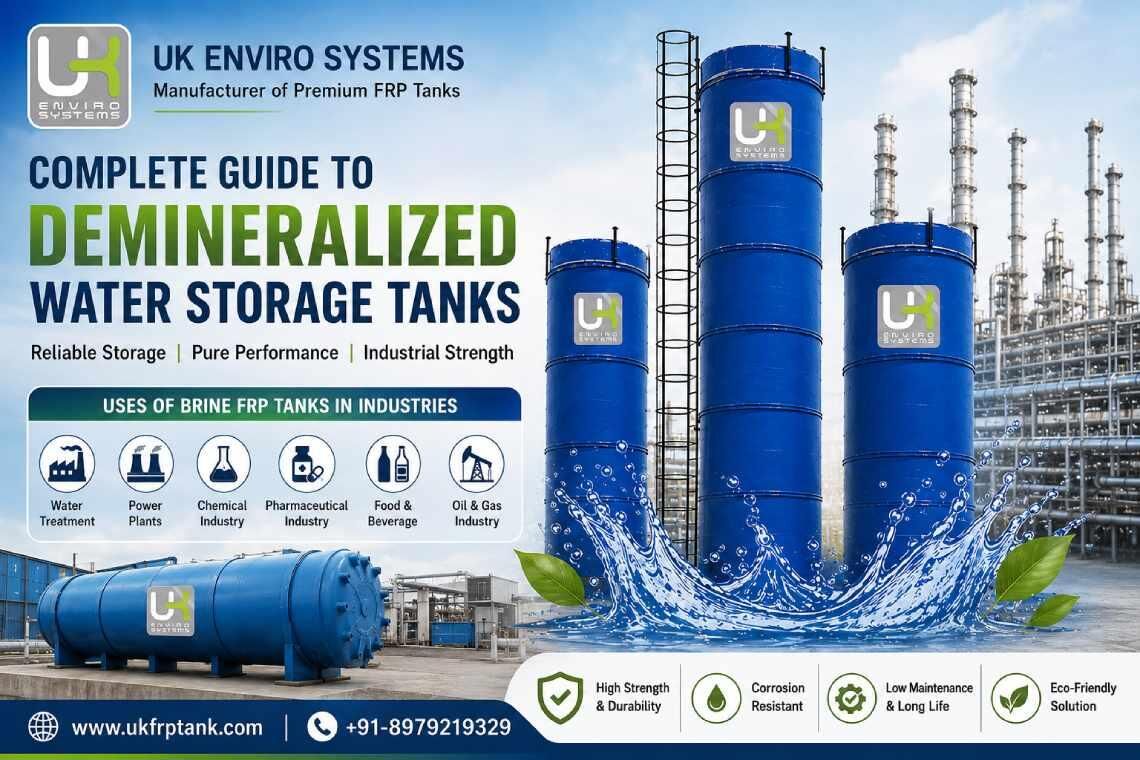
Water purity stands as a critical requirement across numerous industrial processes. Demineralized water, often called DM water, powers boilers, cooling systems, and pharmaceutical production lines. The storage of this highly purified water presents unique challenges. Contamination risks threaten water quality at every stage. Proper storage solutions prevent degradation and maintain ionic purity. Industrial facilities require robust, reliable storage systems. FRP DM Water Storage Tank Manufacturer expertise ensures long-term performance. This guide explores every aspect of DM water storage tanks.
Understanding Demineralized Water and Storage Requirements
Demineralized water contains no dissolved minerals or salts. The deionization process removes all ionic impurities. This water exhibits aggressive properties due to its low mineral content. It actively seeks to dissolve ions from surrounding materials. Storage containers must resist this corrosive tendency. Metal tanks suffer rapid degradation with DM water. The water extracts metallic ions, contaminating the supply. Non-metallic materials provide the safest storage option.
Chemical Properties of Demineralized Water
DM water possesses a conductivity below 1 µS/cm. This extreme purity makes it chemically hungry. It readily absorbs carbon dioxide from air. The absorbed CO₂ forms carbonic acid. This acid reduces pH levels significantly. Storage systems must account for this chemical behavior. Proper venting and blanketing prevent atmospheric contamination.
Critical Storage Parameters
Temperature variations affect DM water quality significantly. Higher temperatures increase dissolution rates. Cooler temperatures reduce bacterial growth risks. Most facilities store DM water at ambient temperatures. Some applications require chilled storage. Insulation requirements vary accordingly.
FRP Storage Technology for DM Water
Fiber Reinforced Plastic (FRP) tanks excel in DM water service. The material composition eliminates metallic contamination risks. FRP provides exceptional corrosion resistance. The smooth internal surface prevents bacterial adhesion. These characteristics make FRP the preferred material choice.
Material Composition and Properties
FRP tanks consist of polymer resin reinforced with glass fibers. The resin matrix protects against chemical attack. Glass fibers provide mechanical strength. The combination creates a durable composite structure. Different resin types suit various service conditions.
Resin Selection Criteria
Isophthalic polyester resins offer good general resistance. Vinyl ester resins provide superior corrosion protection. Bisphenol A fumarate resins suit high-temperature applications. Each resin type exhibits specific chemical resistance properties. Manufacturers select resins based on service conditions.
Glass Reinforcement Types
E-glass fibers provide excellent strength properties. C-glass offers superior chemical resistance. Different fiber orientations optimize tank performance. Chopped strand mat enhances isotropic properties. Woven roving provides directional strength.
Fabrication Methods for DM Water Tanks
Several manufacturing processes produce FRP tanks. Hand lay-up remains common for custom designs. Filament winding creates superior structural integrity. Spray-up offers cost-effective production. Each method suits different size requirements.
Filament Winding Process
Continuous filaments wrap around a rotating mandrel. This process creates highly oriented fiber patterns. The winding angle determines strength characteristics. Computer-controlled winding ensures precision. This method produces tanks with exceptional hoop strength.
Hand Lay-up Technique
Skilled technicians apply resin and glass manually. This method accommodates complex geometries. Custom fittings integrate seamlessly. The process suits smaller production runs. Quality depends heavily on operator expertise.
Design Considerations for DM Water Storage Tanks
Proper tank design prevents water quality degradation. Every component must maintain purity standards. The design must facilitate cleaning and inspection. Operational requirements influence design choices significantly.
Tank Geometry and Capacity
Cylindrical shapes provide optimal structural efficiency. Vertical designs save floor space. Horizontal tanks suit limited height applications. Capacity ranges from small laboratory units to massive industrial tanks. Sizing depends on consumption patterns.
Internal Surface Requirements
Smooth internal surfaces prevent particle entrapment. Surface finish affects cleanability significantly. Mirror-like finishes simplify sanitation procedures. The internal surface must resist chemical attack. Special gel coats enhance surface properties.
Fittings and Connections
Manways provide access for inspection and cleaning. Flanged connections simplify piping installation. Nozzle placement affects mixing characteristics. Bottom outlets ensure complete drainage. Vent connections allow pressure equalization.
Ventilation Systems
Proper venting prevents vacuum formation. Filtration prevents airborne contamination. Carbon dioxide absorption requires consideration. Nitrogen blanketing provides optimal protection. Vent filters must maintain sterility.
Manufacturing Standards and Quality Control
FRP Storage Tank Manufacturer operations follow strict standards. Quality control ensures consistent product performance. Testing verifies structural integrity. Material certifications provide traceability.
Industry Standards Compliance
ASTM D3299 covers filament-wound tanks. ASTM D4097 addresses contact-molded vessels. ASME RTP-1 provides design guidelines. Each standard specifies minimum requirements. Compliance ensures safe operation.
Testing Protocols
Hydrostatic testing verifies structural integrity. Leak tests confirm joint tightness. Surface inspection identifies defects. Resin content analysis ensures proper mix ratios. Quality records maintain traceability.
Quality Assurance Programs
Incoming material inspection ensures specification compliance. In-process inspection catches defects early. Final inspection verifies complete requirements. Non-destructive testing identifies hidden flaws. Documentation provides quality evidence.
Installation and Commissioning Procedures
Proper installation ensures long-term performance. Foundation requirements must meet specifications. Leveling affects structural integrity. Piping connections require careful attention. Commissioning verifies operational readiness.
Foundation Requirements
Concrete foundations provide stable support. Foundation pads distribute loads evenly. Anchor bolt patterns match tank design. Soil conditions affect foundation design. Professional engineering ensures proper design.
Piping System Considerations
Compatible materials prevent contamination. CPVC and PVDF offer excellent resistance. Stainless steel may be acceptable. Pipe sizing affects flow characteristics. Proper supports prevent stress on connections.
Initial Filling and Testing
Gradual filling prevents structural shock. Water quality testing confirms purity. Operational checks verify all systems. Pressure testing ensures leak-free operation. Documentation records all testing results.
Operational Guidelines for DM Water Storage
Proper operation maintains water quality. Regular monitoring identifies potential issues. Operational procedures prevent contamination. Staff training ensures proper practices.
Filling and Emptying Procedures
Slow filling prevents turbulence. Air elimination prevents oxygen absorption. Complete emptying prevents stagnation. Proper sequencing maintains water quality. Automated controls simplify operation.
Monitoring Requirements
Conductivity measurements indicate purity levels. pH monitoring detects contamination. Temperature records show variation patterns. Flow measurements track consumption. Data logging enables trend analysis.
Cleaning and Sanitization
Regular cleaning prevents biofilm formation. Sanitization eliminates biological contamination. Chemical cleaning removes scale deposits. Rinsing removes cleaning residues. Proper procedures ensure safety.
Maintenance and Inspection Programs
Regular maintenance prevents unexpected failures. Inspection identifies potential issues early. Preventive maintenance extends equipment life. Record keeping tracks maintenance history.
Scheduled Inspection Intervals
Visual inspections detect surface damage. Thickness measurements track material loss. Valve checks ensure proper operation. Gasket inspection prevents leaks. Documentation maintains service records.
Common Wear Mechanisms
UV degradation affects external surfaces. Chemical attack reduces material strength. Mechanical damage occurs during operations. Thermal cycling creates stress points. Early detection prevents major failures.
Repair Procedures
Surface repairs restore protective barriers. Structural repairs require specialized techniques. Component replacement follows manufacturer guidelines. Professional contractors perform major repairs. Quality verification ensures repair effectiveness.
Selecting Your DM Water Storage Partner
Choosing the right DM Water Tank Manufacturer ensures success. Experience indicates reliable performance. Technical expertise solves complex problems. Quality commitment ensures long-term value.
Evaluation Criteria
Manufacturing capabilities determine product quality. Technical support ensures proper selection. Project management handles complex installations. After-sales service provides ongoing support. References verify past performance.
Technical Support Requirements
Design assistance optimizes tank specifications. Installation guidance ensures proper setup. Operational training enables proper use. Troubleshooting support solves problems quickly. Documentation provides reference materials.
Industrial Applications and Case Studies
DM water storage tanks serve diverse industries. Power generation requires massive storage capacity. Pharmaceutical production demands absolute purity. Electronics manufacturing needs ultra-pure water. Each application has unique requirements.
Power Generation Industry
Boiler feed water requires exceptional purity. Turbine protection depends on water quality. Cooling systems use DM water extensively. Storage capacity matches plant requirements. Emergency supply ensures continuous operation.
Pharmaceutical Manufacturing
Water for injection demands sterile storage. Production processes require consistent quality. Regulatory compliance drives design choices. Validation ensures documented performance. Regular monitoring confirms specifications.
Electronics Industry
Semiconductor manufacturing needs ultra-pure water. Rinse water quality affects product yields. Storage systems maintain critical purity levels. Distribution systems match production requirements. Water quality directly impacts profits.
Environmental Considerations and Sustainability
Environmental responsibility guides modern manufacturing. Sustainable practices reduce environmental impact. Material selection affects recyclability. Energy efficiency reduces operational costs.
Material Sustainability
FRP materials offer long service life. Durability reduces replacement frequency. Corrosion resistance prevents premature failure. Recyclability improves environmental profile. Green manufacturing reduces carbon footprint.
Energy Efficiency Considerations
Proper insulation reduces heating costs. Optimal design minimizes pumping energy. Gravity systems reduce power consumption. Energy audits identify improvement opportunities. Sustainable practices benefit everyone.
Future Trends in DM Water Storage
Technology continues to advance water storage. Smart monitoring enables predictive maintenance. Advanced materials improve performance. Automation reduces human error. Innovation drives continuous improvement.
Smart Monitoring Technology
IoT sensors provide real-time data. Predictive analytics enable proactive maintenance. Remote monitoring reduces response times. Data integration optimizes operations. Smart technology improves reliability.
Advanced Materials Development
Nanocomposite materials enhance properties. Surface modifications improve cleanliness. Antimicrobial additives reduce biological growth. Self-healing materials extend service life. Research continues to advance technology.
Conclusion
DM water storage demands careful attention to every detail. The selection of proper materials prevents contamination. Expert FRP DM Water Storage Tank Manufacturer partners ensure quality. Understanding technical requirements enables proper decision-making. Following this guide ensures successful storage systems. The investment in quality pays dividends through reliability. Clean water storage protects your most valuable process resource. Contact professional manufacturers for your specific needs. Quality storage ensures process success. Your operations deserve the best protection available.
This comprehensive guide provides the technical understanding needed for successful DM water storage. Industrial DM Water Tanks from quality manufacturers deliver reliable performance. FRP Industrial Storage Tanks represent the industry standard for purity protection. The information presented supports informed purchasing decisions. Proper storage ensures process water quality. Your manufacturing success depends on reliable utilities. Invest wisely in your water storage infrastructure. Quality equipment delivers long-term value. Professional guidance ensures optimal solutions. Begin your project with confidence.
FAQs:
Q1: Why are metal tanks unsuitable for demineralized water storage?
Metal tanks corrode rapidly because DM water aggressively dissolves ions, causing metallic contamination. This degrades water purity and weakens the tank structure. FRP tanks eliminate this risk with non‑metallic, corrosion‑resistant construction.
Q2: What resin types are best for FRP DM water storage tanks?
Isophthalic polyester suits general use; vinyl ester offers superior chemical resistance; bisphenol A fumarate handles high temperatures. Selection depends on service temperature, chemical exposure, and required mechanical strength.
Q3: How does filament winding improve tank performance?
Filament winding creates continuous, oriented fiber patterns that maximize hoop strength and structural integrity. This automated process ensures consistent resin-to-glass ratios, producing tanks that withstand high internal pressures and cyclic loads.
Q4: What monitoring is essential for maintaining DM water quality?
Continuous conductivity measurement detects purity loss; pH monitoring flags CO₂ absorption; temperature logging tracks variations. Regular flow and pressure readings help identify operational issues before they affect water quality.
Q5: How often should FRP DM water tanks be inspected?
Visual inspections should occur quarterly; thickness measurements annually; valve and gasket checks every six months. Frequent monitoring catches early degradation, allowing minor repairs and preventing costly failures or contamination events.
 Arabic
 English
 French
 Spanish
 Portuguese
 Deutsch
 Turkish
 Dutch
Dutch
 Italiano
 Russian
 Romaian
 Portuguese (Brazil)
 Greek
Greek
 Hrvatski
 Cehoslowakia