
How to Avoid Meniscus Surgery | Free Knee Pain Resources
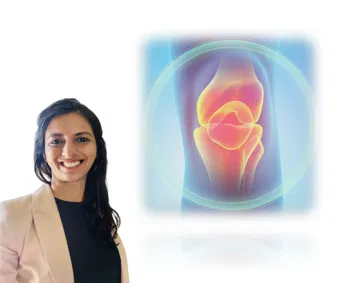
How To Heal Torn Meniscus Naturally Australia (Without Rushing Into Surgery)
If you've just walked out of an MRI appointment clutching a report full of words like "tear," "degenerative," or "complex," I want you to take a breath. I know that feeling. You go in expecting an answer, and instead you walk away with more questions than you started with — and a quiet voice asking, does this mean I need surgery?

I've spent the last 20 years working with people across Australia who've had that exact scan, that exact moment of dread. And here's what I want you to know before we go any further: a meniscus tear is not automatically a surgical sentence. For many people, it's the start of a recovery that doesn't involve an operating table at all.
This isn't false hope. It's what the evidence — and two decades of clinical experience — actually shows.
What a Meniscus Tear Actually Means
Your meniscus is a C-shaped piece of cartilage that sits between your thighbone and shinbone, acting as a shock absorber and stabiliser for the knee. It's a hardworking structure, and like most hardworking structures in the body, it can wear, fray, or tear — sometimes from a single twisting injury, and sometimes simply from years of use.
Here's the part that surprises most people: not all tears are equal, and not all tears cause ongoing pain or dysfunction. Plenty of people walk around with meniscus tears on their scans and have no idea, because their knee functions perfectly well.
This matters enormously, because a scan tells you what your knee looks like — not how it behaves, and not how it will feel in six months. Imaging findings and symptoms often don't line up the way people expect. I've worked with clients who had "ugly" scans and pain-free knees, and others with relatively minor tears who were struggling significantly. The picture on the screen is one piece of information. It is not the whole story.
Can a Meniscus Heal Naturally?
This is the question everyone wants answered honestly, so let's do that.
Some meniscus tears — particularly those on the outer, blood-supplied edge — genuinely can heal over time. Others, especially in the inner, less vascular zone, are less likely to repair on a follow-up scan. But here's what matters clinically: even when a tear doesn't fully "close up" on imaging, many people return to pain-free movement, sport, and daily life through correct rehabilitation.
This isn't just optimism — it's been studied. The well-known METEOR trial, published and discussed extensively in orthopaedic and BMJ research, found that for many people with degenerative meniscus tears, structured physiotherapy produced outcomes comparable to surgery, without the risks of an operation. Subsequent research has continued to support conservative care as a legitimate, evidence-based first option for many tear types — not a fallback, but a genuine pathway.
So when people ask me, "can a meniscus heal naturally?" — my honest answer is: for many people, yes, function and comfort can be restored without surgery, and even structural improvement is possible under the right conditions. It depends on the type of tear, your activity goals, and how your knee is currently moving and loading. This is exactly why meniscus recovery without surgery deserves a real conversation, not a dismissal.
The Conditions Needed for Natural Healing
This is where the real work happens — and where most generic advice falls short.
Healing isn't just about resting and waiting. Cartilage doesn't simply repair itself because you've stopped moving; it needs the right kind of movement, applied consistently, to recover well.
Correcting how your knee moves in daily life. Most meniscus issues aren't just about the knee — they're about everything above and below it. How your hip controls rotation, how your foot loads the ground, how you shift weight when walking, squatting, or going downstairs. If these patterns are off, the knee absorbs forces it wasn't designed to manage alone, and healing stalls. Correcting these patterns is often the single biggest shift my clients experience.
Reducing incorrect joint loading — without eliminating loading altogether. This is the part people get wrong constantly. Avoiding movement doesn't protect the meniscus; it weakens the muscles around it and can leave the joint more vulnerable. What actually helps is graded, appropriate loading — movement that respects where the tear is, while gradually building the joint's tolerance back up.
Giving the body time and the right environment to respond. Tissue healing has a biological timeline. It can't be rushed, but it also can't be left completely dormant. The sweet spot is consistent, guided movement that stays within a safe range while still stimulating recovery — not bed rest, and not pushing through pain either.
This combination — better movement patterns, smarter loading, and patience — is the foundation of genuine natural meniscus healing. It's rarely a quick fix, but for many people, it's a realistic and lasting one.
What Doesn't Work (and Why)
I want to be just as honest about what tends to fail, because I see these patterns often.
Generic strengthening programs that hand out the same exercises regardless of how someone actually moves. Strength without correcting the underlying movement pattern can sometimes reinforce the very compensation that contributed to the tear.
Passive rest alone. Icing and resting can settle acute irritation, but they don't address why the knee is struggling in the first place. Long-term passive rest, on its own, usually leads to deconditioning, not healing.
Avoiding all movement out of fear. Understandable, but counterproductive. Fear of re-injury often does more damage to recovery than gentle, correct movement would.
Treating the scan instead of the person. I've seen treatment plans built entirely around what a tear "looks like" on a report, ignoring how the person actually walks, squats, and lives. Two people with identical scans can need completely different rehabilitation approaches.
The Australian Context: Why This Conversation Matters Here
If you're in Australia, you know the landscape. A GP referral often leads to an orthopaedic consult, and from there, many people are placed on lengthy public waitlists — sometimes many months — or quoted significant out-of-pocket costs for private surgery, even with Medicare or private health cover offsetting part of it.
In that environment, arthroscopy can start to feel like the inevitable next step, simply because it's the path most clearly laid out in front of you. But for many degenerative and even some traumatic meniscus tears, conservative care is a legitimate first option worth properly exploring — not a way of "giving up" on treatment, but an evidence-supported alternative.
If you're someone who loves an active, outdoor lifestyle — bushwalking, surfing, weekend sport, simply keeping up with your kids or grandkids — it's worth asking your GP or orthopaedic specialist directly: is conservative, structured physiotherapy a reasonable option for my specific tear before we consider surgery? You're allowed to ask that question. A good clinician will welcome it.
This is the heart of what I help people navigate: understanding whether avoiding knee surgery in Australia is realistic for their specific situation, rather than guessing based on fear or a waitlist deadline.
Your Next Step
Every knee — and every tear — is genuinely different. What I've shared here is the general picture, but the right approach for you depends on your specific movement patterns, your tear type, your goals, and your current knee mechanics.
If you'd like to understand your own situation more clearly, I run a free masterclass that walks through exactly how to assess your movement patterns and whether a natural, surgery-avoidant approach could be right for your knee. You can register at simran-choudhary.com/resources.
And whatever path you choose, please make sure it includes a proper conversation with a qualified physiotherapist or treating specialist who can assess your knee individually. This article is general information, not a personalised treatment plan — and your knee deserves a plan built around you.
You've already done the hard part by seeking answers instead of panicking. That instinct — to understand before you act — is exactly the right one.

 English
 Arabic
 French
 Spanish
 Portuguese
 Deutsch
 Turkish
 Dutch
Dutch
 Russian
 Romaian
 Portuguese (Brazil)
 Greek
Greek
 Hrvatski
 Cehoslowakia