

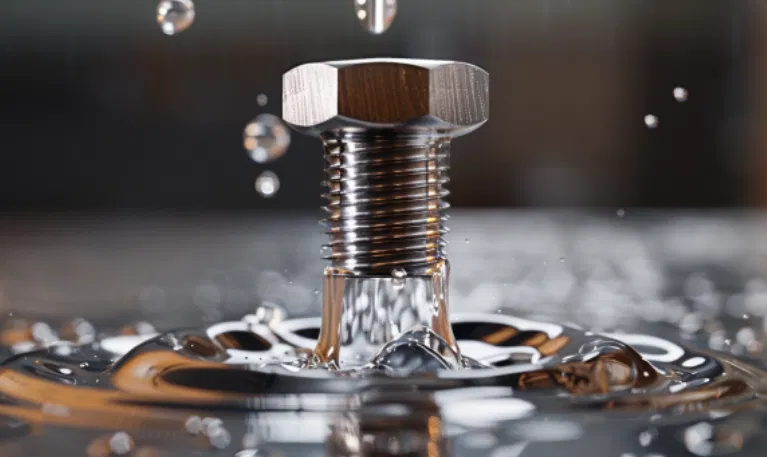

AMPG is a trusted manufacturer of precision nuts, producing high-quality, USA-made fasteners for industrial and OEM applications. Contact us for bulk orders and custom solutions.
Industrial Nuts Manufacturer and Shoulder Screw: Precision Fasteners for Modern Industrial Applications
In today's competitive manufacturing environment, precision, durability, and reliability are essential for building high-performance machinery and equipment. Choosing the right industrial nuts manufacturer is an important step for businesses that require dependable fastening solutions for demanding industrial applications. From heavy engineering and automotive production to construction and machinery assembly, quality fasteners contribute significantly to product safety and operational efficiency.
An experienced manufacturer understands that every fastening component must meet specific dimensional, mechanical, and performance requirements. Whether businesses need durable nuts for secure connections or a precision-engineered shoulder screw for controlled movement and alignment, selecting the right products makes a measurable difference.
At AMPG, explore industrial nuts designed to support different industrial fastening requirements. Understanding product features, material options, and manufacturing quality can help businesses make informed purchasing decisions.

Why Choosing the Right Industrial Nuts Manufacturer Matters
Industrial fasteners may appear to be small components, but they perform an essential function in almost every mechanical assembly. Nuts provide secure threaded connections, helping hold components together under different operating conditions.
A reliable manufacturing partner focuses on more than just producing standard dimensions. It considers material selection, thread accuracy, surface finishing, strength, and consistency throughout the production process.
Here are some important factors businesses should consider:
1. Material Selection and Durability
The material used in manufacturing directly affects the strength, corrosion resistance, and service life of a fastener. Stainless steel, carbon steel, alloy steel, and other engineering materials are selected according to application requirements.
For example, stainless steel components are often preferred in environments where moisture and corrosion are concerns. Alloy steel may be suitable for applications requiring specific mechanical properties and strength.
Selecting an appropriate material helps improve performance while reducing premature wear and replacement requirements.
2. Dimensional Accuracy and Thread Quality
Precise dimensions are essential for ensuring proper fitting and reliable fastening. Even minor variations in thread size, pitch, or overall dimensions can create assembly challenges.
Professional manufacturing processes emphasize dimensional inspection and thread accuracy. These checks help ensure that components fit correctly and perform as intended.
3. Consistent Manufacturing Standards
Quality consistency is particularly important for businesses purchasing fasteners in bulk. Manufacturers should follow appropriate specifications, maintain inspection procedures, and verify product quality throughout production.
Depending on the application, buyers may require products conforming to relevant IS, ISO, DIN, or ASTM specifications.
Understanding Shoulder Screw Design and Its Industrial Applications
A shoulder screw is a specialized mechanical fastener featuring a smooth, unthreaded cylindrical section between the head and threaded portion. Unlike conventional screws, its shoulder serves as a precise locating or bearing surface.
This distinctive construction makes it useful in applications where components require controlled movement, accurate positioning, or consistent spacing.
What Makes This Fastener Different?
The most important feature is its shoulder diameter. The smooth section provides a controlled surface around which another component can rotate, slide, or maintain alignment.
Its design offers several functional advantages:
- Accurate positioning: Helps maintain consistent spacing between connected components.
- Controlled movement: Supports rotational or sliding motion in suitable mechanical assemblies.
- Reliable alignment: Provides a defined locating surface for machine parts.
- Reduced friction: Can function as a bearing surface when properly designed and lubricated.
- Assembly convenience: Combines fastening and locating functions within one component.
These characteristics make it a valuable choice for precision engineering and mechanical equipment manufacturing.
Common Applications Across Industries
Shoulder-style fasteners are used in various applications where accurate positioning and controlled movement are necessary.
Some common examples include:
Automotive Manufacturing: Used in mechanical linkages, pivot assemblies, and moving components where consistent positioning is important.
Industrial Machinery: Helps support rollers, guides, rotating elements, and machine assemblies.
Automation Equipment: Suitable for positioning mechanisms, robotic assemblies, and precision movement systems.
Electronics and Equipment Manufacturing: Supports accurate spacing and mounting in selected mechanical assemblies.
Material Handling Systems: Can be used in rollers, moving guides, and other equipment requiring controlled mechanical movement.
The correct dimensions, material, and surface finish should always be selected according to the intended application.
How Quality Manufacturing Improves Industrial Fastener Performance
Manufacturing quality has a direct influence on how effectively fastening components perform throughout their service life. A dependable production process considers every stage, beginning with raw material selection and continuing through finishing and final inspection.
Raw Material Inspection
The production process begins with selecting materials that meet the required mechanical and environmental specifications. Material verification helps maintain consistency and reduces the possibility of defects.
Precision Manufacturing Processes
Depending on the component design and production requirements, manufacturers may use processes such as cold forming, hot forging, turning, machining, and thread cutting or rolling.
Each method offers different advantages. The appropriate process depends on product geometry, material characteristics, required tolerances, and production volume.
Surface Treatment and Finishing
Surface finishing can improve corrosion resistance, appearance, and service performance. Options may include zinc plating, passivation, and other application-specific protective treatments.
However, finishing requirements must be considered alongside dimensional tolerances because coatings can affect the final fit of threaded components.
Inspection and Quality Control
Final inspection helps verify critical dimensions, thread compatibility, surface condition, and other specified requirements.
A systematic approach to quality control supports reliable production and helps buyers maintain consistency across repeated orders.
What Should Buyers Consider Before Ordering Industrial Fasteners?
Choosing the right fastening components requires understanding the actual operating conditions and technical requirements of the application.
Before placing an order, industrial buyers should evaluate the following factors:
- Application requirements: Identify the equipment, operating conditions, and intended fastening function.
- Material specifications: Select materials according to strength, temperature, moisture, and corrosion requirements.
- Product dimensions: Confirm thread diameter, pitch, length, shoulder diameter, and other critical measurements.
- Applicable standards: Check whether the components must comply with particular industrial specifications.
- Surface finish: Determine the protective coating or finish needed for the working environment.
- Order quantity: Consider production schedules, bulk requirements, and future supply needs.
- Supplier reliability: Evaluate manufacturing capabilities, quality procedures, product consistency, and communication.
Providing accurate technical drawings or product specifications can also help manufacturers understand project requirements and recommend suitable fastening solutions.
The Growing Importance of Precision Fasteners in Modern Manufacturing
Industrial manufacturing continues to evolve with automation, advanced machinery, and increasingly precise engineering requirements. As equipment becomes more sophisticated, the demand for accurately manufactured fastening components also increases.
Businesses now look beyond basic product availability. They value suppliers who understand technical specifications, maintain consistent production quality, and provide products suitable for specialized applications.
From conventional threaded nuts to precision-machined components, every fastener contributes to the overall performance of an assembly. Selecting appropriate products can help improve installation efficiency, minimize maintenance challenges, and support long-term equipment reliability.
This makes the relationship between manufacturers and industrial buyers particularly important. Clear communication about materials, tolerances, finishes, and application requirements helps ensure that the selected products meet practical engineering expectations.
Conclusion: Choosing Reliable Fastening Solutions for Long-Term Performance
Selecting an experienced industrial nuts manufacturer is an important consideration for businesses seeking dependable, consistent, and application-specific fastening products. Equally, choosing the right shoulder screw can improve component alignment, support controlled movement, and contribute to the accuracy of mechanical assemblies.
The best fastening solution is one that combines suitable materials, precise dimensions, appropriate surface finishing, and reliable manufacturing quality. By evaluating these factors before purchasing, industrial buyers can make better decisions and support the long-term performance of their equipment.
Whether your requirements involve standard industrial nuts or specialized precision components, partnering with a quality-focused manufacturer like AMPG can be a valuable step toward building reliable and efficient industrial assemblies.
Shop Now: - https://ampg.com/product-list/nuts