
Who Is an Ideal Candidate for Liposuction? Understanding Eligibility and Medical Requirements
Liposuction can help reshape body contours by removing stubborn fat deposits that remain despite regular exercise and a balanced diet. However, achieving satisfying results involves more than identifying areas where excess fat accumulates. A person's overall health, skin elasticity, weight stability, medical history, and expectations all influence whether the procedure is appropriate.
Not everyone who wants a slimmer waist, flatter abdomen, or more defined thighs is automatically a suitable candidate. Liposuction is a surgical body-contouring procedure rather than a weight-loss solution, so selecting the right patients is essential for achieving safe and proportionate outcomes.
Understanding the medical requirements for Liposuction in Jeddah can help individuals make informed decisions before scheduling a consultation. This guide explains the characteristics of suitable candidates, health conditions that require additional assessment, and the factors surgeons consider when recommending treatment.
The First Question: Does Your Body Have Localised Fat or Excess Weight?
One of the most important considerations when evaluating liposuction eligibility is the type of fat a person wants to remove.
Liposuction primarily targets subcutaneous fat, which is located underneath the skin. It is particularly useful for treating localised fat deposits around the abdomen, waist, hips, thighs, upper arms, back, chin, and chest.
It does not remove visceral fat, which accumulates deeper inside the abdominal cavity around internal organs.
This distinction matters because someone with a generally elevated body weight may benefit more from a medically supervised weight-management programme than cosmetic fat removal.
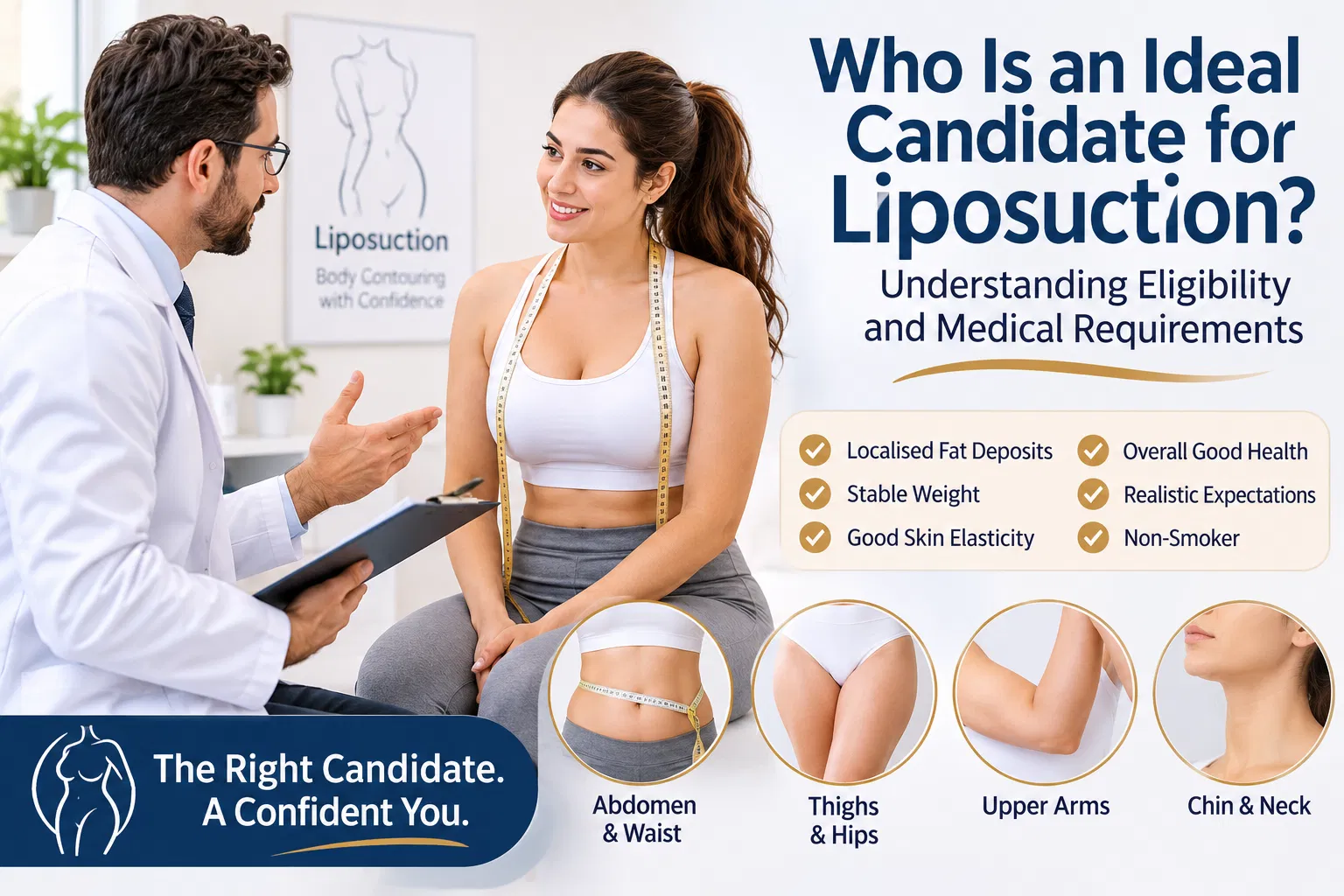
A suitable candidate typically has:
-
Localised fat deposits that remain resistant to diet and exercise.
-
A relatively stable body weight.
-
Good overall physical health.
-
Sufficient skin elasticity for the skin to adapt after fat removal.
-
Realistic expectations about body contouring results.
The American Society of Plastic Surgeons also identifies healthy adults with firm, elastic skin, good muscle tone, and specific aesthetic goals as potential candidates.
Six Characteristics That Indicate You May Be Suitable for Liposuction:
Rather than relying on appearance alone, plastic surgeons evaluate several physical and medical characteristics before recommending surgery.
1. You Have Stubborn Fat Deposits in Specific Areas
Liposuction is particularly appropriate for individuals who have disproportionate fat accumulation in certain body regions.
For example, someone may maintain a healthy lifestyle but continue experiencing:
-
Abdominal fat around the lower stomach.
-
Love handles around the waist.
-
Excess fat along the inner or outer thighs.
-
Persistent upper-arm fat.
-
Back fat that affects clothing fit.
-
Localised fat beneath the chin.
These concerns may be related to genetics, hormonal influences, or individual fat distribution.
If the unwanted fat remains concentrated in particular areas despite maintaining a healthy routine, liposuction may be worth discussing with a qualified surgeon.
2. Your Weight Is Relatively Stable
Weight stability is another important consideration when assessing liposuction eligibility.
The procedure is generally intended for people who are close to their appropriate weight rather than individuals planning substantial weight reduction.
Significant weight fluctuations after surgery can affect the appearance of treated and untreated areas. Remaining fat cells can enlarge when someone gains weight, potentially changing the results.
Maintaining a consistent weight before surgery and following healthy lifestyle habits afterward can help preserve body contours.
3. Your Skin Has Good Elasticity
Skin elasticity plays an important role in determining how smoothly the treated area may look after fat removal.
When fat is removed, the overlying skin needs to adapt to the reduced volume. People with firm, flexible skin generally have a better chance of achieving smoother contours.
However, individuals with significant loose skin, stretch marks, or reduced elasticity may experience skin laxity after liposuction.
In such cases, a surgeon may discuss alternative or combined procedures, including tummy tuck surgery, arm lift, or thigh lift.
4. You Are in Good General Health
Liposuction is an elective surgical procedure, so patients should be medically suitable for anaesthesia, surgery, and postoperative healing.
Good health does not simply mean having no noticeable symptoms. It also involves reviewing existing medical conditions, medication use, circulation, and other factors that could increase surgical risks.
Your surgeon may request laboratory tests or additional medical clearance depending on your health history.
5. You Do Not Smoke or Use Nicotine
Smoking and nicotine use can interfere with blood circulation and wound healing.
Patients who smoke or vape may face an increased risk of complications, including delayed healing and infection.
If you use nicotine products, discuss this honestly during your consultation. Your surgeon may require you to stop for a specified period before and after surgery.
6. You Have Realistic Expectations
Liposuction can improve body proportions, but it cannot guarantee a particular body shape or create perfect symmetry.
Suitable candidates generally understand that:
-
Results vary according to individual anatomy.
-
Some swelling and bruising are expected.
-
Skin quality influences the final appearance.
-
Maintaining results requires healthy habits.
-
Additional procedures may be necessary for significant loose skin.
Having realistic goals helps patients make informed decisions and understand what surgery can reasonably achieve.
Medical Conditions That Must Be Evaluated Before Surgery:
A person's medical history can significantly influence whether liposuction is safe. Certain conditions do not automatically disqualify someone, but they may require additional investigations, medical optimisation, or postponement.
|
Medical consideration |
Why it matters |
|---|---|
|
Diabetes |
Blood glucose control can influence wound healing and infection risk |
|
High blood pressure |
Blood pressure should be appropriately controlled before surgery |
|
Heart conditions |
Cardiovascular health affects anaesthesia and surgical suitability |
|
Blood clotting disorders |
May increase bleeding or clotting complications |
|
Previous blood clots |
Requires careful assessment of postoperative clot risk |
|
Respiratory conditions |
May influence anaesthesia and recovery planning |
|
Active infections |
Surgery may need to be postponed until the infection resolves |
|
Pregnancy or recent childbirth |
Elective body contouring generally requires postponement and appropriate recovery |
Patients taking blood thinners, hormonal medications, supplements, or certain prescription drugs should disclose their complete medication history.
Do not independently discontinue prescribed medication before surgery. Your surgeon and treating physician should determine whether any adjustments are necessary.
When Should Liposuction Be Postponed?
There are circumstances in which proceeding with surgery may create unnecessary medical risks.
A surgeon may recommend postponement when someone has:
-
An uncontrolled chronic medical condition.
-
An active infection or untreated wound.
-
Significant nutritional deficiencies.
-
Unstable body weight.
-
A medical condition that increases anaesthesia risks.
-
An unresolved pregnancy-related recovery period.
The decision depends on individual circumstances and the results of medical evaluation.
Which Body Areas Can Be Treated With Liposuction?
Liposuction eligibility also depends on the location and characteristics of unwanted fat. Different body areas require different surgical considerations.
Common treatment areas
Abdomen and waist
Targets localised abdominal fat and love handles.
Thighs and hips
Addresses stubborn fat affecting leg proportions.
Upper arms
Reduces localised fat around the upper arms.
Chin and neck
Helps refine the jawline and neck profile.
Other possible treatment areas include the back, flanks, chest, and multiple body regions.
Men and women may also have different body-contouring goals. Men frequently seek treatment for abdominal, chest, and flank fat, while women may focus on the abdomen, thighs, hips, and arms.
Which Liposuction Technique Is Appropriate for Different Candidates?
The most suitable liposuction technique depends on fat distribution, treatment area, skin characteristics, and the surgeon's assessment.
The available approaches include:
Traditional Liposuction: Uses a specialised cannula to remove excess fat through small incisions. It may be considered for different body areas with localised fat accumulation.
VASER Liposuction: Uses ultrasound energy to help separate fat before extraction. It may be considered for patients seeking more targeted body contouring.
Laser-Assisted Liposuction: Uses laser energy to affect fat tissue before removal. Its suitability depends on the treatment area and individual clinical requirements.
High-Definition Liposuction: Focuses on creating more defined body contours by selectively treating fat around natural muscular structures.
The choice of technique should be based on medical suitability rather than popularity or advertising claims. No method guarantees superior results for every patient.
Liposuction or Tummy Tuck: Which Procedure Do You Actually Need?
Some individuals assume liposuction will correct every abdominal concern. However, excess fat and loose abdominal skin are different problems and may require different treatments.
|
Comparison |
Liposuction |
Tummy Tuck |
|---|---|---|
|
Main purpose |
Removes localised fat |
Removes excess skin and may tighten abdominal muscles |
|
Best suited for |
Stubborn fat deposits |
Loose skin and abdominal muscle separation |
|
Skin elasticity |
Better results with elastic skin |
Can address significant skin excess |
|
Incisions |
Generally smaller |
Usually a longer lower-abdominal incision |
|
Recovery |
Generally shorter |
Generally longer |
Someone with good skin elasticity and localised abdominal fat may be suitable for liposuction alone. However, patients experiencing substantial loose skin after pregnancy or significant weight loss may need a tummy tuck assessment.
A personalised surgical examination helps determine whether one procedure or a combination is appropriate.
How Surgeons Assess Your Eligibility Before Liposuction?
A professional consultation involves more than discussing the desired body shape. It establishes whether the benefits of surgery outweigh the potential risks.
At Enfield Royal Clinic Jeddah, the published treatment information describes an individualised assessment involving fat distribution, skin condition, body structure, and aesthetic goals.
Dr. Mohamed Asem is identified on the clinic's published profile as a Consultant Plastic Surgeon licensed by the Saudi Commission for Health Specialties (SCFHS). His stated areas of expertise include traditional liposuction, high-definition liposuction, tummy tuck surgery, and body reshaping after weight loss.
The assessment process generally involves:
-
Medical history review: Discussing previous surgeries, existing conditions, medications, allergies, and lifestyle factors.
-
Physical examination: Evaluating fat distribution, skin elasticity, and the condition of the proposed treatment areas.
-
Body contour assessment: Identifying areas where fat removal may improve proportions.
-
Medical investigations: Arranging laboratory tests or additional clearance when clinically necessary.
-
Treatment planning: Discussing the suitable technique, anaesthesia, expected results, recovery, and possible complications.
Patients should also have an opportunity to ask questions about the surgeon's experience, surgical setting, and postoperative support.
Liposuction Cost in Jeddah: What Should Eligible Candidates Expect?
The cost of Liposuction Surgery depends on the treatment technique, number of areas, amount of fat requiring removal, anaesthesia, and surgical complexity.
According to the published pricing at the clinic, liposuction costs range from SAR 4,999 to SAR 24,999.
The following prices are listed on the treatment page:
|
Liposuction treatment |
Published cost (SAR) |
|---|---|
|
Traditional Liposuction |
4,999–14,999 |
|
VASER Liposuction |
8,999–24,999 |
|
Laser Liposuction (SmartLipo) |
9,999–21,999 |
|
HD Liposuction |
14,999–24,999 |
|
Abdomen |
6,999–16,999 |
|
Both Thighs |
5,999–14,999 |
|
Both Arms |
4,999–11,999 |
|
Full Body |
14,999–24,999 |
These are published price ranges rather than guaranteed quotations. The final treatment cost is determined after consultation with a medical professional.
Questions to Ask Before Deciding on Liposuction:
Before committing to surgery, prospective patients should understand the procedure, medical requirements, and expected outcomes.
Consider discussing these questions during your consultation:
-
Am I medically suitable for liposuction?
-
Is my skin elastic enough to adapt after fat removal?
-
Would liposuction alone address my concerns?
-
Which surgical technique is appropriate for my body?
-
What medical tests will I need?
-
What complications should I understand?
-
How long will recovery take?
-
What is included in the quoted treatment cost?
These questions help establish realistic expectations and make the decision-making process more informed.
Frequently Asked Questions About Liposuction Eligibility:
1. What is the ideal BMI for liposuction?
There is no single BMI that determines eligibility for everyone. Surgeons generally prefer patients who are close to a healthy, stable weight. BMI, fat distribution, medical history, and overall surgical risk are assessed together.
2. Can overweight people undergo liposuction?
Some overweight individuals may qualify following medical assessment, but liposuction is not an obesity treatment. Patients with substantial excess weight may benefit more from weight-management treatment before considering body contouring.
3. Is liposuction suitable for people with loose skin?
Patients with mild skin laxity may still be considered, depending on skin quality. Significant loose skin may require a tummy tuck, arm lift, or another skin-removal procedure.
4. Can people with diabetes get liposuction?
Some people with well-controlled diabetes may be suitable candidates. However, blood glucose management, wound healing, infection risk, and overall medical condition must be evaluated before surgery.
5. Is there an age limit for liposuction?
There is no universal upper age limit. Physical health, skin elasticity, healing capacity, and anaesthesia suitability are generally more important than age alone. Patients must also meet applicable consent requirements.
6. Can liposuction remove belly fat permanently?
Liposuction permanently removes some fat cells from treated areas. However, remaining fat cells can enlarge with weight gain, so maintaining a stable weight is important for preserving results.
7. Can someone undergo liposuction without exercising?
A person does not need to follow an intensive exercise programme to qualify. However, liposuction is intended for localised fat removal rather than replacing healthy lifestyle habits.
8. Who should avoid liposuction?
People with uncontrolled medical conditions, active infections, significant surgical risks, or unrealistic expectations may be unsuitable until their circumstances are appropriately addressed.
Making an Informed Decision About Liposuction:
Being an ideal liposuction candidate involves more than having unwanted fat. Healthy weight management, good skin elasticity, suitable medical conditions, and realistic expectations all contribute to successful treatment planning.
People with stubborn fat deposits that remain despite healthy lifestyle habits may benefit from a professional body-contouring assessment. However, those with significant loose skin, obesity, or underlying medical concerns may require alternative treatments or additional medical evaluation.
If you are considering liposuction in the region of Jeddah, arrange a consultation with a qualified plastic surgeon to discuss your eligibility, treatment options, medical requirements, and expected costs. A personalised assessment is the most reliable way to determine whether liposuction is appropriate for your body and health goals.