

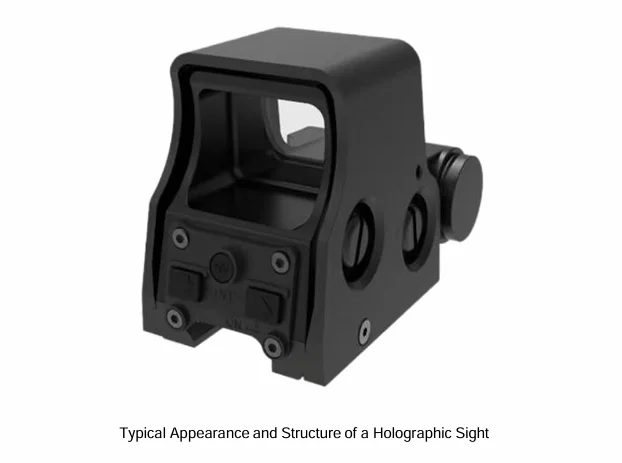

Optical technology has changed the way visual information is presented across many industries. From digital displays to specialized viewing instruments, modern optical systems use carefully engineered components to control how light travels and how images appear. One example is the Holographic sight, which uses holographic optical principles to present a visual reference within a viewing window. Understanding the technology behind these systems offers useful insight into the relationship between optical engineering, display design, and precision manufacturing.
What Is Holographic Optical Technology?
Holographic optical technology uses light interference and diffraction principles to record or reproduce wavefront information. Unlike conventional optical arrangements that rely only on ordinary lenses and mirrors, holographic elements can be designed to redirect light in specific ways.
In a holographic sight system, specialized optical elements help present a projected visual reference within the viewing area. This creates a viewing experience that differs from traditional optical arrangements.
The technology requires careful coordination between the light source, holographic element, viewing window, and supporting mechanical structure. The exact configuration depends on the product's optical design.
How Do Holographic Optical Elements Work?
Holographic optical elements are engineered to interact with light through diffraction. Their optical behavior is determined by the recorded pattern and the properties of the material used.
Several technical principles contribute to their operation:
-
Light diffraction: Changes the direction of light as it interacts with a structured optical element.
-
Interference patterns: Form the basis of holographic recording and reconstruction.
-
Optical alignment: Helps maintain the intended relationship between the light source and viewing components.
-
Image presentation: Allows designed visual information to be perceived through the optical system.
-
Material properties: Influence how the holographic element interacts with different wavelengths and lighting conditions.
These principles make holographic elements useful in specialized optical applications, including certain display and viewing technologies.
Key Components in a Holographic Sight System
A holographic sight is not simply a viewing window. It is an integrated optical and mechanical assembly in which different elements serve specific functions.
Holographic Optical Element
The holographic element is central to the system. It interacts with light according to its engineered diffraction characteristics and contributes to presenting the visual reference.
Light Source
A controlled light source provides the illumination needed for the visual display. Its characteristics must be compatible with the optical design.
Viewing Window
The viewing window forms part of the optical path through which the user observes the surrounding scene and the displayed reference.
Optical Housing
The housing supports the internal components and helps maintain their intended positioning. Mechanical stability is important for consistent optical performance.
Holographic Technology Compared with Conventional Reflective Optics
Holographic and conventional reflective optical systems can both present visual references, but their underlying principles differ.
A conventional reflective system typically uses a partially reflective surface to combine a visual reference with the surrounding view. A holographic system uses a diffraction-based optical element to control light according to a recorded holographic pattern.
Each approach has its own engineering considerations. The selection of a suitable architecture depends on the intended application, optical requirements, manufacturing capabilities, and product design.
Understanding these differences is useful for businesses researching optical technologies and comparing available solutions.
Why Manufacturing Precision Matters
Optical performance depends on more than the basic design. Manufacturing quality, component consistency, and assembly accuracy all influence the behavior of the finished system.
Several factors deserve attention during development:
Optical material quality: Materials must be suitable for the intended wavelength range and optical requirements.
Surface consistency: Optical surfaces and holographic structures require controlled manufacturing processes to achieve the intended behavior.
Component alignment: Accurate positioning helps maintain the designed optical path.
Environmental durability: The product's construction should be appropriate for its expected operating conditions.
Quality inspection: Testing and inspection help identify inconsistencies before products move into wider use.
These considerations demonstrate why specialized optical manufacturing requires both technical expertise and reliable quality-control procedures.
Broader Applications of Holographic Optics
Holographic optical elements are relevant to several areas beyond specialized sight systems.
In augmented reality, holographic elements can help guide or combine light within near-eye display architectures. In optical sensors, diffraction-based components may support particular light-management functions. Holographic technology is also used in security features, scientific instruments, and advanced display research.
As optical manufacturing develops, these principles may support increasingly compact and specialized systems. Their practical value depends on the requirements of each application.
The Future of Precision Optical Components
Advances in optical materials, microfabrication, and digital design are creating new opportunities for specialized optical products. Manufacturers are continuing to explore ways to improve component consistency, simplify integration, and develop optical systems suited to changing industry requirements.
Holographic technology illustrates how controlling light at a detailed level can create new approaches to image presentation. For businesses researching specialized optical products, exploring the Holographic sight range can provide a useful starting point for understanding available optical designs and their engineering considerations.














