

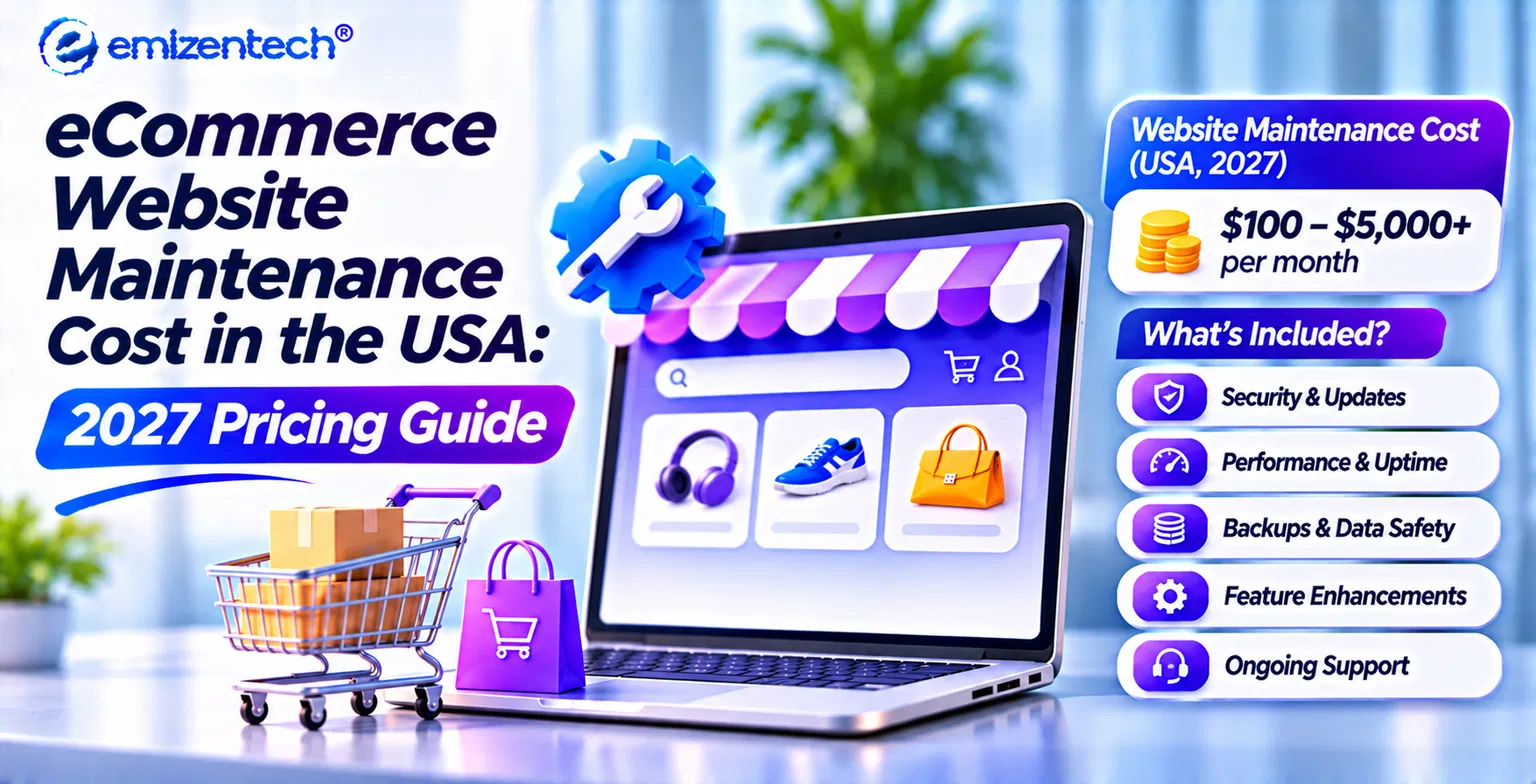

Launching an online store is only the first step. After go-live, platforms release patches, plugins fall out of date, and payment rules change, so a store needs steady attention to keep selling. Budgets vary widely, from a few hundred dollars a month for a small Shopify shop to several thousand for a custom build. This guide explains what upkeep includes, typical price ranges in the US, and ways to keep spending under control.
What Is eCommerce Website Maintenance?
Maintenance is the recurring work that keeps a store secure, fast, and able to take orders. It starts with a solid build, which is why store owners often begin with professional ecommerce website development services before planning a support budget. A typical package covers monitoring, security updates, bug fixes, version upgrades, and technical help.
Security Updates and Backups
Regular patches, SSL checks, and daily backups protect customer data and allow quick recovery after an attack or a failed update.
Performance and Uptime Monitoring
Monitoring tools flag slow pages and downtime early, before shoppers abandon their carts.
Bug Fixes and Platform Upgrades
Developers fix broken checkout steps and move the store to new platform versions so extensions keep working.
Content and Feature Updates
Product uploads, banner changes, and small feature additions keep the store current as the catalog grows.
eCommerce Website Maintenance Cost in the USA
Published guides disagree because stores differ so much in size and setup. Still, the ranges below give a realistic starting point. Treat them as estimates and compare them against written quotes, since scope matters more than the headline price.
Typical Monthly and Yearly Ranges
Guides from GoDaddy, Network Solutions, and Hostinger place e-commerce upkeep between $300 and $5,000 a month, and most of that bill is developer time, according to a Scandiweb analysis. Another common rule of thumb is to set aside 10% to 20% of the original build cost each year.
|
Store setup |
Typical monthly cost |
|
Hosted store (Shopify) |
$39 to $399 platform plan, plus apps |
|
WooCommerce store |
About $100 to $1,000 |
|
Magento or custom store |
About $2,500 to $6,500+ |
Hourly vs. Fixed Monthly Pricing
Hourly billing suits occasional fixes, but totals swing from month to month. A fixed plan with set hours is easier to budget. US developer time commonly runs $80 to $200 per hour, and this guide on the cost to hire a software developer explains how those rates are set.
Cost by Ecommerce Platform
The platform you pick changes both the price and the type of work involved. Hosted platforms handle servers and security for you, while self-hosted ones leave that to your team or provider. Here is how the main options compare.
Shopify and Shopify Plus
Shopify plans run from $39 to $399 a month with hosting, security, and PCI compliance included, according to Scandiweb. Most extra spending comes from paid apps and occasional developer help.
Adobe Commerce (Magento)
Magento Open Source has no license fee, but Scandiweb estimates realistic yearly costs of $30,000 to $80,000 or more once hosting, developer hours, and annual upgrades are counted. It suits stores with complex B2B workflows.
WooCommerce
The plugin is free, yet hosting, security tools, premium extensions, and developer hours add up. CommerceGurus puts a growing store at about $100 a month and a larger one at $600 to $1,000 before major custom work.
Factors That Affect the Monthly Price
Two stores on the same platform can have very different bills. These factors usually explain the gap, so review them before you ask for quotes.
-
Catalog size: Thousands of SKUs mean more data to sync, test, and protect.
-
Custom features and integrations: ERP, CRM, and shipping connections break more often than a standard setup.
-
Traffic and hosting: Busy stores need stronger servers and caching, especially during sales.
-
Security and compliance: PCI-compliant payments and vulnerability checks require ongoing effort.
-
Support hours: Round-the-clock cover with fast response times costs more than office-hours support.
Hidden Costs to Watch For
A quote that looks low can grow quickly once extras appear. Ask what sits outside the plan, and get the answers in writing.
-
Emergency fixes: Urgent work outside plan hours is often billed at higher rates.
-
Extension renewals: Paid apps and plugins renew every month or year.
-
Hosting upgrades: Growth can push a store onto a bigger plan, and dedicated hosting runs $80 to $300 a month, per Hostinger.
-
Downtime losses: An offline store loses sales, so agree on response times in the contract.
How to Reduce Upkeep Costs
Lower bills come from planning, not from cutting support. These habits keep a store stable and prevent expensive surprises.
-
Pick a stable platform: Match it to your team's skills and growth plans.
-
Limit plugins and custom code: Every add-on is one more item to update and test.
-
Schedule regular audits: Reviews of speed, security, and SEO catch small issues early.
-
Match the plan to the store: Pay only for the hours and response times you will use.
Conclusion
Keeping a store healthy costs less than repairing one after a breach or a long outage. Start with a clear scope, compare quotes against the ranges above, and ask what happens when something breaks outside office hours. EmizenTech provides monitoring, security updates, bug fixes, and technical support for stores on Shopify, Adobe Commerce, WooCommerce, and other platforms.
FAQs
1. How much should I budget each month to keep an online store running?
Small hosted stores can run on a few hundred dollars a month, while custom or Magento stores often need $2,500 or more in developer time. Ask for a written quote that lists hours, tasks, and response times.
2. Is ongoing support necessary after launch?
Yes. Unpatched software, outdated plugins, and missed backups raise the risk of security problems, slow pages, and lost orders. Regular upkeep is cheaper than emergency repairs.
3. What does a typical support plan include?
Most plans cover performance monitoring, security updates, bug fixes, platform upgrades, backup management, and technical support. Feature work and emergency fixes may cost extra, so confirm the scope.
4. Is Shopify cheaper to keep running than Magento?
Usually, yes. Shopify bundles hosting, security, and PCI compliance into its plans, while Magento needs separate hosting, developer time, and yearly upgrades. Magento can still suit complex B2B needs.
5. Can I switch support providers without disrupting my store?
Yes, with planning. Ask for documentation, code and server access, and then test the checkout flow after the transition.














