

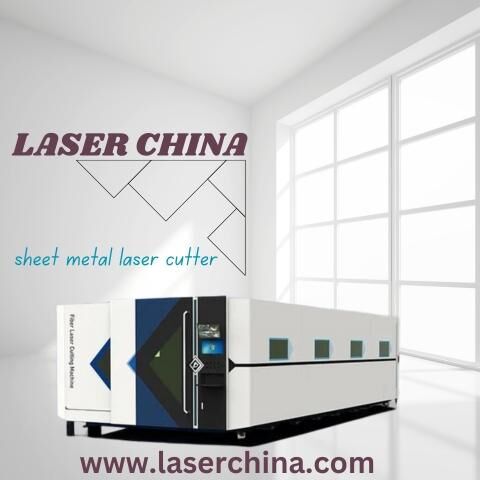
A sheet metal laser cutter is an essential tool for modern manufacturing industries that require accurate, clean, and consistent metal cutting. From small workshops to large industrial production facilities, laser cutting technology has changed how metal sheets are processed into different shapes, sizes, and designs. It allows manufacturers to handle a wide range of fabrication tasks while maintaining precision and production efficiency.
Understanding Sheet Metal Laser Cutting
Laser cutting is a process that uses a concentrated laser beam to cut through metal materials. The laser generates intense heat at a specific point, melting or vaporizing the material along a programmed cutting path. This process creates precise edges and detailed shapes without requiring traditional mechanical cutting tools.
A sheet metal laser cutter is commonly used to process materials such as stainless steel, carbon steel, aluminum, brass, and other metals. The cutting process can be controlled through computer software, allowing operators to prepare designs and transfer them directly to the machine for production.
Applications in Different Industries
Laser cutting technology is widely used in various manufacturing sectors. Automotive companies use laser-cut metal components for vehicle structures, brackets, panels, and other parts. In construction, metal fabrication businesses produce architectural elements, decorative panels, frames, and structural components.
Electrical equipment manufacturers also use laser cutting to create cabinets, enclosures, control panels, and metal housings. Furniture manufacturers, machinery producers, and metal fabrication workshops rely on laser cutting to process customized metal designs according to project requirements.
With the ability to handle different cutting patterns, manufacturers can produce both simple metal parts and more complicated designs.
Choosing the Right Laser Cutting Equipment
Selecting suitable equipment depends on several factors, including material type, sheet thickness, production volume, working area, and required cutting speed. Manufacturers should evaluate their daily production needs before choosing a machine.
Machine power is an important consideration because different materials and thicknesses require different cutting parameters. The working table size should also match the dimensions of metal sheets used in production. In addition, operators should consider software compatibility, maintenance requirements, cooling systems, and safety equipment.
A well-selected machine can support manufacturing operations for a wide range of metal fabrication projects.
Improving Production Workflow
Laser cutting machines can be integrated into a modern production workflow to reduce manual processing and improve consistency. CAD and CAM software help operators prepare cutting designs, arrange parts on metal sheets, and manage production tasks.
Proper material positioning, regular machine maintenance, and suitable cutting parameters are important for achieving reliable results. Operators should also follow laser safety procedures, use appropriate protective equipment, and ensure that the working environment meets safety requirements.
Final Thoughts
Laser cutting continues to play an important role in metal fabrication because manufacturers need precise cutting solutions for customized and industrial production. A sheet metal laser cutter can help businesses process different metal materials, create detailed designs, and organize manufacturing operations more effectively. By evaluating material requirements, machine specifications, software, and workplace safety, manufacturers can select equipment that supports their production goals and future business development.














