

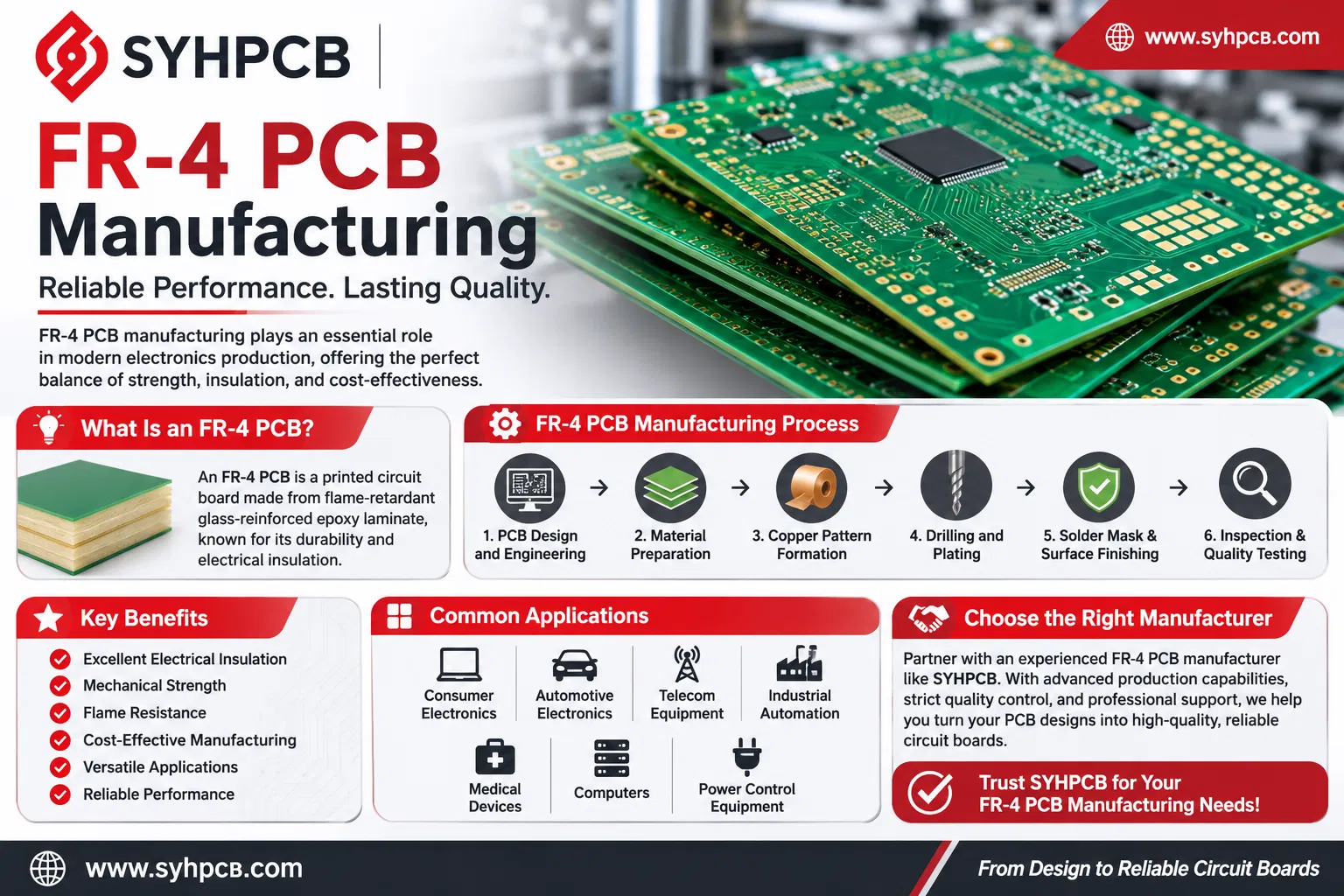
FR-4 PCB Manufacturing: A Complete Guide to Materials, Benefits, and Applications

FR-4 PCB manufacturing plays an essential role in modern electronics production. From consumer gadgets and communication equipment to industrial control systems, FR-4 printed circuit boards are widely used because of their durability, electrical insulation, and cost-effectiveness. As electronic devices become more advanced, manufacturers increasingly rely on high-quality FR-4 materials to produce reliable and efficient circuit boards.
What Is an FR-4 PCB?
An FR-4 PCB is a printed circuit board manufactured using FR-4, a flame-retardant glass-reinforced epoxy laminate. This material consists of woven fiberglass fabric combined with epoxy resin, creating a strong and electrically insulating base for electronic components.
The material offers a balanced combination of mechanical strength, thermal stability, moisture resistance, and electrical performance. These characteristics make FR-4 one of the most commonly used materials in the PCB manufacturing industry.
Understanding the FR-4 PCB Manufacturing Process
The FR-4 PCB manufacturing process involves several important stages to ensure the finished circuit board meets its required specifications.
1. PCB Design and Engineering
The process begins with a digital circuit design. Engineers develop the PCB layout, determine component placement, and plan the copper traces according to the electrical requirements of the application.
2. Material Preparation
FR-4 laminate sheets are selected based on board thickness, copper weight, and performance requirements. Proper material selection helps achieve the required strength and electrical characteristics.
3. Copper Pattern Formation
A copper layer is applied to the laminate, and the required circuit pattern is created through imaging and etching processes. This establishes the electrical pathways that connect different components.
4. Drilling and Plating
Precision drilling creates holes for component leads and electrical connections between PCB layers. Plating is then performed where required to establish reliable electrical conductivity.
5. Solder Mask and Surface Finishing
A solder mask protects exposed copper areas and helps prevent unwanted solder connections. Surface finishing prepares exposed pads for component assembly and supports reliable solderability.
6. Inspection and Quality Testing
The finished board undergoes visual inspection and appropriate electrical testing to identify manufacturing defects and verify that it meets the specified requirements.
Key Benefits of FR-4 PCBs
FR-4 PCBs offer several advantages that make them suitable for a wide range of electronic applications.
-
Excellent Electrical Insulation: Fiberglass and epoxy construction provide reliable insulation between conductive layers.
-
Mechanical Strength: The rigid laminate offers good structural stability and supports electronic components.
-
Flame Resistance: FR-4 materials are designed to meet relevant flame-retardant requirements.
-
Cost-Effective Manufacturing: Their widespread availability and established production processes make FR-4 boards economical for many projects.
-
Versatile Applications: FR-4 supports different PCB designs, layer configurations, and electronic requirements.
-
Reliable Performance: With appropriate material selection and manufacturing controls, FR-4 boards provide dependable performance in many environments.
Common Applications of FR-4 Printed Circuit Boards
FR-4 PCBs are found in numerous industries because of their versatility and practical performance. Common applications include consumer electronics, computers, telecommunications equipment, automotive electronics, industrial automation systems, medical devices, and power control equipment.
They are particularly useful for electronic products that require rigid construction, dependable electrical connections, and economical manufacturing.
How to Choose the Right FR-4 PCB Manufacturer?
Selecting an experienced FR-4 PCB manufacturer is important for achieving consistent product quality. Businesses should consider manufacturing capabilities, material quality, available layer configurations, dimensional accuracy, testing procedures, and production flexibility.
A reliable manufacturing partner should also understand project specifications and provide appropriate engineering support throughout the production process.
SYHPCB aims to support electronics businesses with professional PCB manufacturing solutions designed around different project requirements. Choosing suitable materials and maintaining manufacturing quality can help businesses develop reliable electronic products.
Frequently Asked Questions (FAQs)
1. What does FR-4 mean in PCB manufacturing?
FR-4 refers to a flame-retardant glass-reinforced epoxy laminate commonly used as the insulating base material in rigid printed circuit boards.
2. Are FR-4 PCBs suitable for multilayer designs?
Yes. FR-4 materials are widely used in multilayer PCB construction, supporting complex electronic circuits and different design requirements.
3. What are the main advantages of FR-4 PCBs?
Their primary advantages include electrical insulation, mechanical strength, flame-retardant properties, affordability, and versatility.
4. Which industries use FR-4 PCBs?
Consumer electronics, automotive, telecommunications, industrial automation, computing, and medical electronics frequently use FR-4 circuit boards.
5. How do I select the right FR-4 PCB manufacturing service?
Consider material specifications, board thickness, copper weight, layer count, manufacturing quality, inspection capabilities, and the manufacturer's experience.
Conclusion
FR-4 PCB manufacturing remains an important part of the electronics industry because it combines dependable performance, structural strength, and cost-effective production. Whether developing simple electronic devices or complex multilayer systems, selecting the right FR-4 material and manufacturing partner can make a significant difference in product quality and reliability. Working with an experienced manufacturer such as SYHPCB can help businesses move from PCB design to dependable circuit board production.














