

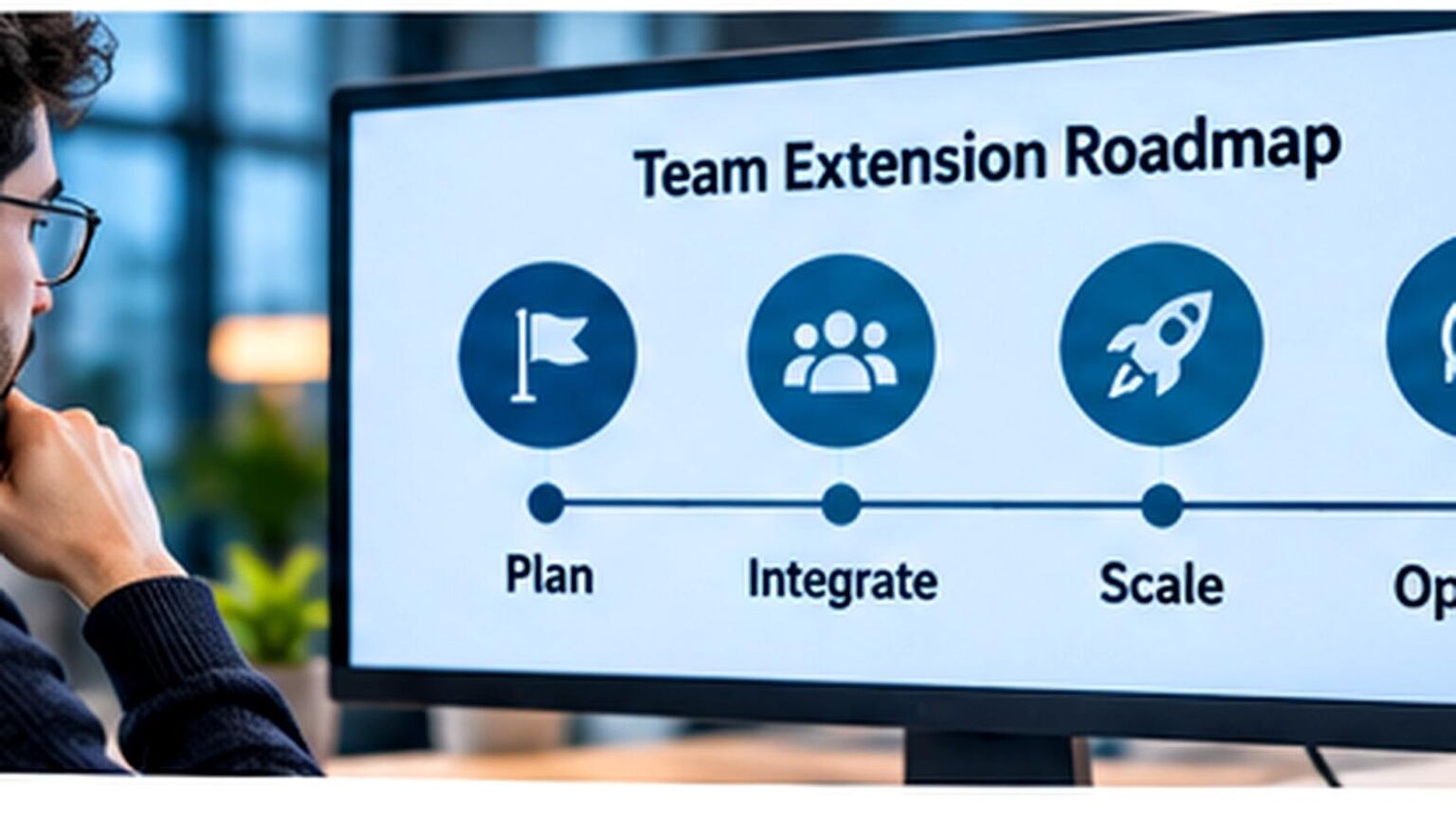
Building Better Developer Experience with Extended Teams and Platform Engineering

Even highly experienced engineers can lose valuable time navigating complicated deployment procedures, setting up development environments, waiting for infrastructure access, or troubleshooting unreliable internal tools.
As technology companies grow, these operational challenges often become more noticeable.
Different teams may use inconsistent workflows, documentation becomes harder to maintain, and routine engineering tasks require assistance from a small number of specialists.
Improving developer experience can help organizations reduce unnecessary friction and make software delivery more predictable.
One increasingly useful approach is combining clear engineering standards with platform engineering practices.
What Is Developer Experience?
Developer experience refers to how effectively software engineers can perform their work using the tools, systems, documentation, and processes available to them.
A positive developer experience makes routine tasks easier.
Engineers should be able to configure development environments, understand existing systems, run tests, submit code changes, and deploy approved releases without encountering unnecessary obstacles.
Poor developer experience often produces hidden costs.
For example, if every new employee spends several days resolving environment setup problems, onboarding becomes slower and senior developers lose time providing repeated assistance.
Similarly, if deploying a minor update requires numerous manual steps, teams may release changes less frequently.
Reducing these problems can improve engineering efficiency without increasing individual workloads.
Identify the Biggest Sources of Friction
Before introducing new developer tools, businesses should understand where engineers encounter difficulties.
Common problems include inconsistent development environments, unclear documentation, slow build pipelines, complicated access procedures, and unreliable automated tests.
Engineering leaders can collect feedback through developer interviews, onboarding reviews, and regular retrospectives.
They should also examine workflow data.
For example, long build times or frequent deployment failures may reveal infrastructure problems that deserve attention.
The goal is to identify repeated obstacles affecting multiple contributors rather than automatically investing in new tools.
A focused improvement plan is often more effective than a large platform transformation.
Use Platform Engineering to Simplify Workflows
Platform engineering focuses on creating reusable internal capabilities that make development and software operations easier.
An internal platform might provide standardized deployment templates, automated environment provisioning, approved infrastructure configurations, and access to shared monitoring tools.
Instead of requiring every development team to build these capabilities independently, the organization can provide a consistent foundation.
For example, a company operating several web applications might create a standard process for deploying new services.
Developers could use approved templates that include logging, security settings, and automated deployment steps.
This reduces repeated configuration work and makes engineering practices more consistent.
However, an internal platform should address genuine developer needs rather than introduce another layer of unnecessary complexity.
Integrate Additional Engineering Capabilities
Building useful internal tools can require infrastructure specialists, DevOps engineers, backend developers, and professionals experienced with developer tooling.
Organizations working with extended teams can add these capabilities to existing engineering departments while keeping technical standards and priorities aligned.
For example, additional platform engineers might help improve continuous integration pipelines while internal developers focus on customer-facing application features.
External contributors should collaborate closely with the engineers who will use the resulting tools.
This helps prevent situations where an internal platform looks technically impressive but fails to solve everyday development problems.
Product thinking is equally important for internal engineering tools.
The platform's users are developers, and their feedback should influence its design and evolution.
Create Clear and Consistent Development Standards
Standardization can make collaboration easier across large or distributed engineering organizations.
Teams may benefit from shared coding conventions, repository structures, build procedures, and automated quality checks.
These practices help new contributors understand how work moves from implementation to production.
However, standards should support productivity rather than unnecessarily restrict development choices.
Different applications may require different technologies or deployment patterns.
Technical leaders should distinguish essential organizational requirements from decisions that individual teams can make independently.
Clear standards reduce ambiguity while preserving appropriate engineering flexibility.
Improve Self-Service Capabilities
One of the most useful goals of platform engineering is enabling developers to complete routine tasks independently.
For example, an engineer might need a temporary test environment to validate an API change.
If creating that environment requires several manual approvals and repeated messages to infrastructure specialists, development can be delayed.
A secure self-service process may allow authorized users to provision approved resources through automated workflows.
Similarly, standardized templates can simplify the creation of new projects and services.
Self-service capabilities should include appropriate access controls, usage limits, documentation, and monitoring.
The objective is to remove unnecessary waiting without compromising operational security.
Measure Developer Experience Improvements
Developer productivity should not be evaluated solely through the amount of code written.
Useful indicators may include onboarding time, build duration, deployment frequency, time spent waiting for technical support, and the reliability of internal tools.
Qualitative feedback also matters.
Developers can explain whether new processes make their work easier or introduce additional complexity.
Businesses should assess whether platform improvements reduce repeated problems and allow teams to spend more time on valuable product development.
Metrics should inform engineering decisions rather than encourage excessive monitoring of individual employees.
Keep Internal Platforms Simple and Maintainable
Platform engineering initiatives can become unnecessarily complicated if organizations attempt to solve every problem at once.
Start with a small number of capabilities that address well-understood needs.
For example, improving a slow build pipeline may provide more immediate value than introducing a complete internal developer portal.
Create clear ownership for each platform component and document its expected users, support procedures, and maintenance requirements.
Expand the platform based on demonstrated demand.
This helps ensure that internal engineering tools remain useful as the company grows.
Final Thoughts
Improving developer experience can have a meaningful effect on software delivery quality and team efficiency.
By reducing technical friction, introducing reusable tools, and maintaining consistent engineering practices, organizations can help developers focus on solving real product problems.
When additional specialists collaborate effectively with existing engineering departments, platform improvements can become a sustainable investment in long-term software development capability.














