

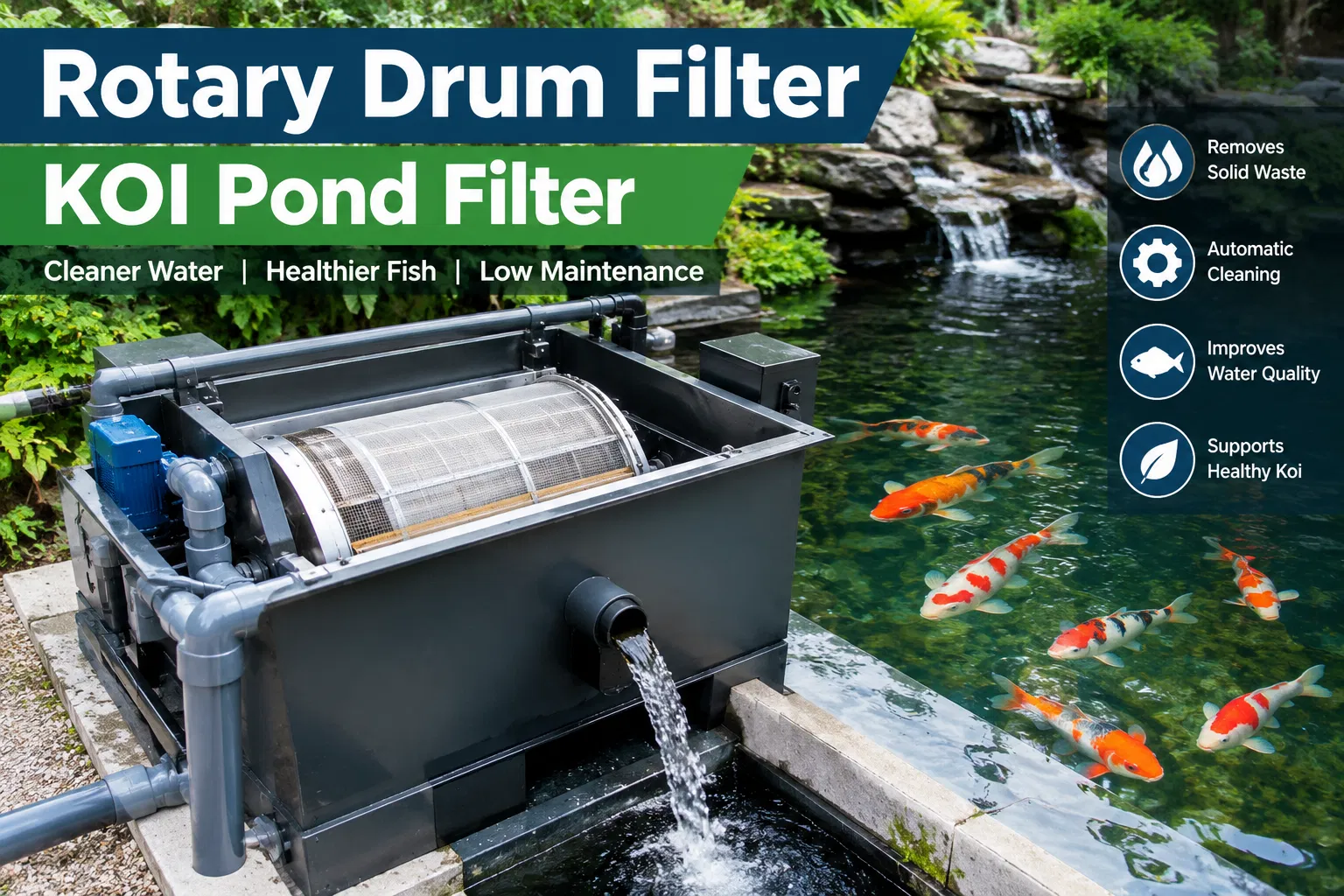

A clean and healthy pond is essential for keeping koi fish active, colourful, and stress-free. Whether you maintain a small garden pond or a large koi-keeping system, proper water filtration plays a vital role in maintaining water quality. Fish produce waste every day, while uneaten food, leaves, and other organic materials gradually accumulate in the water. Without an efficient filtration system, these contaminants can affect water clarity and create unhealthy conditions for aquatic life. A Rotary Drum Filter offers a practical solution for removing solid waste and supporting a cleaner, healthier pond environment.
What Is a Rotary Drum Filter?
A Rotary Drum Filter is a mechanical filtration device designed to separate solid particles from water before they move through the remaining filtration stages. It typically contains a rotating cylindrical drum covered with a fine filtration screen. As pond water enters the filter, water passes through the screen while suspended debris remains on its surface.
Over time, the screen collects waste and becomes partially blocked. An automatic cleaning mechanism then activates, spraying water across the screen to remove accumulated particles. The waste is directed towards a drainage outlet, allowing the filter to clean itself with minimal manual intervention. This automated process makes drum filtration a convenient option for pond owners who want reliable filtration without constantly cleaning mechanical filter media.
Why Choose a KOI Pond Filter?
Koi fish are known for their vibrant colours, graceful movements, and ability to grow to impressive sizes. However, maintaining them successfully requires careful attention to water quality. Koi produce a considerable amount of waste, particularly when they are fed frequently or kept in higher stocking densities.
A suitable KOI Pond Filter helps manage these waste loads by removing suspended solids before they decompose and contribute to water pollution. Mechanical filtration is especially important because solid waste can increase the burden on biological filtration if it remains in the system for too long.
Combining mechanical filtration with an effective biological filter creates a balanced approach to pond maintenance. While the mechanical stage captures debris, beneficial bacteria in the biological stage convert toxic ammonia into nitrite and subsequently into less harmful nitrate. Both processes are essential for maintaining suitable conditions for koi.
Key Benefits of Rotary Drum Filtration
One of the main advantages of a rotary drum system is its automatic cleaning capability. Unlike conventional mechanical filters that may require frequent manual washing, an automatic drum filter monitors the screen and cleans it when necessary, depending on the system's control settings.
Another benefit is its ability to remove fine suspended particles. By capturing debris early, the system can help improve water clarity and reduce the amount of solid waste entering downstream filtration equipment.
Rotary drum filters can also reduce routine maintenance demands, making them attractive for busy pond owners. When correctly sized and installed, they can handle substantial water flow and support the filtration requirements of demanding koi ponds.
However, performance depends on screen size, pump capacity, pond volume, fish stocking levels, and the quantity of waste produced. Regular inspection remains important even with an automated cleaning system.
Choosing the Right Filtration System
Before purchasing a filter, consider the total pond volume, expected fish growth, feeding habits, and required water circulation rate. A filter that is too small may struggle during periods of heavy feeding, while an oversized system may increase the initial investment unnecessarily.
It is also important to consider installation space, plumbing connections, cleaning water requirements, and access to replacement components. Selecting compatible mechanical and biological filtration equipment can improve overall performance and simplify maintenance.
Conclusion
Maintaining excellent water quality requires more than simply removing visible dirt from a pond. Effective filtration supports fish health, reduces waste accumulation, and helps create a stable aquatic environment. A Rotary Drum Filter can provide efficient mechanical waste removal, while a properly selected KOI Pond Filter system supports the broader filtration needs of koi ponds. By choosing suitable equipment and maintaining it regularly, pond owners can enjoy clearer water, healthier fish, and a more manageable pond maintenance routine throughout the year.














