


Conductive Plastic Compounds Market Signals Strong Growth Opportunities
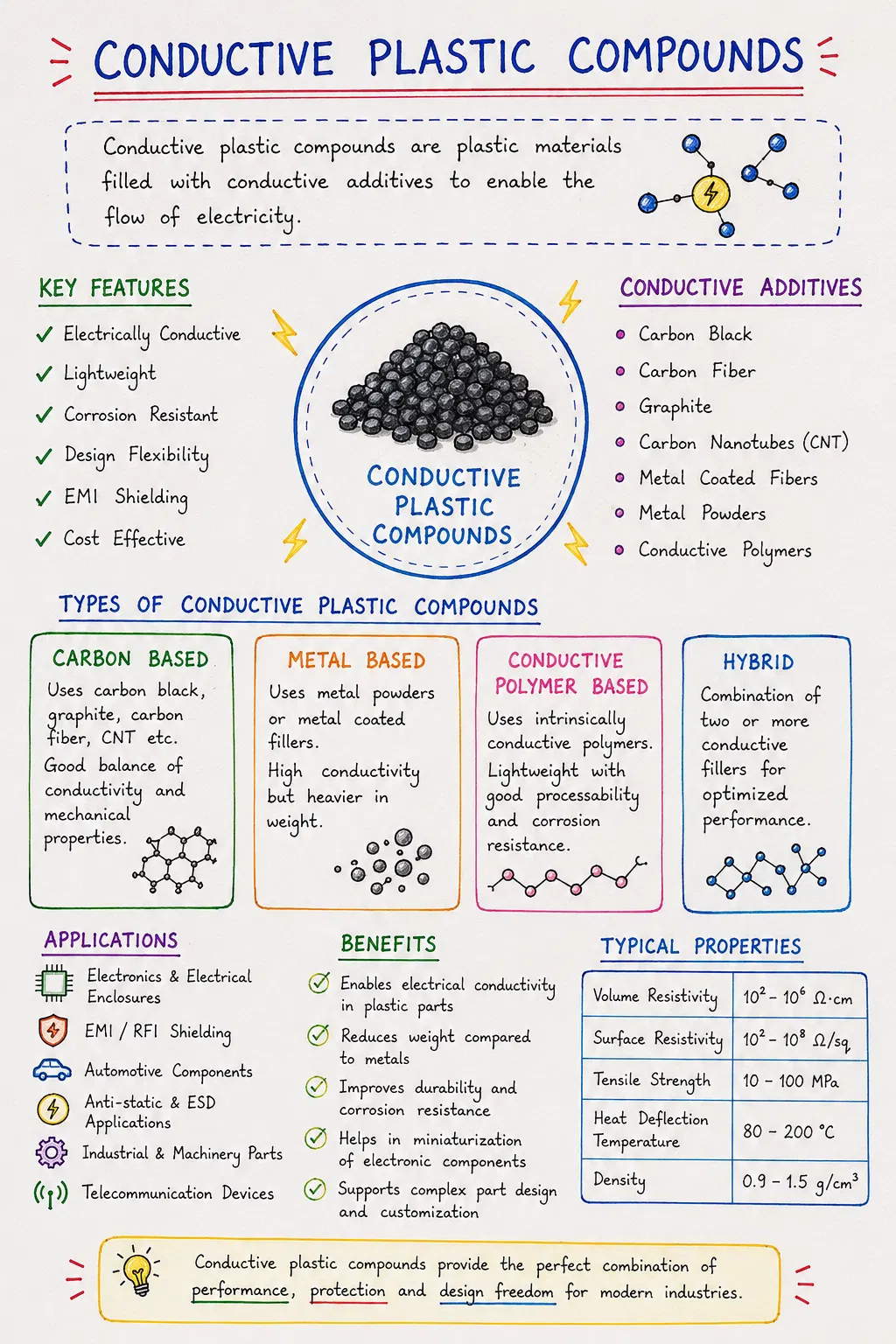
The growing need for reliable electrical performance in modern electronics is accelerating demand for conductive polymer materials. The Conductive Plastic Compounds Market was valued at US$17.08 billion in 2025 and is projected to reach US$41.81 billion by 2034, expanding at a 10.46% CAGR from 2026 to 2034. Increasing use of conductive plastics for electrostatic discharge protection, electromagnetic interference control, and lightweight component design is supporting market expansion across the electronics industry.
What Is the Conductive Plastic Compounds Market?
Conductive plastic compounds are polymer formulations blended with conductive fillers, such as carbon black or metal particles, to impart electrical or thermal conductivity while retaining the processability and weight advantages of standard plastics. They serve applications ranging from anti-static packaging to shielded automotive housings and printed electronic components.
Request a Sample Copy of the Report: https://www.theinsightpartners.com/sample/TIPRE00021115
Market Drivers
Electric vehicle production is arguably the single largest force reshaping demand for conductive plastic compounds. Battery enclosures, busbars, and connector housings all require materials that combine electrostatic discharge protection with the light weight automakers need to offset battery mass. As EV output scales across North America, Europe, and China, suppliers of conductive plastic compounds are being pulled into deeper, longer-term qualification programmes with tier-one automotive vendors, a shift that favours companies with proven thermal and electrical consistency across production batches.
Consumer electronics manufacturing tells a related story. What makes this particularly significant is the pace of miniaturisation: smartphones, wearables, and IoT devices pack more circuitry into smaller enclosures, intensifying the need for electromagnetic interference shielding without adding bulk. Conductive plastic compounds filled with carbon fibers or carbon nanotubes offer shielding effectiveness that once required metal casings, letting device designers cut weight while meeting stricter regulatory limits on electromagnetic emissions.
Beyond electronics, industrial machinery and building and construction applications are adopting conductive compounds for anti-static flooring, cable trays, and equipment housings where static build-up poses safety or contamination risks. So what is driving this acceleration in industrial uptake? Largely, it is the cost of downtime. Facilities handling flammable solvents, fine powders, or sensitive semiconductor components cannot tolerate static discharge events, and conductive plastics offer a maintenance-light alternative to grounded metal fixtures.
This is not just a trend, it is a structural shift in materials selection. Packaging for electronics components, particularly trays and totes used in semiconductor fabrication, increasingly specifies conductive or dissipative plastic grades as standard rather than optional. That steady, unglamorous demand from packaging supply chains provides a stable revenue floor beneath the more headline-grabbing automotive and electronics growth stories.
Segmentation Overview
By Resin: Polyethylene remains widely used for its processing ease and cost efficiency in packaging and industrial applications. Polypropylene offers strong chemical resistance suited to automotive under-the-hood parts. Polyvinyl chloride serves cable and wire insulation where conductivity control matters for safety. Polystyrene finds use in cost-sensitive consumer goods. Engineering plastics, including polyamide and polycarbonate blends, command premium positioning in electronics housings requiring dimensional stability. Thermoplastic elastomers bring flexibility to gaskets and seals needing conductive properties. Bio-plastics are an emerging category as brands pursue sustainability credentials, and the others segment captures niche specialty resins.
By Filler: Carbon black is the dominant, most cost-effective conductive filler, used broadly across packaging and industrial goods. Carbon fibers deliver higher conductivity and mechanical strength for automotive and aerospace-adjacent applications. Carbon nanotubes represent the high-performance end of the market, offering conductivity at low loading levels for advanced electronics. Metals, including nickel and silver-coated fillers, provide superior conductivity for demanding electromagnetic shielding needs. The others category includes graphene and hybrid filler systems gaining traction in research-stage applications.
By End-Use Industry: Automotive leads demand given electric vehicle expansion and the ongoing push for lightweight, electrically functional components. Electrical and electronics applications span connectors, enclosures, and circuit protection. Building and construction uses conductive compounds for flooring and safety infrastructure. Packaging remains a steady volume driver through electronics-grade containers. Industrial machinery relies on these compounds for static-safe equipment, while medical devices use conductive plastics in sensitive diagnostic and monitoring equipment where interference control is critical. The others segment spans aerospace, defence, and consumer goods niches.
Key Market Players
- BASF SE
- RTP Company
- LyondellBasell Industries N.V.
- Mexichem Specialty Compounds Inc.
- SABIC
- Dow Inc.
- Coperion K-Tron
- Adell Plastics, Inc.
- Sojitz Corporation
- Ravago
These companies compete on filler formulation expertise, custom compounding capabilities, and the ability to meet exacting automotive and electronics qualification standards. BASF SE and SABIC bring extensive polymer science resources to bear on next-generation conductive grades, while specialists like RTP Company and Adell Plastics differentiate through rapid custom formulation and smaller-batch flexibility that larger chemical majors often cannot match.
Sustainability and Innovation Trends
Formulators are increasingly exploring bio-based resin carriers paired with conductive fillers to reduce the carbon footprint of compounds without sacrificing electrical performance, a response to tightening packaging and automotive sustainability mandates in Europe. Alongside this, carbon nanotube and graphene-based fillers are being refined to achieve conductivity at lower loading percentages, which improves mechanical properties and processability while cutting material costs. Recyclability is also becoming a design priority, with compounders working to ensure conductive fillers do not compromise the ability to reprocess plastic waste streams, an important consideration as regulators push circular economy targets across the plastics industry.
Buy Premium Report: https://www.theinsightpartners.com/buy/TIPRE00021115
Regional Outlook
Asia Pacific holds a commanding position in the conductive plastic compounds market, anchored by China's dominant electronics manufacturing base, Japan's advanced materials expertise, and South Korea's semiconductor and display industries. Rapid electric vehicle adoption across the region reinforces this lead.
North America follows closely, driven by automotive electrification investment in the United States and a resurgent domestic semiconductor manufacturing push that raises demand for anti-static and shielding-grade compounds.
Europe's growth is shaped by stringent automotive emissions regulation and a manufacturing base concentrated in Germany, which supports both automotive and industrial machinery applications. South and Central America represents a smaller but steadily developing market, with Brazil's automotive sector offering the clearest growth pathway as regional manufacturers gradually adopt more advanced polymer technologies.
Related Reports
Conductive Textiles Market Size, Trends & Growth by 2034
Electrical Insulation Materials Market Size, Demand & Growth by 2034
Reinforced Plastics Market Size, Growth & Demand by 2034
Carbon Fiber Reinforced Thermo Plastics Market Size, Share & Forecast by 2034
About The Insight Partners
The Insight Partners is among the leading market research and consulting firms in the world. We take pride in delivering exclusive reports along with sophisticated strategic and tactical insights into the industry. Reports are generated through a combination of primary and secondary research, solely aimed at giving our clientele a knowledge-based insight into the market and domain. This is done to assist clients in making wiser business decisions. A holistic perspective in every study undertaken forms an integral part of our research methodology and makes the report unique and reliable.
Contact Us:
If you have any queries about this report or if you would like further information, please contact us:
Phone: +1-646-491-9876
E-mail: sales@theinsightpartners.com
Also Available in: Korean | German | Japanese | French | Chinese | Italian | Spanish

 English
 Arabic
 French
 Spanish
 Portuguese
 Turkish
 Dutch
Dutch
 Italiano
 Russian
 Romaian
 Portuguese (Brazil)
 Greek
Greek
 Hrvatski
 Cehoslowakia