 Sobre
Sobre
 Termos
 Privacidade
 Advertisment
 DMCA
DMCA
 Gmaps
Gmaps
 Rewards
 Refunds
 Developers
The Precision Fix: A Guide to Local Cellphone and Watch Maintenance
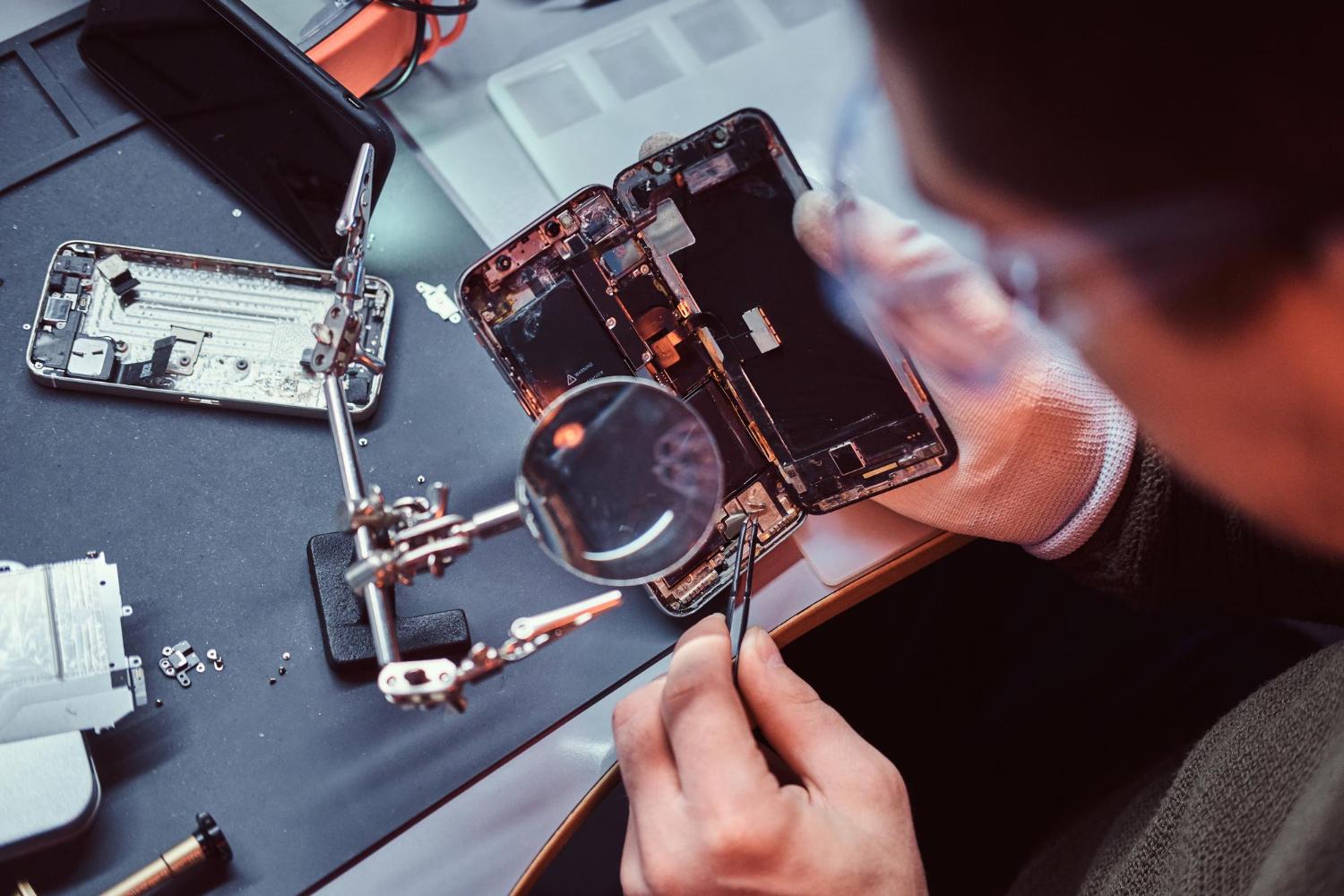
In our fast-paced digital age, two items remain indispensable to our daily rhythm: the smartphone in our pocket and the timepiece on our wrist. One connects us to the world; the other anchors us to the moment. However, because we use them constantly, they are prone to the inevitable: a cracked screen, a failing battery, or a stopped movement.
When searching for cellphone repair shops near me, or seeking a reliable spot for a watch battery replacement near me, the goal isn't just a quick fix—it’s about restoring the heartbeat of your daily routine.
1. The Anatomy of Modern Cellphone Repair
Modern smartphones are marvels of engineering, but their sleek designs make them notoriously fragile. Most repairs fall into three major categories, each requiring a specific level of technical expertise.
Screen Restoration
The screen is the most common casualty. Beyond the glass, technicians must handle the digitizer (which senses touch) and the OLED/LCD panel. High-quality shops prioritize OEM (Original Equipment Manufacturer) parts to ensure your "Auto-Brightness" and "True Tone" features continue to function.
Battery Life Extension
Lithium-ion batteries have a finite lifespan, typically around 500 to 800 charge cycles. If your phone dies at 20% or feels sluggish, it’s likely "throttling" to prevent a shutdown. A professional replacement can make a three-year-old phone feel brand new for a fraction of the cost of a new device.
Micro-Soldering and Logic Boards
The most complex repairs involve the motherboard. Whether it’s a damaged charging port or water damage, these require a technician with a microscope and steady hands to bridge microscopic connections.
2. The Art of Watch Maintenance
While cellphones are the "new" essential, watches represent a tradition of precision. Whether it is a rugged digital sports watch or a delicate heirloom mechanical piece, maintenance is the key to longevity.
Battery and Gasket Replacement
A watch stopping is usually just a dead cell, but "battery replacement" involves more than just a fresh power source. When a watch is opened, the internal gasket (the rubber ring that keeps water out) can become compressed or dry. Professional repairers will lubricate or replace this gasket and perform a pressure test to ensure the watch remains water-resistant.
Mechanical Servicing
For automatic or manual-wind watches, a "service" is like an oil change for a car. The microscopic gears (the "train") are cleaned of old, gummy oils and re-lubricated with synthetic oils to reduce friction and maintain accuracy.
3. How to Choose a Repair Center
Not all repair shops are created equal. Before handing over your devices, look for these three pillars of service:
|
Pillar |
What to Look For |
|
Warranty |
A reputable shop should offer at least a 3-to-6-month warranty on both parts and labor. |
|
Transparency |
They should provide an upfront quote and explain exactly what is being replaced. |
|
Turnaround |
Simple repairs (screens/batteries) should ideally be "while-you-wait" or same-day. |
Maintenance Best Practices
To avoid frequent trips to the repair shop, follow this simple maintenance sequence.
1
Phone: Clear the Ports
Every 30 days
Use a non-metallic pick or compressed air to gently remove pocket lint from the charging port. This prevents "loose connection" issues.
2
Watch: Check the Crown
Daily
Ensure the crown (the winding knob) is fully screwed in or pushed down before any contact with water. This is the #1 cause of interior rust.
3
Phone: Optimize Charging
Stay between 20-80%
To prolong battery health, avoid letting your phone drop to 0% or sit at 100% on a charger overnight.
4
Watch: Wipe the Case
After exercise
Sweat is corrosive. Wipe down your watch with a soft, damp cloth to prevent salt buildup on the case back and lugs.
Conclusion
Whether it's a cracked screen or a ticking second hand that’s finally gone still, your devices deserve professional care. Finding a shop that understands the nuances of both modern circuitry and horological tradition ensures that your tools remain as reliable as you are.
Frequently Asked Questions
1. Will a screen repair void my manufacturer warranty?
In many cases, yes. If your phone is still under the original manufacturer's 1-year warranty, an unauthorized third-party repair may void it. However, for older phones, third-party shops are significantly more cost-effective.
2. How long does a watch battery usually last?
A standard silver-oxide watch battery typically lasts between 2 and 3 years. High-end quartz movements with "Power Saving" modes can sometimes last up to 5 years.
3. My phone fell in water; should I put it in rice?
Actually, no. Rice is a myth. It is more likely to get dust and starch inside the phone. The best move is to power it off immediately and take it to a professional who can open the device and clean the board with 99% isopropyl alcohol to stop corrosion.
4. Why is my watch losing time even with a new battery?
If a quartz watch is losing time, it usually means the mechanical parts (the gears) are dirty and create too much friction for the battery to overcome easily. It may need a "movement service" or cleaning.
5. Is it worth repairing an older smartphone?
If the repair cost is less than 30-40% of the cost of a comparable new phone, it is usually worth it—especially for screen or battery issues.
6. Can a cracked watch crystal be replaced?
Yes. Technicians can replace acrylic, mineral, or sapphire crystals. Sapphire is the most expensive but is almost impossible to scratch.


 Croatian
 English
 Arabic
 French
 Spanish
 Portuguese
 Deutsch
 Turkish
 Dutch
Dutch
 Italiano
 Russian
 Romaian
 Greek
Greek
 Chech
Chech
 Afganistan