
 About
About
 Terms
Terms
 Privacy
 Advertisment
 DMCA
DMCA
 Gmaps
Gmaps
 Rewards
 Refunds
 Developers
The Future of Surface Restoration: Why Laser Wood Stripper Technology Is Changing the Industry
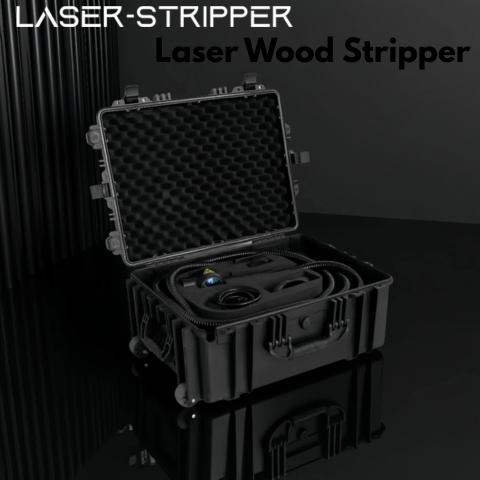
Wood restoration and surface refinishing have evolved dramatically in recent years, moving away from traditional sanding, scraping, and chemical stripping toward advanced laser-based solutions. These innovations are transforming how professionals handle paint removal, varnish stripping, and surface preparation, delivering cleaner, faster, and more precise results with minimal damage to the wood itself.
One of the most advanced tools in this field is the laser wood stripper, designed to remove coatings from wood surfaces using highly focused laser energy. This modern technology offers a powerful alternative to conventional methods by targeting only the unwanted layers while preserving the natural structure and beauty of the wood underneath.
Laser wood stripping works through a highly controlled process. A concentrated laser beam is directed at the coated surface, where the energy is absorbed by paint, varnish, or other finishes. This absorption causes the coating to heat up rapidly and break down into vapor or fine particles, which are then safely removed from the surface. Because the laser is precisely tuned, the underlying wood remains unaffected, making it ideal for delicate restoration projects and high-value materials.
One of the biggest advantages of this technology is its precision. Unlike sanding or chemical stripping, which can damage intricate wood details or leave uneven surfaces, laser systems allow controlled layer-by-layer removal. This makes them especially useful for antique furniture restoration, wooden flooring refurbishment, and architectural preservation projects where maintaining original craftsmanship is essential.
Another key benefit is environmental safety. Traditional stripping methods often rely on harsh chemicals that release harmful fumes and create hazardous waste. Laser wood stripping eliminates the need for such substances, offering a cleaner and more sustainable solution for modern workshops and industrial operations. This not only improves workplace safety but also reduces environmental impact significantly.
Efficiency is another reason why this technology is gaining popularity. Laser systems can complete stripping tasks in a fraction of the time required by manual methods. Whether working on small furniture pieces or large wooden panels, professionals can achieve consistent results with less labor and reduced operational effort.
In addition, laser wood strippers are highly versatile. They can handle different types of coatings, including paint, varnish, lacquer, and stains. Adjustable settings allow users to control intensity and speed depending on the wood type and coating thickness, ensuring optimal performance across a wide range of applications.
Although the initial investment for laser equipment can be high, the long-term benefits often outweigh the cost. Reduced labor, minimal material waste, lower maintenance needs, and faster project completion all contribute to improved productivity and profitability for professional users.
As industries continue to prioritize precision, sustainability, and efficiency, laser-based solutions are becoming the new standard in surface treatment. This technology is not just an upgrade—it represents a complete shift in how wood restoration and refinishing are performed.
In conclusion, laser wood stripping technology is redefining the future of woodworking and restoration. By combining accuracy, safety, and eco-friendly performance, it offers a smarter and more advanced way to restore wooden surfaces while preserving their natural integrity.


 Croatian
 Arabic
 French
 Spanish
 Portuguese
 Deutsch
 Turkish
 Dutch
Dutch
 Italiano
 Russian
 Romaian
 Portuguese (Brazil)
 Greek
Greek
 Chech
Chech
 Afganistan
